

WeVote

Bill

Bill

HR 9827

Wildfire Reduction Market Expansion Act of 2026

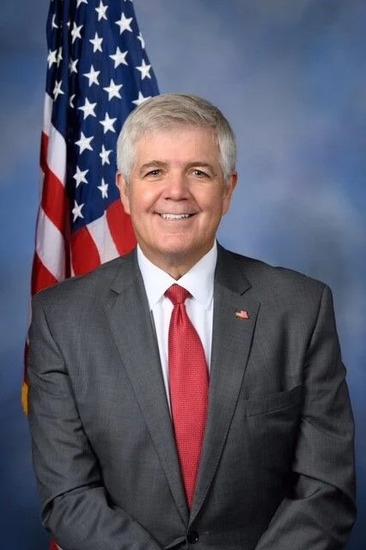
119th Congress Introduced by Cliff Bentz and 17 co-sponsors

Expands eligible renewable biomass for the RFS to include forest by-products and wildfire risk-reduction vegetation, with new certification of feedstocks.

Introduced in House
0
WeVote Research Nonpartisan
Bill Summary · HR 9827

Overview

Wildfire Reduction Market Expansion Act of 2026 (HR 9827) aims to modify the Clean Air Act’s renewable biomass definition as it applies to the renewable fuel standard (RFS). The bill expands what qualifying biomass can be used to generate credits under the RFS, with a focus on materials related to forest management, wildfire risk reduction, and defensible space projects. The objective appears to be creating more eligible feedstocks for renewable fuels by recognizing sources tied to wildfire risk reduction and forest health activities.

Main purpose and intent

  • Amend the Clean Air Act, specifically the definition of “renewable biomass” for the Renewable Fuel Standard.
  • Broaden the pool of materials that can generate credits under the RFS by including additional forest and land-management by-products and related vegetation.
  • Facilitate use of forest fuels and by-products from wildfire risk reduction activities as renewable biomass for renewable fuel credits.
  • Provide certification mechanisms to verify eligible feedstocks and maintain alignment with forest management plans and federal land-management laws.

Key provisions and changes

  • Redesignation and restructuring of the renewable biomass definitions (Section 211(o)(1)(I) of the Clean Air Act):
    • Reorganizes existing subclauses and updates language to reflect new categories.
    • Adds explicit qualifiers for materials generated from forest products manufacturing by-products (e.g., residuals, sawdust, bark, chips, paper-recycling residuals) with some exclusions (notably paper in its commonly recycled form).
    • Introduces new categories for trees, shrubs, and parts thereof (including slash and storm debris) sourced from:
    • Non-Federal land meeting certain forest-management criteria or land-use designations (e.g., forest land, timberland) or certified as being managed for long-term timber production.
    • National Forest System lands or public lands with certification by the applicable federal land-management authorities, provided specific criteria are met.
    • Conditions including by-products from land-management activities, ecological restoration projects, or pre-commercial thinning; not reasonably suitable for use as a sawlog; and compliant with all applicable laws and forest plans.
    • Expands scope to include vegetation obtained from within defensible space around structures or infrastructure assets, aligned with local law or the International Wildland-Urban Interface Code; and wildfire risk reduction activities within the wildland-urban interface as defined by law.
  • Certification framework (new subparagraphs under clause (i)):
    • Allows certification to be provided via a letter to the Administrator from the relevant landowner (for non-Federal lands) or from the local offices of the Department of Agriculture or the Department of the Interior (for federal land-management contexts).
    • Certification mechanism covers both non-Federal land and federal land contexts, enabling eligible producers to generate credits.
  • Savings/clarifications:
    • An “Avings Clause” clarifies that forest plans or resource management plans do not need to expressly name renewable fuel or biomass energy as an intended end use, as long as the underlying project and management activities are authorized and consistent with the applicable plans.
    • Ensures that the new definitions do not require forest plans to explicitly identify renewable energy end uses, provided compliance with applicable laws and plans is maintained.

Who/what would be affected

  • Renewable fuel producers that utilize biomass feedstocks for RFS credits could gain access to a broader set of eligible feedstocks, including:
    • Forest products manufacturing by-products and residuals.
    • Non-Federal forest land materials and certain federal lands, subject to certification.
    • Vegetation and debris collected for wildfire risk reduction, defensible space, and related ecological restoration activities.
  • Landowners, tribal lands, and public land managers could participate by providing certified feedstocks (via landowners or federal land-management offices).
  • Federal agencies (USDA, Interior) and Forest Service, as well as state and local authorities, could be involved in certification processes and ensuring forest plans align with the bill’s requirements.

Procedural/timeline aspects

  • The bill was introduced in the House on July 22, 2026, and referred to the Committee on Energy and Commerce.
  • The text establishes a new certification pathway and definitions but does not specify a detailed implementation timeline or regulatory rulemaking schedule within the bill itself. If enacted, rulemaking by the Environmental Protection Agency (EPA) and related agencies would be expected to set implementation timelines, verification procedures, and guidance for industry compliance.

Potential impacts and considerations

  • Increased eligible feedstocks could expand the supply of renewable biomass credits, potentially affecting the economics of the RFS and biofuel markets.
  • Emphasis on wildfire risk reduction and defensible space aligns renewable energy policy with forest health and wildfire mitigation objectives.
  • The certification framework introduces a mechanism to verify eligibility, which could depend on coordination with tribal, state, and federal land-management authorities.
  • Environmental and forest-management safeguards would rely on adherence to existing laws, forest plans, and management plans, given the “savings clause” provisions.

Note: This summary reflects the text and structure of HR 9827 as introduced, focusing on substantive provisions and potential impact. If you want, I can compare these provisions to the current Clean Air Act language or provide a contact-ready briefing for policymakers.

Compiled from official sources — confirm details with the bill’s official record.

Sign in to ask a question.