

WeVote

Bill

Bill

HR 10193

We Can't Wait Act of 2026

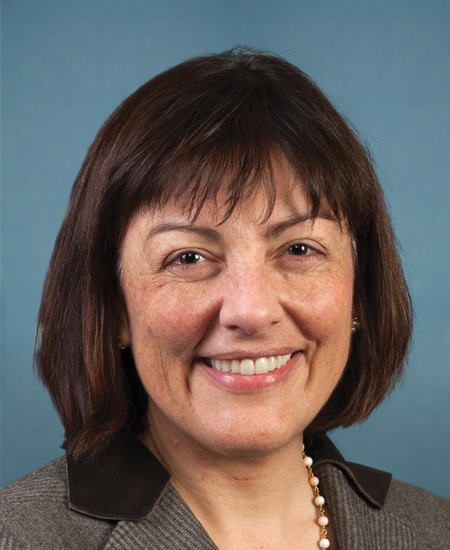
119th Congress Introduced by Suzan DelBene and 2 co-sponsors

Allows SSDI recipients to elect to receive benefits during the waiting period with defined timing, calculation rules, and actuarial oversight.

Introduced in House
0
WeVote Research Nonpartisan
Bill Summary · HR 10193

We Can't Wait Act of 2026 — Summary

What this bill would do

  • Amend title II of the Social Security Act to allow disabled individuals to elect to receive disability insurance benefits during the disability insurance benefit waiting period.
  • Provide a framework for when and how such elections can be made, how benefits would be calculated during the waiting period, and how the long-term actuarial impact would be monitored and addressed.

Main purpose and intent

  • The bill seeks to reduce the financial gap for individuals who become disabled by making disability benefits available during the period when benefits are normally not payable (the waiting period).
  • It introduces an elective option intended to improve income continuity for disabled workers while the standard determination and approval process is ongoing.

Key provisions and changes

  1. Election to receive during the waiting period (Section 223(a) amendments)

    • Adds a new paragraph (3) allowing eligible individuals to elect to receive disability insurance benefits during their waiting period.
    • Election can be made in writing, potentially via a choice on the benefit application form, and may be revocable within set timeframes described below.
  2. Election mechanics and timing (subsection (3)(A))

    • Eligibility to elect upon meeting defined triggers related to the waiting period and timing around the disability benefits process.
    • Elections or revocations can occur:
      • After applying but before a decision is made, within specified windows (e.g., 45 days post-application, or 10 days after a favorable decision).
      • After an initial filing, reconsideration requests, or hearings, with corresponding 10-day windows.
      • If a representative payee is involved, the representative can revoke or confirm within a 10-day window after selection.
      • The individual may revoke a waiting-period election during the applicable windows, with a caveat: no elections or revocations may occur in the first month of an established eligibility period.
  3. Payment calculation during the waiting period (subsection (3)(B) and (C))

    • For benefits elected during the waiting period, the disability benefit for any month during or after the waiting period will:
      • Be equal to the standard monthly benefit amount multiplied by a month-specific percentage (see subparagraph (C)).
      • Continue unchanged for the entire eligibility period and be included in past-due benefit calculations if applicable.
    • The monthly percentage (subparagraph (C)) is:
      • 94.25% for any month in the first 36 months after enactment.
      • The most recently certified percentage thereafter (as determined by the Commissioner).
    • The Chief Actuary must, within specified timelines, calculate a target percentage to keep the 75-year fiscal impact neutral for the Social Security Disability Insurance Trust Fund if all eligible electors used the waiting-period election.
      • If the calculated actuarial percentage is at least 91%, the Commissioner must certify it to the Managing Trustee.
      • If below 91%, the Commissioner may elect not to certify.
      • If the Commissioner stops certifying percentages, the Chief Actuary must prepare a congressional report with recommendations for maintaining actuarial neutrality.
  4. Protections and public information (subsection (3)(E)–(G))

    • Elections do not affect benefits for other individuals based on their own wages or self-employment income.
    • The Commissioner must publicly post information about electing benefits during the waiting period, including a calculator to estimate effects on the disability benefit.
    • Each entitlement application that could trigger the waiting period must allow for new elections or revocations under this paragraph.
  5. Effective date and implementation (Section 2)

    • The amendments apply to disability insurance benefit applications that are filed or pending on or after the first day of the first month that begins after 180 days from enactment.
  6. Forms update (Section 2(c))

    • By 180 days after enactment, the SSA Commissioner must update disability benefits application forms to include the waiting-period election option.

Who would be affected

  • Disabled individuals who file for Social Security Disability Insurance (SSDI) benefits and are subject to the standard waiting period.
  • Appointed representatives (e.g., representative payees) and the SSA for processing elections, revocations, and benefit calculations.
  • The SSA and its Chief Actuary, which would determine actuarial neutrality targets and monitor long-term fiscal impact.
  • The general public, via SSA-provided information and online calculators.

Procedural and timeline aspects

  • Introduction date: August 31, 2026; referred to the House Ways and Means Committee.
  • Effective date: Provisions apply to applications filed/pending after the date that's 180 days after enactment.
  • Administrative updates: SSA must update forms within 180 days and provide public information and a benefit calculator.
  • Ongoing actuarial oversight: The Chief Actuary must periodically assess the 75-year fiscal impact and report if the policy is not actuarially neutral or if adjustments are needed.

Notes for readers

  • The bill introduces an elective option to receive SSDI benefits during the waiting period, with defined timing windows for making or revoking the election.
  • Initial 36-month period after enactment sets the starting percentage at 94.25%, with subsequent months pegged to the latest certified percentage.
  • Long-term fiscal neutrality is a central consideration, with annual/5-year review cycles and potential congressional reporting if neutrality cannot be demonstrated.

Compiled from official sources — confirm details with the bill’s official record.

Sign in to ask a question.