

WeVote

Bill

Bill

S 4549

WATER for Farmers Act

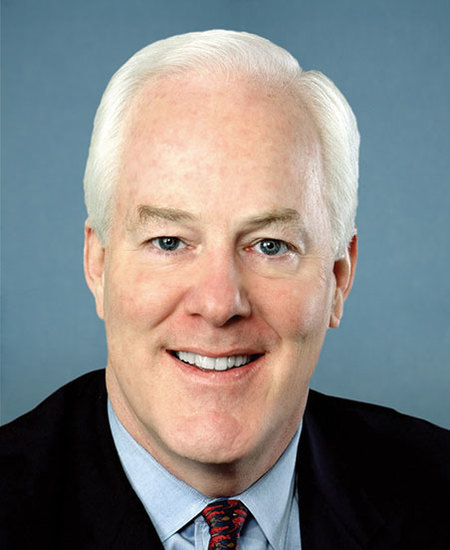
119th Congress Introduced by John Cornyn

The act ties Mexico’s water deliveries to U.S. trade duties if shortfalls occur, funding direct compensation for South Texas farmers from a dedicated U.S. Treasury trust.

Introduced in Senate
0
WeVote Research Nonpartisan
Bill Summary · S 4549

Summary of S. 4549 (119th Congress) – WATER for Farmers Act

Purpose and intent

  • Establishes a framework to ensure reliable water deliveries to the United States under the 1944 Water Treaty with Mexico, and to compensate United States agricultural producers (notably in the Rio Grande Valley) for economic losses caused by water delivery shortfalls.
  • Creates a mechanism to enforce treaty obligations, with specific trigger events (shortfalls) that could lead to tariff actions and targeted compensation.

Key provisions and changes

  • Short title (Sec. 1)

    • Referred to as the Water Assurance and Treaty Enforcement for Rio Grande Farmers Act or the WATER for Farmers Act.
  • Findings (Sec. 2)

    • Recognizes Mexico’s treaty obligation to deliver a minimum 350,000 acre-feet of water per year (measured across five-year cycles).
    • Cites problems with relying on storm events and unpredictable deliveries that harm U.S. agriculture, particularly in South Texas.
    • Argues current diplomatic agreements lack sufficient enforcement mechanisms to guarantee reliable deliveries.
    • Calls for new enforcement tools to realize treaty benefits.
  • Determination of water delivery shortfalls (Sec. 3)

    • After each five-year cycle, the Secretary of State (with the International Boundary and Water Commission (IBWC) and the Secretary of Agriculture) must determine, within 30 days, whether Mexico met the annual requirement.
    • Annual delivery requirement: 350,000 acre-feet per year within each five-year cycle.
    • If Mexico fails to meet the annual requirement for a given year, that year is a water delivery shortfall.
  • Imposition of duties during shortfalls (Sec. 4)

    • The United States Trade Representative (USTR), after consultations, would impose duties on imports from Mexico starting 90 days after a shortfall determination and ending 30 days after a certification that shortfalls have been remedied for all preceding years.
    • Duties prioritized on goods likely to affect Mexico’s economy and goods produced in areas that use Rio Grande water. If a shortfall continues for a second or subsequent year, duties may be increased (higher rates or broader categories).
  • South Texas Agricultural Compensation Trust Fund (Sec. 5)

    • Establishes a U.S. Treasury Trust Fund (South Texas Agricultural Compensation Trust Fund) to hold funds generated from duties.
    • Secretary of the Treasury transfers to the Trust an amount equivalent to duties collected.
    • Funds are invested with interest and proceeds credited to the Trust.
    • Amounts in the Fund are available to the Secretary of Agriculture to provide direct financial compensation to U.S. agricultural producers harmed by shortfalls (per Sec. 6).
  • Compensation of U.S. agricultural producers harmed by shortfalls (Sec. 6)

    • Within 90 days of a shortfall determination, the Secretary of Agriculture (in consultation with the Secretary of State and IBWC) calculates direct economic losses in the Rio Grande Valley.
    • Provides a compensation formula based on:
    • Shortfall volume (acre-feet)
    • Economic value per acre-foot (derived from updated Texas agricultural economics studies, crop losses, alternative water costs, water prices, crop vulnerability, regional variations)
    • An impact multiplier (accounting for indirect effects like job losses, downstream supply reductions, processing closures)
    • Defines key terms:
    • Shortfall volume in acre-feet: difference between required and actual delivered water.
    • Economic value per acre-foot and impact multiplier: based on studies and regional economic conditions.
  • Data collection and review (Sec. 7)

    • IBWC, in coordination with the Secretary of Agriculture and the Secretary of State, would collect and publicly report monthly data on treaty water deliveries, shortfalls, and compensation payments.
  • Interaction with treaty and other laws (Sec. 8)

    • Act should be construed consistently with the 1944 Water Treaty.
    • Does not diminish rights or remedies under other federal/state laws or other international agreements, except as required by this Act.

Who is affected

  • United States:

    • Agricultural producers in the Rio Grande Valley (mainly South Texas) potentially eligible for direct compensation.
    • U.S. importers from Mexico could face duties during shortfall periods.
  • Mexico:

    • May face duties on imports if shortfalls occur and are not remedied promptly; affected sectors could include agriculture and other exports to the U.S.
  • U.S. government agencies:

    • Treasury (Trust Fund administration and transfer of duty revenues)
    • Agriculture (calculation of losses and administration of compensation)
    • State Department and IBWC (coordination on water deliveries and shortfall determinations)
    • USTR (tariff determinations and imposing duties)

Procedural and timeline aspects

  • Shortfalls determined: annually within 30 days after the end of each year in a five-year cycle.
  • Remedies and compensation trigger: once a shortfall is determined, compensation calculations occur within 90 days.
  • Duties: could start 90 days after a shortfall determination and would end when the Secretary certifies that all preceding years’ shortfalls are remedied (plus 30 days after certification).
  • Trust Fund operations: funds credited from duties are invested and eventually used for compensation without additional appropriations.
  • Data transparency: monthly public reporting on water deliveries, shortfalls, and compensation payments.

Observations

  • The bill codifies an enforcement mechanism linking water deliveries to trade measures and provides a dedicated fund to compensate U.S. farmers harmed by shortfalls.
  • It emphasizes South Texas agriculture as a primary beneficiary and focal point for compensation.
  • It requires ongoing data collection and alignment with the 1944 Water Treaty obligations.

Note: This summary reflects the text and stated provisions of the bill as introduced in May 2026.

Compiled from official sources — confirm details with the bill’s official record.

Sign in to ask a question.