Summary of HR 7165 (119th Congress) – WATCH Act
Title: Worldwide Animal Testing Compliance and Harmonization Act of 2026
Jurisdiction: United States Congress (House)
Introduced: January 20, 2026
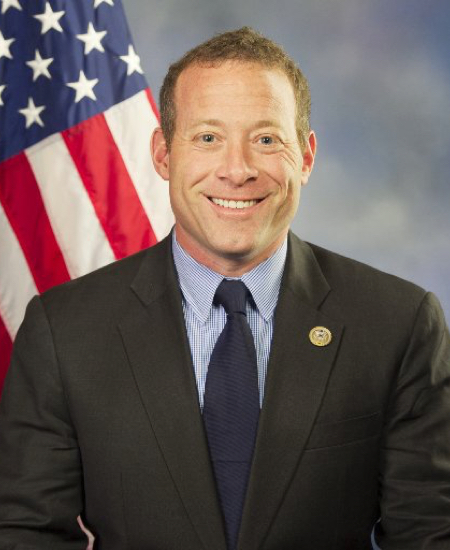
Authors/Sponsors: Rep. Greg Steube (and Rep. Susie Lee, Rep. Josh Gottheimer as co-sponsors)
Committee: Energy and Commerce
Effective date: 180 days after enactment
Purpose and main aim
- To amend section 495 of the Public Health Service Act to require inspections of foreign laboratories conducting biomedical and behavioral research that receive U.S. federal funding, ensuring compliance with U.S. animal welfare requirements.
- The bill establishes a systematic, ongoing foreign-inspection regime tied to eligibility for NIH and other national research institute funding.
Key provisions and changes
1) New requirement for foreign laboratories receiving U.S. federal funds
- Any non-U.S. laboratory that receives federal funds to perform research involving animals and is eligible for grants, contracts, or cooperative agreements administered by the National Institutes of Health (NIH) or other national research institutes must undergo quarterly inspections.
- The inspections assess compliance with the animal welfare requirements under the Public Health Service Act (and related regulations).
2) Inspection process and standards
- The Secretary of Health and Human Services, in consultation with foreign regulatory authorities and international organizations, must establish a quarterly inspection process for foreign labs that hold an Animal Welfare Assurance (as defined in 42 CFR 9.2).
- Inspections evaluate:
- Establishment and operation of animal care committees
- Review and evaluation of animal care and treatment
- Proper record-keeping and reporting procedures
3) Certification of compliance and public access
- After each quarterly inspection, labs found compliant receive a certification of compliance.
- Certifications of compliance issued must be maintained by the Office of Laboratory Animal Welfare and be publicly accessible alongside current Animal Welfare Assurances.
- Labs not in compliance must be given a reasonable opportunity to take corrective action.
4) Non-compliance consequences
- If a foreign facility remains non-compliant and corrective action is not taken, the Secretary may suspend or revoke the applicable grant, contract, or cooperative agreement for animal research, as determined appropriate by the NIH Director, and in accordance with existing procedures.
5) Role of inspecting authority and international coordination
- The Secretary (in consultation with the NIH Director) will designate the appropriate authority to conduct quarterly inspections and issue certifications.
- The Secretary and NIH Director must coordinate with foreign authorities and may enter into agreements with foreign governments to facilitate implementation, while respecting sovereignty and law.
6) Coordination and sovereignty
- The bill emphasizes cooperation with foreign regulatory bodies and mentions entering into agreements as needed, balancing U.S. oversight with respect for foreign laws.
Who is affected
- Foreign laboratories outside the United States that receive U.S. federal funds for animal research conducted under NIH or related national research institute grants/contracts.
- U.S. funding agencies (e.g., NIH) that administer animal research grants, contracts, or cooperative agreements.
- The Office of Laboratory Animal Welfare (OLAW), which would maintain certifications and publicly accessible information.
- Potential foreign regulatory bodies through formal coordination agreements established under the act.
Potential impact
- Strengthened oversight of animal welfare in international research settings funded by U.S. federal dollars.
- Increased transparency of foreign facilities’ animal welfare status via public certifications.
- Possible expansion of compliance costs and administrative requirements for international labs receiving U.S. funding.
- Movement toward harmonization of international animal welfare practices with U.S. standards, subject to foreign sovereignty and regulatory alignment.
Notes
- The bill is titled the "Worldwide Animal Testing Compliance and Harmonization Act" (WATCH Act).
- It creates a structured, quarterly inspection regime for foreign labs tied to eligibility for NIH funding.
- Public access to compliance certifications aims to inform stakeholders and maintain accountability.