WeVote

Bill

Bill

HF 1617

Voting system testing improved.

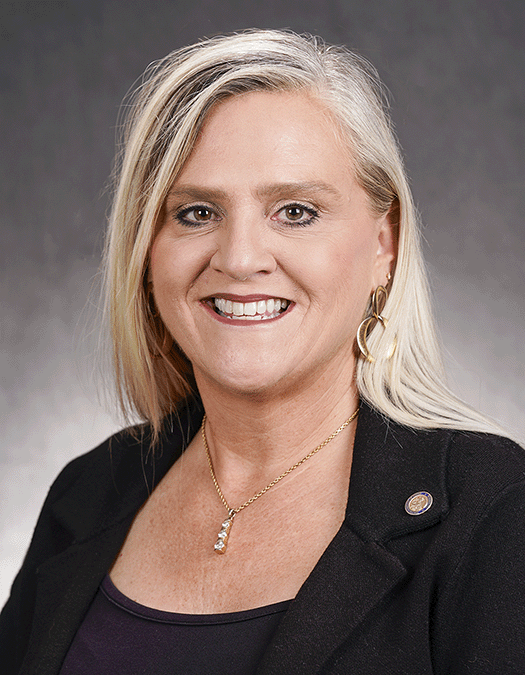
2025-2026 Regular Session Introduced by Pam Altendorf and 2 co-sponsors

The bill strengthens and standardizes testing of voting systems to improve accuracy, security, and transparency before deployment.

Author added Roach
0
WeVote Research Nonpartisan
Bill Summary · HF 1617

Summary: HF 1617 (2025-2026) – Minnesota

Title

Voting system testing improved

Purpose and intent

HF 1617 seeks to enhance the testing of voting systems in Minnesota. The bill appears to aim at strengthening the accuracy, reliability, and integrity of election technology through more robust testing processes, procedures, and oversight. The overarching goal is to reduce voting-system failures or vulnerabilities by ensuring testing is thorough, timely, and consistent with specified standards.

Key provisions and changes (proposed)

  • Enhancement of testing standards for voting systems: The bill introduces or expands requirements for testing voting equipment and software before deployment or use in elections. This may include more stringent acceptance testing, performance benchmarks, or conformity with recognized standards.

  • Testing timelines and sequencing: Provisions may set or adjust deadlines for testing activities, ensuring that testing is completed within a defined election cycle timeline to avoid delays in implementation or certification.

  • Oversight and accountability: The bill could establish or modify the roles of state agencies or election officials responsible for conducting, supervising, and auditing voting-system testing. This may involve reporting requirements or periodic review of testing results.

  • Documentation and transparency: Requirements for documentation of testing procedures, results, and any remedial actions could be included to improve auditability and public confidence.

  • Interoperability and security considerations: Provisions may address compatibility with existing election infrastructure and security controls, ensuring that tested systems meet specified cybersecurity criteria.

  • Standards alignment: The bill may reference state, federal, or industry standards (e.g., VVSG-like benchmarks or state-adopted criteria) to guide testing practices.

Who or what would be affected

  • Election officials and government entities responsible for selecting, certifying, and deploying voting systems in Minnesota.
  • Voting system vendors and manufacturers whose equipment and software must undergo prescribed testing prior to use.
  • Election administration and testing staff tasked with performing tests, documenting results, and ensuring compliance with new requirements.
  • Voter operations and election administration could experience changes in the timing of system readiness and potential improvements in system reliability.

Procedural and timeline aspects

  • Legislative status: Introduced and referred to the committee on Elections, Finance, and Government Operations as of February 27, 2025. Subsequent actions in 2026 include adding authors, indicating active consideration.
  • Sponsor and support: Additional co-sponsors include Pam Altendorf, Drew Roach, and Jeff Backer, signaling bipartisan interest in tightening voting-system testing.
  • Effective date and implementation: Specific dates for when testing requirements take effect are not provided in the summary. The bill would typically specify an effective date and any phase-in period for regulators and vendors.

Potential impacts and considerations

  • Positive impacts: Improved confidence in election technology, reduced risk of undiscovered defects, and clearer accountability for testing processes.
  • Challenges: Potential increases in cost and time for testing and certification; need for adequate resources for state agencies to administer enhanced testing protocols.
  • Public transparency: Documentation and reporting requirements can bolster public trust if implemented with accessible reporting.

If you’d like, I can tailor this summary to include anticipated fiscal implications, define the exact testing standards referenced (if the bill text provides them), or provide a comparison with existing Minnesota election-system testing requirements.


Compiled from official sources — confirm details with the bill’s official record.

Sign in to ask a question.