

WeVote

Bill

Bill

HR 7467

Virginia’s Law

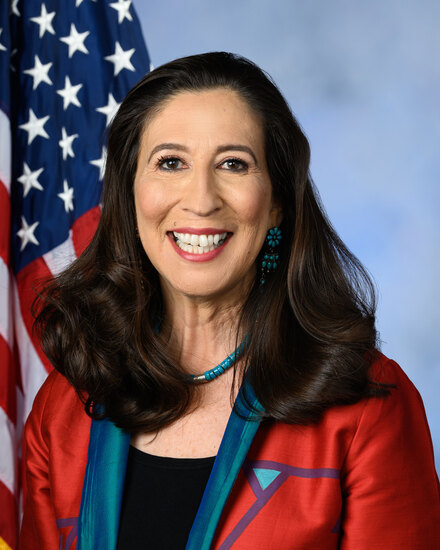
119th Congress Introduced by Teresa Leger Fernandez and 3 co-sponsors

The bill creates federal civil remedies allowing victims of sexual abuse and trafficking to sue perpetrators (and certain beneficiaries) for damages, with extended or no time limit

Introduced in House
0
WeVote Research Nonpartisan
Bill Summary · HR 7467

Bill overview

  • Bill: HR 7467 (Virginia’s Law)
  • Session: 119th Congress, 2nd Session
  • Introduced: February 10, 2026 by Rep. Leger Fernandez
  • Status: Referred to the House Committee on the Judiciary
  • Co-sponsors: Teresa Leger Fernandez, Jamie Raskin, Suhas Subramanyam, Pramila Jayapal

Main purpose and intent

  • The bill aims to expand civil remedies for certain crimes by creating new civil causes of action and removing statute of limitations constraints in specified cases.
  • It intends to provide a mechanism for victims to sue perpetrators (and certain others who financially benefit from the wrongdoing) in federal court, independent of, or in addition to, criminal prosecutions.
  • The title “Virginia’s Law” signals a model that could be adopted or influence policy regarding civil accountability for violent crimes, including sexual violence and trafficking-related offenses.

Key provisions and changes

  1. Civil remedy for sexual abuse (Chapter 109A, 18 U.S.C.)

    • New § 2249: Civil remedy
      • Victims may sue the perpetrator (and others who knowingly benefit or assist in the wrongdoing) in federal district court with jurisdiction over related criminal prosecutions.
      • Eligible damages: actual damages and reasonable attorney fees.
      • Stay of civil action: Any civil action is stayed while a related criminal action is pending.
      • Filing window: Generally, actions must be commenced within the later of 10 years after the cause of action arose or 10 years after the victim reaches 18 if the victim was a minor at the time of the offense. Exceptions: No time limit for actions involving violations of sections 2241, 2242, or 2243 (which pertain to certain sexual offenses).
  2. Civil remedy for transportation for illegal sexual activity and related crimes (Chapter 117, 18 U.S.C.)

    • New § 2430: Civil remedy
      • Victims may sue the perpetrator (and others who knowingly benefit) in federal court with jurisdiction over related criminal prosecutions.
      • Damages: damages and reasonable attorney fees.
      • Stay of civil action: Civil actions must be stayed during the pendency of a related criminal action.
      • Filing window: Generally, within the later of 10 years after the cause of action arose or 10 years after the victim reaches 18, with an exception for certain trafficking-related offenses (sections 2421-2423).
  3. Elimination of the federal statute of limitations for certain offenses (Chapter 1595, 18 U.S.C.)

    • Section 1595(a) is amended to allow civil actions in any district court with jurisdiction over related criminal conduct.
    • Section 1595(c) is rewritten to delete the time-bar for civil actions related to the offenses of 1589, 1590, and 1591 (which cover forced labor, trafficking, and related crimes).
  4. Applicability and look-back period

    • The act applies to claims as of enactment date or arising after enactment, with a one-year look-back period for covered actions.
    • Covered actions include civil actions under the new sections (2249, 2430) and civil actions under 18 U.S.C. § 1595 relating to the listed offenses that were previously barred by 1595(c).
    • The one-year window allows actions that were time-barred under prior law to be filed within a one-year period after enactment, including actions dismissed before enactment on time-bar grounds.

Who/what would be affected

  • Victims of sexual abuse, trafficking, or related crimes who seek civil damages against perpetrators and potentially parties who knowingly benefited from the crime.
  • Defendants would include individuals who committed the offense and any co-conspirators or beneficiaries involved in financial or material support of the crime.
  • The civil litigation would be in federal district courts with jurisdiction over related criminal prosecutions.

Procedural and timeline considerations

  • Civil actions would be stayed during the pendency of any related criminal case.
  • Typical filing window: later of 10 years after the action accrued or 10 years after the victim turns 18 (minor victims).
  • For certain offenses (e.g., 2241-2243; trafficking-related offenses 2421-2423) there would be no statute of limitations, allowing potentially endless liability in civil court.
  • The act includes a one-year retroactive look-back period for covered actions, enabling previously time-barred claims to be filed within that window.
  • The act would amend the statutory table of sections to add the new civil remedy provisions.

Potential impact and considerations

  • Increased avenues for victims to obtain civil remedies, including damages and attorneys’ fees, even when criminal prosecutions may be difficult or ongoing.
  • The stay provision ensures coordination between civil and criminal cases to avoid conflicting proceedings and duplicative efforts.
  • The removal or extension of time limits for certain offenses could significantly broaden exposure for defendants and may have implications for evidence preservation and witness availability.
  • As a federal bill, it would set national standards for civil remedies related to sexual abuse, human trafficking, and related crimes, potentially influencing state laws and policy discussions.

Compiled from official sources — confirm details with the bill’s official record.

Sign in to ask a question.