Bill

BILL โ€ข US SENATE

S 4500

VICTIM Act of 2026

119th Congress

Establish a federal grant program to boost homicide and firearm-violence clearance rates through enhanced investigators, tech, training, and victim support with safeguards.

Introduced in Senate
0
0
Bill Summary ยท S 4500

Overview

  • Bill: S. 4500, the Violent Incident Clearance and Technological Investigative Methods Act of 2026 (VICTIM Act of 2026)
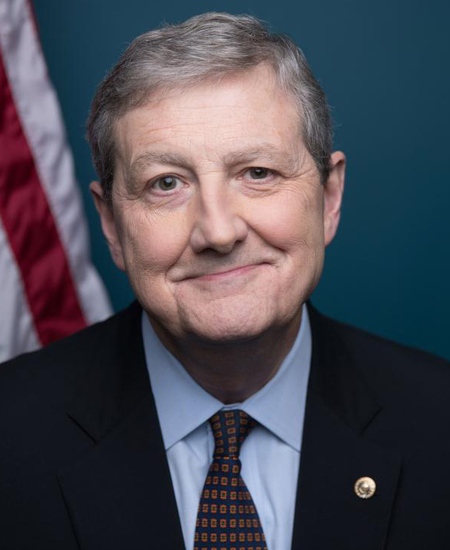
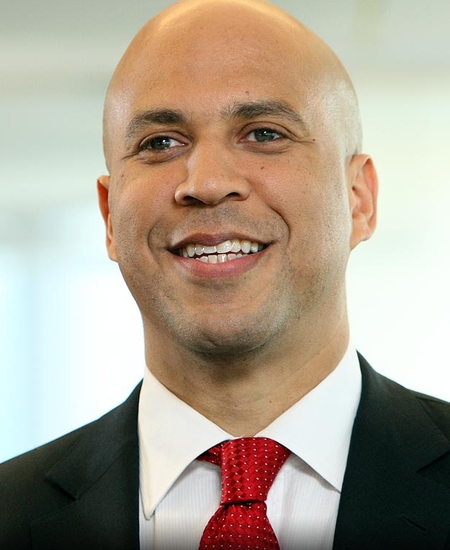
  • Sponsor: Sen. Kennedy (joined by Sen. Booker); introduced May 12, 2026
  • Purpose: Direct the Attorney General to establish a grant program to improve clearance rates for homicides and firearm-related violent crimes using enhanced investigative methods and technology, while strengthening victim support and civil rights protections.

Main purpose and intent

  • Create a federal grant program administered by the Office of Community Oriented Policing Services (COPS) to help State, Tribal, and local law enforcement agencies establish, implement, and supervise violent incident clearance and technological investigative methods.
  • Prioritize improving clearance rates for homicides and firearm-related violent crimes.
  • Ensure funds are used to supplement (not replace) existing federal and non-federal resources.

Key provisions and changes

  • Definitions (Section 2):
    • Clarification of terms such as clearance by arrest, clearance by exception, and clearance rate.
    • Eligible entity: a State, Tribal, or local law enforcement agency or group of such agencies.
    • Rural is defined as non-metropolitan statistical areas.
  • Grant program (b):
    • Establishment within 180 days of enactment.
    • Eligible entities apply with project descriptions outlining how funds will be used.
    • Selection criteria focus on plans to improve clearance rates for homicides and firearm-related violent crimes; criteria must also ensure geographic distribution (rural and urban balance).
  • Eligible uses (b)(4):
    • Hiring and training personnel for homicide and firearm-crime investigations.
    • Retention of current investigators.
    • Evidence collection, processing, and forensic testing; upgrading equipment and technology.
    • Data analysis of violent crime trends; GVPA or similar research methodologies.
    • Development of policies to safeguard civil rights and civil liberties during investigations and testing.
    • Victim support programs (emergency needs, such as food, housing, travel) and trauma-informed services.
    • Training on trauma-informed interviewing; language and disability access for victims and families.
    • Best practices for internal coordination, performance metrics, community relations, and interagency collaboration.
  • Reporting and oversight (e):
    • Grant recipients must annually report on personnel, training, technology, costs, and effectiveness, including clearance data, victim service usage, and civil rights protections.
    • If multiple agencies collaborate on a single clearance, only the initiating agency reports the clearance.
    • Inspector General audits required; recipients with unresolved audit findings may be excluded from funding in subsequent year.
  • Evaluation (h):
    • National Institute of Justice to evaluate practices and victim services every two years; findings reported to Congress.
  • Streamlined application process (i):
    • The Attorney General to study barriers to streamlined applications and present a plan within 60 days to allow a grant application, in practice, to be completed in not more than 2 hours.
  • Geographic and tribal/rural focus (j, k):
    • Criteria to distribute funds widely across geography and agency size.
    • Minimum allocations: at least 5% of program funds for Tribal entities and at least 5% for rural law enforcement agencies.
  • Appropriations (k):
    • Authorized funding: $60 million per fiscal year from 2027 through 2031.

Who is affected

  • Eligible entities: State, Tribal, and local law enforcement agencies (including joint or multi-agency groups).
  • Beneficiaries include homicide and firearm-crime victims and their families, who receive enhanced access to supportive services.
  • Rural and tribal communities receive dedicated funding allocations to promote equitable distribution.

Timelines and procedural aspects

  • Grant program must be established within 180 days after enactment.
  • Annual reporting to continue through fiscal year 2032.
  • NIJ evaluation due within 2 years of enactment and every two years thereafter, with Congress briefed within 30 days of each evaluation.
  • Streamlined application plan due within 60 days of enactment.

Potential impact

  • Aims to raise clearance rates for homicide and firearm violence through enhanced personnel, training, technology, and coordinated practices.
  • Emphasizes victim support, civil rights protections, and trauma-informed approaches.
  • Creates accountability via audits, performance metrics, and NIJ evaluations, with explicit anti-fraud and transparency measures.

Hi! I'm your AI assistant for S 4500. I can help you understand its provisions, impacts, and answer any questions.

Key Provisions Impacts Timeline
Sign in to chat

Start the Conversation

Be the first to share your thoughts on this petition. Your voice matters!

Share your opinion above