

WeVote

Bill

Bill

S 4809

Venezuela Democratic Transition Act

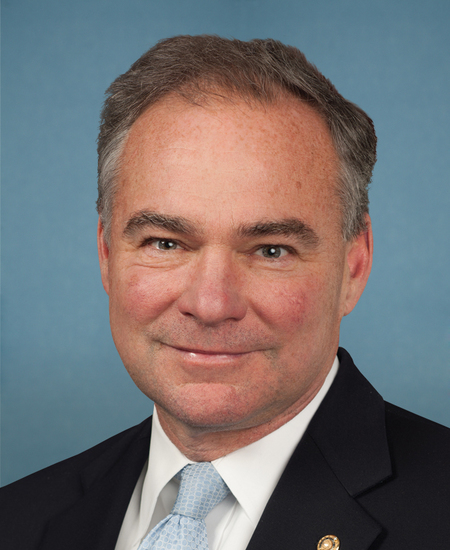
119th Congress Introduced by Tim Kaine

The bill aims to promote a free, fair 2026 Venezuelan election by enacting a U.S. strategy and sanctions to support democracy and hold human rights violators accountable.

Introduced in Senate
0
WeVote Research Nonpartisan
Bill Summary · S 4809

Overview

S. 4809, the Venezuela Democratic Transition Act, introduced June 17, 2026 by Senator Kaine, would require the Secretary of State to develop a strategy to support free and fair elections in Venezuela and to impose sanctions on individuals responsible for gross human rights violations in Venezuela. The bill also sets forth definitions, reporting duties, and potential waivers related to sanctions, with the aim of advancing a democratic transition in Venezuela and ensuring international engagement is aligned with Venezuela’s opposition and humanitarian needs.

Purpose and intent

  • Promote free, fair, and transparent presidential elections in Venezuela in 2026 with full opposition participation.
  • Restore democracy and the rule of law in Venezuela and end the Maduro-Rodriguez regime’s usurpation of presidential authorities.
  • Support political prisoners’ release and ensure humanitarian assistance reaches the Venezuelan people.
  • Condition or shape international energy and other engagements with Venezuela through consultation with the democratic opposition.
  • Establish a structured, transparent U.S. government strategy and ongoing congressional oversight for democratic transition efforts.

Key provisions and changes

  • Short title: The act may be cited as the Venezuela Democratic Transition Act.
  • Findings and sense of Congress:
    • Acknowledges past Venezuelan elections (2020, 2025) as fraudulent and the 2024 presidential election as illegitimate; Maduro regime criticized for repression.
    • Declares the sense of Congress to recognize Edmundo González Urrutia as legitimate President-elect, support the democratic opposition, facilitate a 2026 free and fair election, and ensure energy agreements are with the democratic opposition in mind.
  • Definitions:
    • Clarifies terms for use throughout the bill (e.g., United States person, Venezuelan person, gross violations of internationally recognized human rights, appropriate congressional committees, etc.).
  • Strategy for free and fair elections (Section 4):
    • Secretary of State must develop and submit a strategy updating the 2020 State Department Framework for Venezuela.
    • Strategy must use all diplomatic tools to:
    • Facilitate a 2026 presidential election compliant with international standards.
    • Undo Maduro-Rodríguez regime’s control of presidential powers.
    • Free political prisoners and ensure humanitarian aid delivery.
    • Outline benchmarks for a democratic transition and assess Venezuelan government institutions, detention facilities, and repression laws.
    • Include next steps for international sanctions coordination, closure of torture centers, military respect for election results, institutional reform mechanisms, safe return of opposition leaders (including Maria Cordina Machado), and transitional justice pathways.
    • Require transparency with monthly reporting to the appropriate committees, including monitoring energy-related negotiations and progress on democratic benchmarks.
  • Sanctions for human rights violations (Section 5):
    • Establishes sanctions on Venezuelan individuals complicit in gross human rights violations.
    • Sanctions can include:
    • Blocking property under the International Emergency Economic Powers Act (IEEPA).
    • Inadmissibility for entry, visa/documentation denial, and other immigration restrictions for designated individuals.
    • Exceptions:
    • Exemption for the importation of goods (goods defined broadly to exclude materials like technical data).
    • Compliance with UN Headquarters Agreement and law enforcement activities.
    • Exemption for intelligence activities under existing authorities.
    • Waivers:
    • National security waiver requires presidential determination and a report to Congress.
    • Humanitarian waiver allows exemptions for agricultural commodities, food, medicine, medical devices, and humanitarian assistance, and related transactions.
    • Democratic transition waiver possible upon certifications from the Secretary of State and the Secretary of the Treasury that a democratic transition has occurred.
  • Implementation and penalties:
    • President to implement sanctions authorities under IEEPA.
    • Violations carry penalties consistent with IEEPA provisions.

Who would be affected

  • Venezuelan individuals deemed complicit in gross human rights violations (sanctions target).
  • US persons and entities conducting transactions involving designated individuals or blocked property.
  • Venezuelan government officials, security forces, and entities involved in repression or detentions.
  • Foreign entities and individuals engaging with Venezuela in a way that may be restricted under sanctions.
  • Oppostion leaders and their supporters, humanitarian actors, and transitional justice initiatives, given the emphasis on safe return and accountability.
  • The broader international community and energy sector, due to the emphasis on energy negotiations and strategic diplomacy tied to democratic transition.

Procedural and timeline aspects

  • The bill requires the Secretary of State to develop and submit a comprehensive strategy to Congress, updating the 2020 Venezuela Framework.
  • Monthly reporting to appropriate congressional committees on transition progress and energy negotiations.
  • Sanctions would be imposed on designated individuals, with potential waivers available under specified conditions (national security, humanitarian purposes, or democratic transition certification).
  • Potential waivers and exemptions are codified, including humanitarian exemptions and allowances to comply with international obligations.
  • No specific date for the 2026 election is set beyond the objective of facilitating a free and fair presidential poll in 2026; strategy must lay out benchmarks and steps to achieve that goal.

Potential impact

  • Elevates U.S. policy emphasis on democratic legitimacy in Venezuela and aligns diplomacy with opposition-led democratic transition.
  • Creates a formal mechanism to sanction individuals responsible for egregious human rights abuses, potentially increasing accountability pressures on the Maduro regime.
  • Aims to improve humanitarian access and protection for political prisoners, while promoting safe conditions for opposition leadership to return or participate.
  • Ties U.S. engagement and potential energy cooperation to progress toward democratic benchmarks and credible elections.

Note: This summary reflects the bill’s text and stated objectives as introduced; actual legal effects depend on passage, any amendments, and subsequent regulatory actions.

Compiled from official sources — confirm details with the bill’s official record.

Sign in to ask a question.