

WeVote

Bill

Bill

HR 8712

Uyghur Forced Labor Disclosure Act

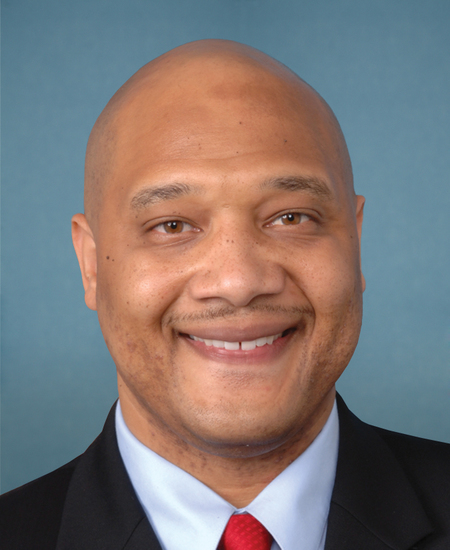
119th Congress Introduced by André Carson and 12 co-sponsors

The act requires issuers to disclose XUAR-related supply chain risks and forced labor details, with public filings, audits, and penalties for noncompliance.

Introduced in House
0
WeVote Research Nonpartisan
Bill Summary · HR 8712

Overview

  • Bill: H.R. 8712 (Uyghur Forced Labor Disclosure Act)
  • Session: 119th Congress, 2nd Session
  • Primary purpose: Amend the Securities Exchange Act of 1934 to require issuers to disclose information related to the Xinjiang Uyghur Autonomous Region (XUAR) and forced labor concerns in supply chains. The bill creates certification, disclosure, and reporting requirements for issuers seeking to register or file annual reports/proxy statements, with public availability of information and enhanced enforcement penalties for noncompliance. It includes repeal timelines tied to eight-year sunset or a presidential determination regarding China’s human rights conditions.

Section-by-section summary

Section 2 – Certification and documentation for securities registration (amendment to Section 12)

  • Timing: Rules to be issued within 180 days after enactment.
  • What issuers must do:
    • For registration applications with a national securities exchange, include specific documentation about XUAR-related supply chain risks and file both with the issuer and the Commission.
    • If a non-listed issuer merges with a listed issuer, file a report containing the same documentation.
    • For registration statements under subsection (g), include the specified documentation.
  • Documentation required (Paragraph (2)):
    • Whether the issuer or its affiliates source from the XUAR or use forced labor (as defined by the act, including the Public Law 117-78 regime and related lists).
    • Coverage includes goods produced in whole or in part by forced labor and those mined/produced via entities employing forced labor.
    • Identification of industries and product lists from the Xinjiang-related advisories and enforcement lists.
  • Transparency and verification:
    • Require disclosure of supply-chain links to specific facilities (names, addresses, sourcing quantities).
    • Require independent third-party verification of documentation prior to filing; confidentiality protections for auditors; measures to address reprisals against auditors.
  • Public access and penalties:
    • All documentation must be publicly accessible on the Commission’s website.
    • Penalties for noncompliance include: exchanges may not approve the registration; issuers cannot re-file for one year if misrepresentation or failure to comply occurs.
  • Definitions:
    • Forced labor: includes State-sponsored programs in XUAR targeting Uyghurs and other minorities, continued labor in the XUAR unless explicitly identified as non-forced by US authorities, and convict/indentured labor per existing U.S. law.
    • XUAR: Xinjiang Uyghur Autonomous Region.

Section 3 – Disclosure of activities relating to the XUAR (amendment to Section 13)

  • Timing: Rules to be issued within 180 days after enactment.
  • What must be disclosed in annual reports, Section 15(d) filings, and proxy statements under Section 14:
    • Whether the issuer or affiliates engaged to use or source goods from the XUAR or through forced labor (per the same lists and definitions in Section 2).
    • Whether there are supply-chain links to facilities employing forced labor.
    • For each implicated good or product:
    • Nature and extent of commercial activity.
    • Revenue and net profits attributable to the good.
    • Alternative sourcing options, while protecting proprietary information.
    • Measures taken to exercise due diligence on sourcing and chain of custody.
    • Details about related entities and facilities employing forced labor, including locations.
    • Whether the issuer or affiliates were involved in development or provision of surveillance goods/services used to facilitate gross human rights abuses.
  • Public availability:
    • Information disclosed under this section must be accessible on the Commission’s website.
  • Repeal mechanics:
    • Same sunset/reassessment trigger as Section 2 (8 years after enactment or presidential determination of ending mass violations).

Section 4 – Reports (oversight and evaluation)

  • SEC annual reporting:
    • Assess compliance with Section 12(m) (certification requirements) and Section 13(t) (disclosures) across applicable issuers, with findings reported to Congress.
  • GAO oversight:
    • Periodic evaluation by the Comptroller General on the effectiveness of SEC oversight regarding the certification requirements and disclosures.

Who is affected

  • Issuers registering securities with U.S. national exchanges.
  • Issuers filing annual reports (Section 13), proxy statements (Section 14), or registration statements (Section 12) that fall under the amended provisions.
  • Third-party auditors, subject to SEC-approved qualification and confidentiality provisions.
  • Public and investors, via publicly available disclosures on the SEC website.

Key implications and potential impact

  • Disclosure burden: Adds rigorous documentation and verification requirements about XUAR-linked supply chain risks and potential forced labor, including independent audits.
  • Transparency: Increases public visibility of supply-chain practices and potential human rights concerns for U.S. investors.
  • Compliance risk: Potential penalties for misrepresentation or failure to comply, including denial of registration and a one-year re-filing ban.
  • Sunset and geopolitical nuance: Provisions are tied to a sunset (eight years) or presidential determination about mass violations in China, creating a potential policy-driven expiration trigger.
  • Oversight: Establishes ongoing SEC and GAO oversight to monitor effectiveness of the new disclosures.

Timeline at a glance

  • 180 days after enactment: SEC to issue rules implementing 12(m) and 13(t) disclosures.
  • Ongoing: Annual SEC and GAO assessments and public reporting.
  • Sunset: Either eight years after enactment or presidential determination ending mass forced labor violations (whichever occurs first).

Compiled from official sources — confirm details with the bill’s official record.

Sign in to ask a question.