

WeVote

Bill

Bill

SB 3851

USE/OCC TX-EXEMPT PRESCRIPTION

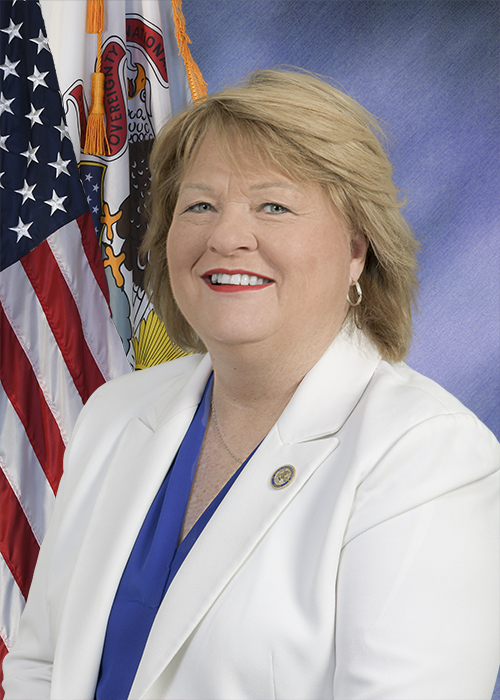
104th Regular Session Introduced by Terri Bryant and 8 co-sponsors

Exempts prescription cancer medicines and certain Class III cancer devices from sales/use taxes and increases LGDF share of state income taxes to local governments starting 2026.

Added as Co-Sponsor Sen. Dave Syverson
0
WeVote Research Nonpartisan
Bill Summary · SB 3851

Summary of SB3851 (104th General Assembly, Illinois)

Purpose and overall aim

  • Proposes targeted tax policy changes affecting multiple Illinois tax Acts (Use Tax Act, Service Use Tax Act, Service Occupation Tax Act, Retailers' Occupation Tax Act, and Illinois Income Tax Act).
  • Primary substantive changes:
    • Create an explicit exemption for prescription medicines and certain Class III medical devices used for cancer treatment when purchased with a prescription.
    • Reallocate and increase the share of net revenue from the individual and corporate income taxes deposited into the Local Government Distributive Fund (LGDF), effective July 1, 2026.

Key provisions

  1. Prescription medicines and Class III cancer-related devices (sales/use taxes)

    • Adds an exemption from tax (Use Tax Act, Service Use Tax Act, Service Occupation Tax Act, Retailers' Occupation Tax Act) for:
      • Prescription medicines.
      • Products classified as Class III medical devices by the U.S. FDA that are used for cancer treatment pursuant to a prescription.
      • Accessories and components related to those devices.
    • Also covers insulin, blood sugar testing materials, syringes, and needles used by diabetics (already referenced in the text as part of other exemptions, but SB3851 explicitly lists these in the context of cancer-related exemption language).
  2. Increase in LGDF deposits (Illinois Income Tax Act)

    • Alters the distribution formula for the Local Government Distributive Fund (LGDF), increasing the share of net revenue deposited into LGDF from the state General Revenue Fund:
      • Beginning July 1, 2026, LGDF deposits shall be:
      • 7.47% of the net revenue from taxes imposed on individuals, trusts, estates, and pass-through entities (for individuals-based taxes).
      • 7.85% of the net revenue from taxes imposed on corporations.
    • These changes follow prior multi-year glide paths that adjust LGDF shares over time; SB3851 specifies the July 1, 2026 effective date for the new percentages.

Affected parties and implications

  • Taxpayers receiving cancer-related medicines or devices on prescription:

    • Expectation of tax exemption for qualifying prescription medicines and Class III cancer-related devices and their accessories/components, potentially lowering out-of-pocket costs for patients.
  • Hospitals, clinics, and medical suppliers:

    • Providers and suppliers selling eligible prescription medicines and cancer treatment devices would no longer collect sales/use taxes on those qualifying items.
  • Local governments and municipalities:

    • LGDF is a significant revenue stream for local governments; increasing the LGDF share from state income taxes (beginning 2026) provides more funds to local governments for services.
  • State budget and administration:

    • The tax-exemption change and LGDF reallocation will affect state revenue streams and require administrative adjustments to ensure proper collection, exempt status, and transfers to LGDF.

Procedural/timeline notes

  • Effective date for both major changes:

    • Prescription-related exemption: Effective date not explicitly stated beyond the bill’s general effective-date framework; given sections show exemption language, it is intended to become operative as provided in the bill, with related Act amendments anticipated to take effect in 2025 or 2026 per surrounding Act schedules (the bill text references multiple sections with 2025 effective references for other exemptions; the document notes July 1, 2026 as the LGDF change date).
    • LGDF reallocation: Effective July 1, 2026.
  • The bill amends numerous sections across four acts (Use Tax Act, Service Use Tax Act, Service Occupation Tax Act, Retailers' Occupation Tax Act) and the Illinois Income Tax Act, as well as cross-referencing existing funds (Local Government Distributive Fund, Income Tax Refund Fund, Education Assistance Fund, Commitment to Human Services Fund, etc.) to reflect these changes.

Plain-language takeaway

SB3851 would:
- Make prescribed cancer-related medicines and certain Class III medical devices used for cancer treatment tax-exempt at the point of sale under Illinois sales/use taxes.
- Increase the portion of state income tax revenue earmarked for LGDF starting in 2026, directing more funds to local governments.
- Involve a broad set of technical amendments across multiple tax statutes to implement these changes.

Compiled from official sources — confirm details with the bill’s official record.

Sign in to ask a question.