

WeVote

Bill

Bill

HR 6562

United States Development Finance Corporation Effectiveness Act

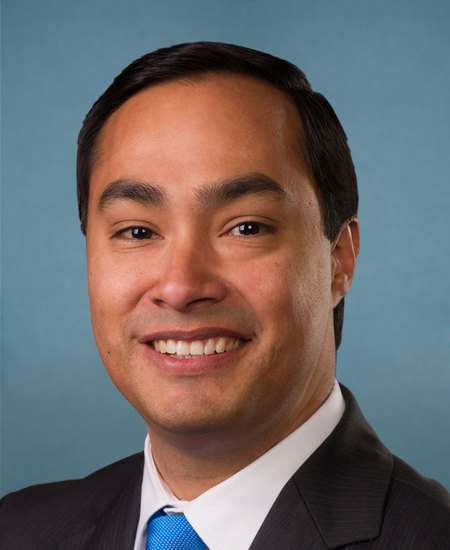
119th Congress Introduced by Joaquin Castro

Requires DFC reporting and a public, machine-readable project database to show how investments meet development goals, mobilize private capital, and manage risk by country.

Introduced in House
0
WeVote Research Nonpartisan
Bill Summary · HR 6562

Summary of H.R. 6562 — United States Development Finance Corporation Effectiveness Act

Overview

  • Bill: H.R. 6562
  • Title: United States Development Finance Corporation Effectiveness Act
  • Purpose: Amend the Better Utilization of Investments Leading to Development (BUILD) Act of 2018 to enhance the effectiveness, transparency, and accountability of the U.S. Development Finance Corporation (DFC).
  • Status: Introduced in the House on December 10, 2025; referred to the House Committee on Foreign Affairs.
  • Congress: 119th, 1st Session

Purpose and Policy Intent

  • Strengthen the strategic alignment of DFC investments with U.S. foreign policy and development objectives.
  • Increase transparency around portfolio health, development impact, and mobilization of private capital.
  • Encourage risk-taking in priority development sectors and in less developed countries, while providing clearer performance metrics and accountability.

Key Provisions

Section 2. Annual Report (amendments to 22 U.S.C. 9653)

  • Modifies existing annual reporting requirements by adding new reporting elements and clarifying the nature of the narrative.
  • Adds explicit inclusion of:

    • U.S. strategic, foreign policy, and development objectives supported by the DFC.
    • Development objectives advanced by DFC investments.
  • Expands subsection (b) reporting, requiring:

    • (A) Assessment of desired development impact and strategic outcomes for projects, and whether metrics/goals are being met, including post-project outcomes when practicable.
    • (B) Evaluation of whether projects supporting strategic outcomes achieve those objectives over the duration of support and beyond.
    • (C) Valuation and analysis of private sector assets mobilized relative to DFC support and other public sector support.
    • (D) Total private capital projected to be mobilized in the given year, with detail on lenders/investors and instruments.
    • (E) Total private capital actually mobilized by year-end, with the same level of instrument/investor detail, plus comparison to projections.
    • (F) Breakdowns by income level of recipient countries (less developed, middle/advancing, high income) for both the current year and averaged over the last five fiscal years.
    • (G) Details on maximum contingent liabilities authorized to be outstanding under section 1433, by country category.
    • (H) DFC’s risk appetite for projects in less developed countries and in sectors critical to development but with potentially lower financial returns.
    • (I) CEO incentives to encourage calculated risk-taking, including performance reviews and rewards tied to development outcomes.
  • Adds new subsection (4) under (b) to the extent practicable: recommendations for measures to enhance the strategic goals of projects, enabling adaptation to changing circumstances.

Section 3. Publicly Available Project Information (amendments to 22 U.S.C. 9654)

  • Requires a user-friendly, publicly accessible, machine-readable project database.
  • Database must include:
    • Project information as described in the annual report (section 1443).
    • Project-level performance metrics.
    • Description of development impact, including anticipated impact prior to initiation and assessed impact during and after completion.

What Would Change (Impact)

  • Enhanced Transparency:

    • Publicly accessible project data and metrics, enabling independent assessment of DFC’s performance.
    • Expanded annual reporting with detailed, narrative development impact explanations and post-project outcomes.
  • Stronger Performance Metrics:

    • More explicit linkage between investments and strategic development objectives.
    • Clear assessment of whether private capital mobilization and development outcomes meet stated goals.
  • Portfolio and Risk Analysis:

    • Greater emphasis on risk appetite in less developed countries and in high-impact, development-focused sectors.
    • Analysis of contingent liabilities and their distribution by country income level.
  • Incentives and Management Practices:

    • Potentially new or expanded CEO incentives tied to development outcomes and performance reviews.

Who Is Affected

  • United States Development Finance Corporation (DFC) and its leadership.
  • U.S. policymakers and Congress, through enhanced reporting requirements.
  • Private lenders and investors participating in DFC-backed projects (due to more detailed disclosure and performance expectations).
  • Recipient countries and project entities receiving DFC support (through focus on development impact and risk profiles).
  • The general public, via a new, publicly available project database.

Timeline and Procedural Notes

  • Introduced: December 10, 2025.
  • Referral: House Committee on Foreign Affairs.
  • No further actions listed in the provided text; status will depend on committee consideration and potential floor action.

This bill seeks to sharpen the effectiveness, accountability, and transparency of U.S. development finance through richer reporting, clearer development impact assessment, and a publicly accessible data platform.

Compiled from official sources — confirm details with the bill’s official record.

Sign in to ask a question.