

WeVote

Bill

Bill

HR 10050

Uniform Vehicle Safety Standards Act of 2026

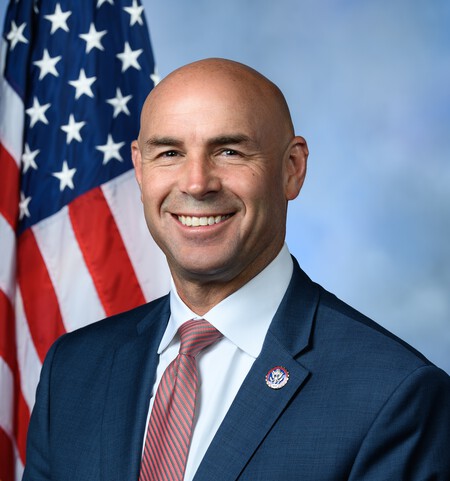
119th Congress Introduced by Jake Ellzey and 3 co-sponsors

The bill preempts common-law claims by exempting liability for failure to exceed federal vehicle safety standards, shielding manufacturers from such lawsuits.

Introduced in House
0
WeVote Research Nonpartisan
Bill Summary · HR 10050

Overview

Uniform Vehicle Safety Standards Act of 2026 (HR 10050)

  • Purpose: Amend title 49 United States Code to prohibit liability at common law for failure to manufacture or equip a motor vehicle to an extent that exceeds applicable motor vehicle safety standards.
  • Introduced: August 6, 2026 in the House by Rep. Flood (for himself and colleagues Obernolte, Ellzey, Rouzer).
  • Status: Referred to the House Committee on Energy and Commerce.

What the bill does

  • Creates a uniform bar on common-law liability tied to vehicle safety standards.
  • Specifically amends Section 30103 of title 49, U.S. Code, subsection (e), to:
    • Replace a current provision that “does not exempt” liability with language that the safety standards “shall exempt” common-law claims for failure to exceed the standard.
    • Add a parenthetical ensuring that liability for failure to exceed such standard is exempt from common-law liability.

Key provisions

  • Scope of protection: Precludes common-law liability claims based on a vehicle’s alleged failure to meet or exceed federal safety standards.
  • Standards referenced: Relies on motor vehicle safety standards promulgated by the National Highway Traffic Safety Administration (NHTSA) under Chapter 301 of Title 49.
  • Uniform application: Aims to ensure consistent application of safety standards across interstate commerce by limiting state common-law theories of liability that would diverge from federal standards.
  • Civil liability impact: Shifts the accountability framework away from common-law negligence theories that seek to impose liability for not surpassing federally mandated standards.

Affected parties

  • Vehicle manufacturers and equipers: Shielded from certain common-law liability claims related to not exceeding federal safety standards.
  • Plaintiffs in civil actions: Potentially restricted from pursuing common-law claims that hinge on alleged failure to exceed or meet safety standards, where federal standards are involved.
  • Interstate commerce: Intended to reduce regulatory uncertainty and burdens created by conflicting state-level common-law claims.

Procedural and timeline aspects

  • Introduction date: August 6, 2026.
  • Next steps: Referral to the House Committee on Energy and Commerce; potential future hearings, amendments, and floor consideration.
  • There is no enacted timeline or effective date specified in the text provided; typical follow-through would involve committee markup and potential floor passage before moving to the Senate.

Notes on interpretation and impact

  • The bill strengthens federal preemption-like effect for safety standards by explicitly exempting common-law liability when a party’s claim concerns failure to exceed federal safety standards.
  • The practical effect may reduce litigation risk for manufacturers and suppliers in states where plaintiffs previously invoked state common-law negligence or product-liability theories to challenge compliance with federal standards.
  • The scope is limited to claims related to “failure to exceed” safety standards; it does not necessarily bar other forms of liability or claims unrelated to compliance with federal standards.

Compiled from official sources — confirm details with the bill’s official record.

Sign in to ask a question.