

WeVote

Bill

Bill

HR 6435

Transportation Megaprojects Accountability and Oversight Act

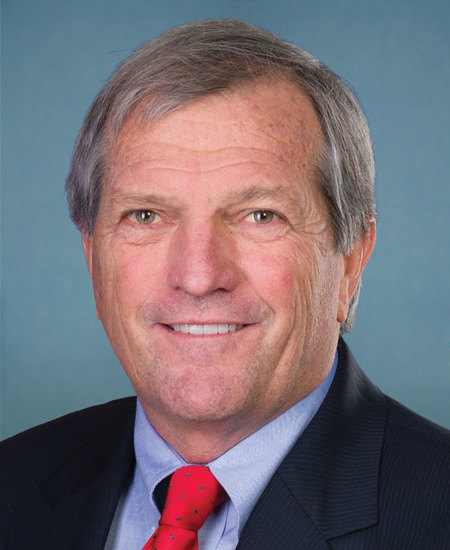
119th Congress Introduced by Mark DeSaulnier and 1 co-sponsor

Requires risk management plans, independent peer reviews, and public disclosure for megaprojects $2.5B+, boosting oversight and transparency.

Introduced in House
0
WeVote Research Nonpartisan
Bill Summary · HR 6435

Summary of H.R. 6435 — Transportation Megaprojects Accountability and Oversight Act

Overview

  • Bill number: H.R. 6435
  • Title: Transportation Megaprojects Accountability and Oversight Act
  • Status: Introduced in the House (December 4, 2025)
  • Primary sponsors: Mr. Desaulnier, with Mr. Lamalfa
  • Purpose: Amend title 23, United States Code, to impose additional requirements for large transportation projects with estimated costs of $2.5 billion or more, enhancing risk management, oversight, transparency, and independent review.

Key Provisions

1) Megaproject Definition

  • Defines a megaproject as a transportation project with an estimated total cost of at least $2,500,000,000, plus other projects identified by the Secretary.

2) Comprehensive Risk Management Plan (for Megaprojects)

  • For megaprojects authorized for construction, recipients must submit a comprehensive risk management plan to the Secretary.
  • Plan must include:
    • How risks that could cause cost overruns, delays, reduced quality, or diminished benefits will be identified, quantified, and monitored.
    • Mechanisms the recipient will use to track identified risks.
    • A plan to control those risks.
    • Assurances that the recipient will regularly submit updated cost estimates and maintain financial reserves for known and unknown risks.

3) Peer Review Group

  • Recipients must establish a peer review group for the megaproject within 90 days after authorizing construction (minimum of 5 members, including at least 1 with project management experience).
  • Secretary must establish guidelines within 180 days after enactment for:
    • Recruitment/selection criteria and public disclosure of members.
    • Conflict-of-interest prohibitions (no member may have a financial interest in the megaproject).
  • The peer review group must:
    • Meet annually until project completion.
    • Review scope, schedule, and budget at least within 90 days of establishment and after any significant change.
    • Submit a report of its findings to the Secretary, Congress, and the recipient.

4) Transparency and Public Disclosure

  • Recipients must publish on their internet site:
    • The name, license number, and license type of each engineer supervising an aspect of the megaproject.
    • The peer review report described above, within 90 days after submission of the report.

5) Transportation Megaprojects Committee (NRB/Academy Involvement)

  • The Transportation Research Board (a National Academy of Sciences body) will convene a Transportation Megaprojects Committee within 180 days after enactment.
  • Duties of the committee include:
    • Literature review of megaproject studies and relevant foreign experiences (notably the UK and France).
    • Identification of recurring problems with megaprojects and potential approaches to address them in the U.S. context.
    • Recommendations on changes to DOT’s approach to megaproject funding and oversight.
    • Possible mandate that each megaproject identify a peer group to work with project management and report to the Inspector General and Congress.
  • Reporting: A final report with findings and recommendations must be submitted within 3 years after enactment to the Secretary, the House Committee on Transportation and Infrastructure, and the Senate Committee on Environment and Public Works.

Applicability and Timeline

  • Effective applicability: The amendments apply to megaprojects authorized for construction on or after a date that is one year after enactment.
  • Key timelines:
    • Within 180 days: DOT/Board to establish a Transportation Megaprojects Committee framework.
    • Within 90 days after megaproject authorization for construction: Recipient must form a peer review group.
    • Within 90 days of establishing the peer group or any major scope/schedule/budget change: Peer group must review the megaproject.
    • Annual peer reviews through project completion; reports due to the Secretary, Congress, and the recipient.
    • Within 3 years: Committee to deliver a comprehensive report with findings and recommendations.

Who Is Affected

  • Federal-aid megaproject recipients (e.g., state DOTs, local governments, and other entities receiving Federal financial assistance for megaprojects).
  • Engineering professionals supervising megaproject elements (license information must be disclosed publicly).
  • Peer review group members and the Secretary of Transportation.
  • Congress (receives periodic and final oversight reports).
  • Transportation Research Board and related National Academy bodies for the committee’s work.

Practical Impact

  • Higher upfront and ongoing risk management expectations for very large projects.
  • Increased transparency through public disclosure of engineer credentials and peer review findings.
  • Structured, independent review via peer groups to inform decision-making and potential course corrections.
  • Enhanced national-level study and guidance on megaproject oversight and funding practices.

Compiled from official sources — confirm details with the bill’s official record.

Sign in to ask a question.