

WeVote

Bill

Bill

HB 6115

Transportation: funds; road funding allocation for a local unit of government hosting an international airport; modify. Amends secs. 12 & 13 of 1951 PA 51 (MCL 247.622 & 247.663)

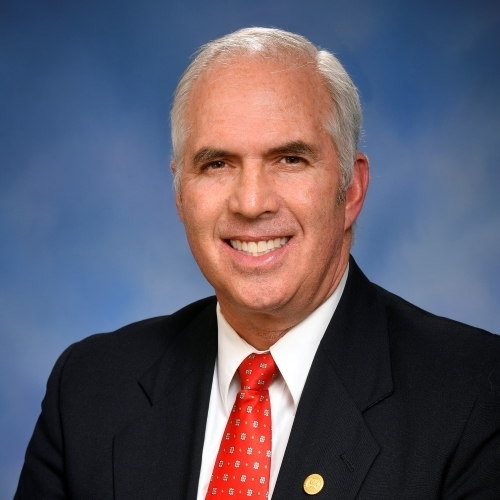
2025-2026 Regular Session Introduced by Jim DeSana and 6 co-sponsors

The bill boosts funding for airport-hosting townships and municipalities by multiplying their population base for allocations and directing the extra to airport-related transportat

bill electronically reproduced 06/18/2026
0
WeVote Research Nonpartisan
Bill Summary · HB 6115

Overview

HB 6115 would amend Michigan’s road funding framework (1951 PA 51) by adjusting how funds from the Michigan Transportation Fund are allocated to local units of government hosting an international airport, as well as other related provisions. The bill specifically targets sections 12 and 13 of the act (MCL 247.662 and 247.663) and introduces new or modified rules for distributing funds to counties, towns, and municipalities, with a particular emphasis on airport-related impacts.

Main purpose and intent

  • Modernize and refine how transportation funds are distributed to counties, cities, and villages.
  • Create or adjust mechanisms to direct funding toward transportation infrastructure within airport-hosting townships and municipalities, particularly where international airports generate substantial passenger traffic.
  • Promote efficient use of funds through incentives (e.g., statewide purchasing pools) and protections (e.g., asset management planning, performance audits).

Key provisions and changes

General funding distribution (Sec. 12 and related subsections)

  • The department and the County Road Association must jointly develop incentives for counties to form statewide purchasing pools to use transportation funds more efficiently.
  • County road commissions receive funding through a structured set of allocations, with specific percentages earmarked for different purposes:
    • Up to $10,000 per year per county for reimbursement of licensed professional engineer costs.
    • Deductions from distributions (1% for snow removal; 4% for urban-area mileage adjustments) allocated back to counties or for specific purposes.
    • A substantial portion (75% of the remainder) dedicated to preserving and expanding county primary road systems, allocated using formulas based on county mileage, population, and proportional shares.
    • The balance allocated to county local road systems with a split based on mileage and population.
  • Priorities for expenditures emphasize preservation, construction, acquisition of rights of way, and debt service, with explicit sequencing (e.g., debt service takes precedence in some cases).

Capital and debt considerations

  • Funds may be used for debt service on bonds and loans, subject to certifications that debt service will not exceed defined limits (e.g., 10% of the money returned for purposes other than preservation).
  • Provisions exist to ensure compliance with bond and debt-related obligations, including certifications by the county road commission.

Asset management and audit requirements

  • Beginning to be governed by asset management plans; after approval of such plans in counties or cities, distributions must be expended toward asset-management-related goals and purposes.
  • The department may conduct financial and performance audits of how funds are used, with standards aligned to GAO guidelines. Cities, villages, and counties must provide records and may face waivers or adjustments if noncompliance is identified.

Special provisions for airport-hosting townships and municipalities (new multiplier effects)

  • If a township (within a county) contains part of an international airport with more than 2,000,000 enplaned passengers in the most recent FAA-reported year, two changes apply:
    • The township’s population base for funding calculations is multiplied by 3 (subsection 25(a)).
    • Any funding increases from this multiplier must be spent on transportation infrastructure within the airport-bearing township (road construction, resurfacing, maintenance, traffic signals, drainage, etc.).
    • Townships receiving increased funding must report annually to the department and the Legislature detailing how the funds were used, including road condition ratings on primary airport access routes and estimated traffic on those routes.
  • The Department must certify which townships qualify for the multiplier by February 1 each year (Sec. 12(25)(d)).

City and village funding framework (Sec. 13)

  • Distributions to cities and villages follow a parallel framework with a 0.7% annual withholding to help reimburse snow-removal costs in eligible counties.
  • Funds for cities and villages are allocated 75% to preservation/construction of the major street system and 25% to the local street system, with priority rules for debt service and previously pledged obligations.
  • Special rules exist for newly incorporated municipalities, asset management, warranty programs for pavement, and restrictions on admin expenses (not more than 10% per year).
  • For airport-related areas within a city or village, a similar multiplier and reporting requirement apply if the municipality has an international airport with ≥2,000,000 enplaned passengers, increasing population for funding calculations and directing funds toward airport-adjacent transportation infrastructure.
  • Departments must certify qualifying cities/villages for the multiplier by February 1 each year.

Who would be affected

  • County road commissions and county treasurers (primary administrative and funding recipients).
  • Cities and villages (major and local street system funding recipients).
  • Local governments hosting international airports (townships, cities, and villages) that meet FAA passenger thresholds could receive enhanced funding via population multipliers.
  • Departments of Treasury and Transportation, which manage allocations, audits, asset-management requirements, and reporting.
  • Residents and road users in counties, cities, and villages who benefit from improved preservation, maintenance, and airport-adjacent infrastructure.

Procedural and timeline notes

  • Effective procedure revolves around annual distributions and certifications:
    • Department certifies eligible airport-adjacent townships and municipalities by February 1 each year (Sec. 12(25), Sec. 13(17)).
    • Annual withholding and distribution cycles occur primarily in February (for cities/villages) and November/December (for counties), with ongoing monthly distributions for counties.
  • Asset management plans must be approved to unlock certain funding obligations (Sec. 12(23), Sec. 13(16)).
  • Warranty programs for pavement are to be developed and implemented by specified deadlines (2016-2017 timeframe referenced in the text; actual timing depends on when the bill becomes law).
  • Performance audits and reporting requirements are integrated, with potential waivers or adjustments if compliance would affect eligibility for federal funds.

Note: The bill includes many technical, legacy provisions from the existing transportation statute, with targeted enhancements for airport-related funding and stronger emphasis on asset management and accountability.

Compiled from official sources — confirm details with the bill’s official record.

Sign in to ask a question.