Summary of measures labeled “HR 1109” (federal and Arkansas state documents included in filing)
Note: the provided materials include two distinct measures that share the same bill/resolution number (HR 1109). Below are concise, separate summaries of each measure so readers can distinguish their purpose, provisions, and status.
1) Federal: H.R. 1109 — “Litigation Transparency Act of 2025” (Introduced Feb 7, 2025)
Purpose
- To require disclosure and judicial oversight of third‑party beneficiaries who have a contingent financial interest in the outcome of civil litigation.
Key provisions
- Adds a new Section 1660 to chapter 111 of title 28, U.S. Code (federal rules of civil procedure area).
- Disclosure requirement: any party (or counsel of record) must disclose in writing to the court and all named parties the identity of any person (other than counsel) who has a right to receive payment or other thing of value that is contingent on the outcome of the civil action (or group of related actions).
- Production requirement: the party must produce for inspection and copying any agreement creating that contingent right (including ancillary documents), unless the court or parties stipulate otherwise.
- Timing: disclosures due no later than the later of (a) 10 days after execution of the contingent‑payment agreement, or (b) the time of filing the action.
- Duty to correct/supplement: required to timely supplement or correct disclosures if they become materially incomplete or incorrect, or as ordered by the court.
- Exceptions: disclosure/production requirements do not apply when the contingent payment right is solely (1) repayment of principal of a loan; (2) repayment of principal plus interest not exceeding the higher of 7% or two times the annual average 30‑year Treasury yield (Board of Governors of the Federal Reserve System) for the year preceding the agreement; or (3) reimbursement of attorney’s fees.
- Applicability: applies to any civil action pending on or commenced after enactment.
Who is affected
- Federal civil litigants, their counsel, and third parties who fund litigation or stand to receive contingent payments (e.g., funders, backers).
- Courts and opposing parties (who will receive agreements and identities).
Procedural/status
- Introduced in the U.S. House Feb 7, 2025; referred to House Committee on the Judiciary.
- Sponsors: Rep. Darrell Issa (primary) with cosponsors including Mike Collins, Scott Fitzgerald, and others listed in the filing.
Potential impacts
- Increases transparency about litigation funding and third‑party interests.
- May affect litigation finance industry practices, settlement negotiations, and judicial management of cases.
- Could raise confidentiality and privilege considerations (courts retain ability to limit disclosure).
2) Arkansas House Resolution 1109 — Urging HUD and the U.S. Interagency Council on Homelessness (Filed Apr 4, 2025; Read and Adopted)
Purpose
- A state resolution urging the U.S. Department of Housing and Urban Development (HUD) and the U.S. Interagency Council on Homelessness (USICH) to change federal rules and practices affecting homelessness programs so Arkansas and local communities have more flexibility and reduced federal administrative burden.
Key requests made to HUD and USICH (resolution text)
- Repeal the Continuum of Care Interim Rule to increase state/local flexibility.
- Amend the Homeless Management Information System (HMIS) to streamline reporting and reduce administrative burdens.
- Eliminate HUD performance standards and measures to allow locally set performance indicators.
- Rescind federal Housing First policy mandates to permit varied housing approaches.
- Reduce federal standards in the Emergency Solutions Grants (ESG) program to better align with local priorities.
- Repeal the 2009 McKinney‑Vento Act amendments cited as increasing federal mandates.
- Reduce HUD’s role in Permanent Supportive Housing to allow local implementation flexibility.
- Shift HUD funding toward block grants to give states greater discretion over allocation.
Who is affected
- Arkansas state agencies, local governments, and service providers that administer homelessness/housing programs; people experiencing homelessness in Arkansas.
- Federal program administration and HUD/USICH policy frameworks if these requests were adopted.
Procedural/status (Arkansas)
- Filed April 4, 2025; read and adopted (date entries show READ AND ADOPTED and later actions indicating adoption and distribution to federal agencies and state officials).
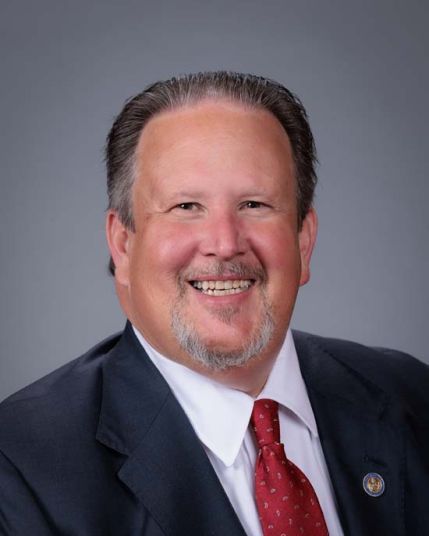
- Sponsored in the Arkansas House by Representative Beaty Jr.; the filing requests copies be sent to HUD, USICH, Arkansas’s congressional delegation, and the Governor.
Potential impacts and considerations
- If federal agencies acted on the resolution’s requests, Arkansas could gain programmatic flexibility, reduced reporting burdens, and more discretion over funds; service models might diversify beyond Housing First/permanent supportive housing.
- Conversely, reducing federal standards and reporting could affect program accountability, data availability, comparability across jurisdictions, and federal oversight tied to funding requirements.
- The resolution itself is advisory/expressive (urging federal action) and does not change federal law by itself.
If you want, I can:
- Produce a side‑by‑side comparison of the two measures’ likely effects on state and federal actors, or
- Draft an executive summary tailored for a HUD/USICH briefing packet summarizing the Arkansas resolution’s requests and implications.