

WeVote

Bill

Bill

HR 9112

CREATOR Act

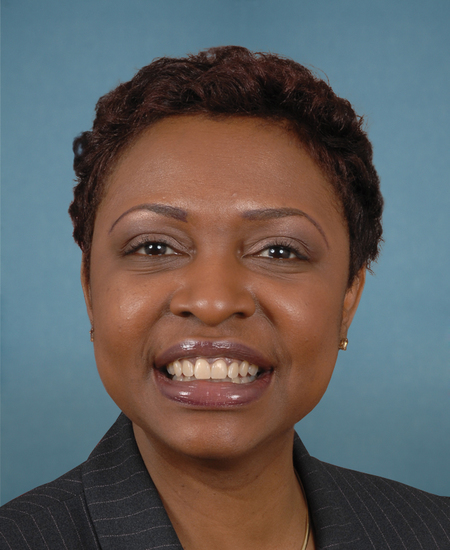
119th Congress Introduced by Yvette Clarke and 4 co-sponsors

The bill would give visual artists an exclusive right to authorize or prohibit the commercial use of works that stylistically impersonate them across interstate commerce.

Introduced in House
0
WeVote Research Nonpartisan
Bill Summary · HR 9112

Overview

HR 9112 is a bill introduced in the U.S. House of Representatives that seeks to grant visual artists an exclusive right to authorize the commercial exploitation or public distribution in or affecting interstate commerce of a stylistic impersonation of that visual artist. In other words, it aims to protect artists from third parties using a style closely resembling a particular artist’s distinctive style in ways that generate commercial value, by giving the artist control over such “stylistic impersonations.”

Main purpose and intent

  • Establish an exclusive right for visual artists to authorize the commercial exploitation or public distribution of works that stylistically impersonate the artist.
  • Target activities that reproduce or imitate an artist’s distinctive style in a manner that is commercially exploited or distributed across state lines or internationally via interstate commerce.
  • Provide a legal mechanism for artists to control and monetize stylistic impersonations, analogous to rights currently applicable to the use of a specific artwork or its likeness.

Key provisions and changes

  • Creation of a new exclusive right for visual artists related to their stylistic impersonations.
  • Authorization rights: The artist would have the exclusive authority to permit or prohibit the commercial use or interstate/public distribution of works that mimic their stylistic characteristics.
  • Scope of coverage: Applies to stylistic impersonations that are sufficiently distinctive to be identified with the specific artist, and that involve interstate commerce or activities affecting interstate commerce.
  • Enforcement and remedies: The bill would presumably provide legal avenues to enforce the exclusive right (though precise enforcement mechanisms and remedies would be defined in the text; not specified in the summary provided).
  • Definitions: The bill would define what constitutes a “stylistic impersonation,” “visual artist,” and the nature of “commercial exploitation” and “public distribution” within the interstate context.

Who or what would be affected

  • Visual artists: Especially those with distinctive artistic styles that could be imitated.
  • Importantly, creators, publishers, galleries, manufacturers, collectors, and distributors who might engage in or facilitate the distribution or sale of works that imitate an artist’s style.
  • Potentially platforms and intermediaries involved in distributing or selling stylistic-impersonation works in interstate commerce.
  • Legal entities representing artists (e.g., unions, associations) that may seek to protect members’ stylistic rights.

Procedural and timeline aspects

  • Introduced in the House and referred to the Committee on the Judiciary (June 2, 2026).
  • House sponsor(s): Valerie Foushee, Beth Van Duyne, and Yvette Clarke are listed as co-sponsors.
  • As of the provided information, there is no enacted text available, no floor consideration timeline, or committee reports available. The bill would proceed through standard committee processes (hearings, markups) and, if advanced, to the House floor for debate and a vote. Any passage in the Senate or potential reconciliation would follow separate proceedings.

Potential implications

  • Positive: Stronger legal recourse for visual artists against unauthorized commercial use of their stylistic signatures; clearer standards for what constitutes a stylistic impersonation.
  • Controversies or challenges: Definitional clarity (how to distinguish a generic influence from a targeted impersonation), potential conflicts with free expression, artistic reinterpretation, and the permissible scope of stylistic adaptation.
  • Economic impact: May affect licensing practices, use of stylistic likenesses in merchandise, exhibitions, and digital platforms; could influence contracts between artists, licensors, and distributors.

If you’d like, I can compare this bill to existing copyright or related rights regimes (e.g., rights in visual works, personality rights, or moral rights) or provide a proposed section-by-section outline based on typical legislative structure.

Compiled from official sources — confirm details with the bill’s official record.

Sign in to ask a question.