

WeVote

Bill

Bill

HR 9195

Alice Cogswell and Anne Sullivan Macy Act

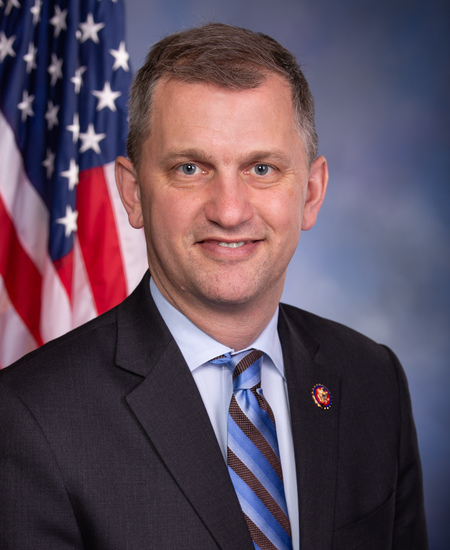
119th Congress Introduced by Sean Casten and 28 co-sponsors

The bill aims to ensure high-quality, language-accessible special education and early intervention for children who are blind, visually impaired, deaf, hard of hearing, or deafblin

Introduced in House
0
WeVote Research Nonpartisan
Bill Summary · HR 9195

Overview

  • Bill: HR 9195 (Alice Cogswell and Anne Sullivan Macy Act)
  • Session: 119th Congress
  • Purpose: To promote and ensure high-quality special education and related services for children and youth who are blind or visually impaired, deaf, hard of hearing, deafdisabled, or deafblind. The bill emphasizes instructional methodologies that meet these students’ unique language and learning needs, strengthens accountability, and supports specialized personnel and national resources to advance research, training, and service delivery.

Main goals and intended outcomes

  • Improve delivery of high-quality specialized education and related services tailored to sensory disabilities.
  • Ensure robust early intervention services for deaf, hard of hearing, deafdisabled, and deafblind children and their families.
  • Expand research and the development of effective assessments and instructional methodologies aligned with students’ language needs (including American Sign Language and Braille).
  • Enhance accountability and monitoring of services, including data collection and reporting on deaf, hard of hearing, deafdisabled, and deafblind populations.
  • Support the development of a national center (Anne Sullivan Macy Center) focused on visual disability and educational excellence, along with broader national activities to improve services.

Key provisions by title

Title I – Deaf, Hard of Hearing, or Deafdisabled

  • Identify and serve all children who are deaf, hard of hearing, or deafdisabled, regardless of how they are classified.
  • Strengthen state plans, evaluations, IEP team processes, and consideration of special factors to ensure language access (including ASL) and direct language opportunities without excessive reliance on interpreters.
  • Data collection enhancements to track deaf, hard of hearing, and deafdisabled students, including ASL access and use of language pathways.
  • Addendum requirements for state plans to address evaluation, staffing, and ASL access; require access to ASL unless waived by parents.
  • Evaluations and IEP content updated to require language proficiency in the child’s primary language (ASL and/or written language) and explicit planning for service delivery timelines and locations.
  • Enhanced monitoring by the Secretary of Education to ensure compliance with revised provisions.
  • Continuum of placement options obligation for states (regular classes, specialized classes, specialized schools, home instruction, hospital/institutional settings) with supplementary services.
  • Technical assistance for parents and educators, and a policy guidance refresh at least every 5 years.

Subtitle B – Early Intervention for Deaf, Hard of Hearing, or Deafdisabled Infants/Toddlers

  • Require qualified personnel, natural environments, and content standards for early intervention.
  • Content plans must address language development goals and direct language access (ASL and spoken language as appropriate).

Subtitle C – National Activities (Deaf, Hard of Hearing, Deafdisabled)

  • Establish a National Center on Deafness/Related Disabilities to coordinate research, education, and practitioner development.
  • Create a consortium of entities (professional associations, national organizations, higher ed institutions) to administer the center for at least 5 years, with an advisory board and governance structure.
  • Activities include research funding, continuing education for teachers and related staff, enrichment projects for students, and collaboration with other national centers (e.g., Helen Keller National Center, National Center on Deaf-Blindness).

Authorized funding and administration

  • The Anne Sullivan Macy Center would receive appropriations as necessary, with carryover provisions and alignment with other DOE research centers.
  • Coordination with other programs (e.g., National Center for Special Education Research) and avoidance of duplication with existing programs for the blind and deafblind populations.
  • Intellectual property and deliverables owned by the U.S. Government, with collaboration terms defined for consortium members.

Title II – Blindness or Visual Impairment (and Title III – Deafblind)

  • Identifies and services children who are blind or visually impaired, regardless of classification, ensuring evaluation and instruction aligned with Braille, assistive technology, orientation and mobility, self-determination, and other functional skills.
  • Data reporting additions to count blindness/visual impairment within other disability categories.
  • State plan addenda focusing on blind/visual-impaired students, ensuring qualified personnel, and access to instruction in Braille and visual/low-vision accommodations.
  • Evaluations for blind/visually impaired students to include language and literacy, Braille proficiency, assistive technology, orientation and mobility, self-sufficiency, independent living, career education, etc.
  • Consideration of special factors for blindness/visual impairment in IEPs, including Braille instruction unless waived.
  • Expanded guidance and personnel development to ensure sufficient teachers of the visually impaired, early intervention specialists, and interveners (including those who support deafblind children).

Anne Sullivan Macy Center on Visual Disability and Educational Excellence (Title II Subtitle C)

  • Establishment of a national center to advance curricula, professional development, enrichment projects, higher-education programs, and research related to visual disabilities.
  • Structure includes a governing consortium, advisory board, and funding mechanisms, with partnerships among professional associations, national organizations, higher education, and other entities.

Who is affected

  • Students who are deaf, hard of hearing, deafdisabled, deafblind, blind, or visually impaired.
  • State education agencies, local educational agencies, and schools serving these student populations.
  • Teachers of the deaf, teachers of the visually impaired, orientation and mobility specialists, interveners, and early intervention staff.
  • Families of affected children, who would receive enhanced technical assistance and guidance.
  • National centers and consortia involved in research, training, and service delivery for sensory disabilities.

Procedural and timeline considerations

  • Addendum timelines: States would file plan addenda within 2 years after enactment detailing compliance with deaf/deafblind provisions.
  • Policy guidance refreshes: Updated guidance within 1 year after enactment and at least every 5 years thereafter.
  • Center establishment: The Anne Sullivan Macy Center would require long-term contracting with a consortium (minimum 5-year duration) and ongoing DOE oversight.
  • Monitoring: Enhanced monitoring by the Secretary to track compliance with revised sections (612(a)(3), 612(a)(5), 614(b), and 614(d)(3)(B)) and report findings to Congress on a regular basis.
  • Data collection: State and federal data systems would add new categories and metrics to count and report on blind/visual impairment and deafblind populations, including access to ASL and other languages.
  • Coordination: The bill envisions coordination with existing centers (Helen Keller Center, National Center on Deaf-Blindness) and adherence to general IDEA frameworks while expanding scope.

Note: The bill is expansive, combining targeted revisions to IDEA provisions for sensory disabilities with the creation of a national center and enhanced emphasis on language access, early intervention, and ongoing professional development.

Compiled from official sources — confirm details with the bill’s official record.

Sign in to ask a question.