

WeVote

Bill

Bill

HJR 3

To eliminate the offices of Treasurer and Auditor, replacing their duties and responsibilities under a new Office of Comptroller.

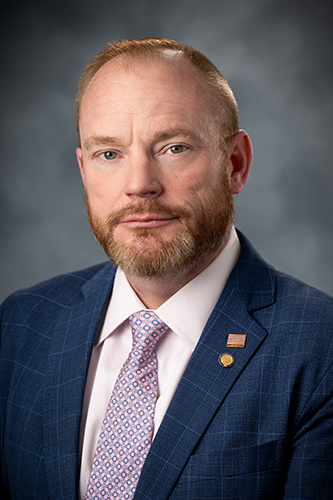
2025 Regular Session Introduced by Chris Anders and 3 co-sponsors

HJR 3 would amend NM Constitution to grant residents a right to a healthy environment and require state and local governments to protect it, as trustees.

To House Government Organization
0
WeVote Research Nonpartisan
Bill Summary · HJR 3

Summary — HJR 3 (Environmental Rights, New Mexico)

Status: Action postponed indefinitely (as of 2025-06-03).
Introduced: February 21, 2025.
Type: House Joint Resolution (constitutional amendment) — would place a proposed amendment to Article 2 of the New Mexico Constitution on the ballot (voter approval required).

Purpose / Intent

HJR 3 would add an explicit set of environmental rights to the New Mexico Constitution and declare the state and its political subdivisions trustees of natural resources. The resolution’s stated aim is to recognize and protect rights to a healthy environment for present and future generations, and to provide a constitutional basis for enforcement against governmental entities.

Key provisions (proposed constitutional text — paraphrased)

  • Recognizes that the people of New Mexico have a right to:
    • clean and healthy air, water, soil and environments;
    • healthy native flora, fauna and ecosystems;
    • a safe climate; and
    • preservation of the natural, cultural, scenic and healthful qualities of the environment.
  • Requires the state to protect these rights equitably for all people regardless of race, ethnicity, tribal affiliation, gender, socioeconomics or geography.
  • Declares that the state, counties and municipalities shall serve as trustees of New Mexico’s natural resources and shall conserve, protect and maintain these resources for the benefit of all people, including present and future generations.
  • States the provisions are self-executing, prohibits monetary damages for violations, and makes the section enforceable against the state, counties and municipalities.

Who would be affected

  • State agencies (e.g., Environment Department, Energy & Natural Resources, State Land Office) — potential new duties, litigation exposure and interagency conflicts over authority.
  • Counties and municipalities — enforcement could require corrective infrastructure, permitting changes, or other remedial actions.
  • Permit holders, resource users, private landowners and businesses — potential changes to permitting, operations, and liability exposure.
  • The electorate — would decide final adoption (proposed placement on next general election ballot — November 2026 — or a special election).

Fiscal implications (estimated and uncertain)

  • Ballot/administrative costs: Secretary of State printing/publication estimated at $35,000–$50,000 (one-time).
  • Legal and agency costs: uncertain and potentially significant
    • A single additional attorney estimated ≈ $150,000/year.
    • New Mexico Environment Department (NMED) estimated ~$1,000,000 to address "confusion" from conflicts with existing regulations.
    • Legislative Finance Committee analysis cites a range: lower-bound legal/corrective costs (minimal) to an upper-bound scenario involving litigation-driven reforms analogous to prior statewide remedies (examples cited include reforms that have increased state spending by large amounts). The LFC memo indicates potential legal cost upper estimates in the low millions and corrective action exposure could be very large (the analysis references comparators up to $1.6 billion in annual programmatic increases in other contexts).
  • Local governments may face uninsured liabilities or procurement/insurance complications.

Significant legal / policy issues

  • The amendment is self-executing and enforceable against government, but it explicitly bars monetary damages — this combination raises questions about available remedies and how courts would implement or order corrective actions.
  • The resolution does not designate a specific implementing agency or vest explicit statutory duties in the Legislature, creating potential statutory/regulatory conflicts and uncertainty over enforcement and scope.
  • New Mexico Attorney General and some agencies have raised concerns about vagueness and conflicts with existing statutory authority (e.g., pollution-control statutes).

Procedure / Timeline

  • HJR 3 must be approved by voters to become effective. The resolution provides for placement on the next general election ballot (November 2026) or a special election called for that purpose.
  • Current legislative status: action postponed indefinitely (committee-level holding as noted).

Compiled from official sources — confirm details with the bill’s official record.

Sign in to ask a question.