

WeVote

Bill

Bill

HR 8360

To authorize the Secretary of Education, in collaboration with the Secretary of Health and Human Services, to establish an interagency advisory Commission on Advancing Restorative Justice in Elementary and Secondary Education, and for other purposes.

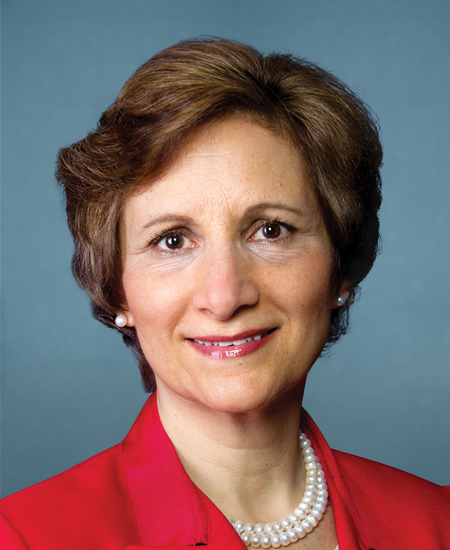
119th Congress Introduced by Suzanne Bonamici and 4 co-sponsors

Establish a federal interagency Commission (Education and HHS) to advance restorative justice in K-12, guiding national standards, funding, and data to reduce punitive discipline a

Introduced in House
0
WeVote Research Nonpartisan
Bill Summary · HR 8360

Summary of HR 8360 (113th? 119th Session) — Restorative Justice in Elementary and Secondary Education

Note: This summary reflects the bill as introduced: “To authorize the Secretary of Education, in collaboration with the Secretary of Health and Human Services, to establish an interagency advisory Commission on Advancing Restorative Justice in Elementary and Secondary Education, and for other purposes.” Action history shows referral to the House Committee on Education and Workforce and introduction date in April 2026. Co-sponsors include Suzanne Bonamici, Summer Lee, Rashida Tlaib, Terri Sewell, and Bonnie Watson Coleman.

1) Purpose and intent

  • The bill intends to authorize federal efforts to advance restorative justice (RJ) practices within elementary and secondary education settings.
  • It directs the establishment of an interagency advisory Commission on Advancing Restorative Justice in Elementary and Secondary Education, to be formed in partnership between the Department of Education (ED) and the Department of Health and Human Services (HHS).
  • Overall aim: promote equitable discipline approaches and reduce disproportionately punitive outcomes for students, with a focus on RJ as an alternative to exclusionary discipline in schools.

2) Key provisions and changes

  • Establishment of Interagency Advisory Commission
    • Creation of a federal advisory commission co-led or jointly staffed by the Department of Education and the Department of Health and Human Services.
    • Purpose of the Commission: provide guidance, coordination, and recommendations to advance RJ practices across K-12 settings.
  • Roles and responsibilities
    • Develop a national framework or set of best practices for implementing restorative justice in schools.
    • Identify metrics and data collection methods to assess the impact of RJ programs on student outcomes, disciplinary rates, and equity.
    • Coordinate cross-agency activities, including research, technical assistance, and professional development.
  • Collaboration with other stakeholders
    • Engage school districts, educators, students, families, community organizations, and experts in restorative practices.
    • Potentially issue reports, policy recommendations, and guidance for states and localities seeking to adopt RJ approaches.
  • Funding and implementation
    • The bill would authorize or facilitate activities and possibly funding streams (grants or cooperative agreements) to support RJ pilot programs, training, and evaluation.
  • Policy alignment
    • Aligns with efforts to reduce suspension and expulsion rates, address disproportionality in disciplinary actions, and promote safer school climates through restorative approaches.

3) Who or what would be affected

  • Primary beneficiaries
    • Students in elementary and secondary schools, particularly those who are traditionally subjected to exclusionary discipline.
    • Schools and school districts implementing or considering restorative justice models.
  • Institutions and programs
    • U.S. Department of Education (ED) and Department of Health and Human Services (HHS) would oversee and administer the interagency Commission and related activities.
    • Local educational agencies (LEAs), schools, educators, administrators, school-based mental health professionals, and community partners involved in RJ programming.
  • Data and reporting
    • Schools implementing RJ programs would contribute to data collection efforts for evaluation by the Commission.

4) Procedural and timeline aspects

  • Introduction and referral
    • Introduced in the House and referred to the Committee on Education and Workforce (April 16, 2026).
  • Legislative process
    • As a bill requesting establishment of a federal advisory Commission and related activities, it would proceed through committee consideration, potential amendments, and floor consideration.
  • Implementation timeline (typical, if enacted)
    • Setup: formation of the interagency Commission with specified membership and operating rules.
    • Initial guidance or framework: publication of a national RJ framework, best practices, and metrics within a defined period after enactment.
    • Ongoing activities: grant programs, training initiatives, pilot projects, and annual reports or updates to Congress.

This summary presents the bill’s intent to institutionalize restorative justice in K-12 through a federal interagency advisory Commission, emphasizing collaboration, guidance, and support for RJ adoption while addressing equity concerns in school discipline. If you’d like, I can tailor this to a particular audience (educators, policymakers, researchers) or provide a comparison with existing federal discipline or RJ initiatives.

Compiled from official sources — confirm details with the bill’s official record.

Sign in to ask a question.