

WeVote

Bill

Bill

HR 10032

To amend title 18, United States Code, to reform executive clemency.

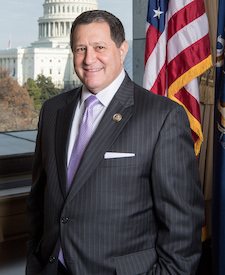
119th Congress Introduced by Joe Morelle

HR 10032 reforms executive clemency by standardizing submission, review, and decision criteria to boost transparency, fairness, and timeliness.

Introduced in House
0
WeVote Research Nonpartisan
Bill Summary · HR 10032

Overview

HR 10032 is a bill introduced in the 119th Congress that seeks to reform the executive clemency process under title 18 of the United States Code. The legislation aims to modify how clemency decisions are initiated, reviewed, and granted, with the intent of increasing transparency, accountability, and consistency in the exercise of presidential clemency powers.

Main purpose and intent

  • To reform the framework governing executive clemency, including how clemency requests are submitted, evaluated, and approved or denied.
  • To establish clearer criteria, processes, and timelines for clemency consideration to enhance fairness and public confidence in the clemency system.
  • To potentially provide additional oversight or procedural safeguards in the clemency review process.

Key provisions and changes (as outlined by the bill text)

  • Revisions to statutory language in title 18 addressing clemency procedures, including any required steps for public or official review of petitions.
  • Specifications regarding eligibility, submission requirements, and documentation for clemency petitions.
  • Procedures for the internal review and recommendation process within the executive branch (e.g., the Office of the Pardon Attorney or equivalent entity) and guidance on how clemency recommendations are transmitted to the President.
  • Establishment of timelines or deadlines for processing petitions and issuing determinations.
  • Possible criteria or standards to be considered in evaluating clemency requests (such as humanitarian grounds, risk to public safety, rehabilitation, sentence proportionality, etc.).
  • Provisions related to transparency, such as reporting requirements, public disclosures, or release of information about clemency decisions.
  • Any limitations, protections, or due process considerations for petitioners (e.g., rights to notice, opportunity to be heard, or to respond to information).

(Note: The summary reflects typical components of a clemency reform bill. The exact textual provisions may include additional or more specific mechanisms.)

Who/what would be affected

  • Individuals seeking executive clemency for federal offenses who submit petitions under title 18.
  • The executive branch agencies responsible for clemency review and recommendations (e.g., offices within the Department of Justice involved in clemency processing).
  • The President, who would continue to exercise clemency authority but under revised procedures and criteria.
  • Oversight and accountability mechanisms, potentially including Congress and any bodies established to monitor clemency activity.

Procedural and timeline aspects

  • The bill has been referred to the House Committee on the Judiciary for consideration, initiating committee review, potential amendments, and reporting to the full House.
  • Introduced and assigned to committee on the same day (2026-08-03), with a co-sponsor listed (Joe Morelle).
  • Any final enactment would require passage by both chambers of Congress and signature by the President, along with any potential changes during conference or further legislative action.
  • The bill may establish or modify deadlines for petition submission, agency responses, and clemency determinations, contributing to more predictable timelines.

Additional notes

  • Details such as exact numerical thresholds, specific procedural steps, and quantified timelines would be found in the full text of HR 10032. This summary reflects the bill’s stated aim to reform executive clemency and the typical structural elements such reforms include.
  • As the measure is in early-stage referral to a committee, its provisions may be subject to revision through committee markups and floor amendments.

Compiled from official sources — confirm details with the bill’s official record.

Sign in to ask a question.