

Summary of HR 8855 (119th Congress)
Purpose and intent
HR 8855 seeks to amend title 18 of the United States Code to establish nationwide recognition of concealed carry privileges for certain members of the United States Armed Forces. In practical terms, the bill aims to create a federal framework that would recognize and honor concealed carry permissions across state lines specifically for qualifying military personnel, aligning federal law with the intent of standardizing concealed carry rights for service members regardless of their state of residency or duty station.
Key provisions and changes
- Nationwide reciprocity for concealed carry: The bill would establish a nationwide standard that recognizes concealed carry permits or privileges for eligible members of the Armed Forces, regardless of state-specific permitting requirements, with the aim of facilitating carry rights across state lines.
- Eligibility criteria for service members: The legislation would define which military personnel qualify for the nationwide recognition. This typically involves active-duty service members or other specified categories within the Armed Forces who meet safety, training, and legal criteria established by the bill.
- Relation to existing state and federal law: The bill would modify or add to the applicable provisions of title 18 to provide a uniform federal framework for recognizing concealed carry privileges among service members, potentially superseding or coordinating with state-level concealed carry reciprocity rules for the defined group.
- Oversight and enforcement mechanisms: The text would delineate enforcement provisions, compliance expectations, and any relevant penalties for violations or misrepresentations related to concealed carry status under the new framework.
- Definitions and procedures: The bill would introduce definitions (e.g., what constitutes a “qualified service member,” what types of firearms or carry methods are covered) and procedures for validating eligibility and exercising concealed carry rights across jurisdictions.
Who would be affected
- Target population: Active-duty and/or other specified categories of members of the United States Armed Forces who meet the eligibility criteria outlined in the bill.
- Broader impact: Military personnel traveling, training, or stationed in different states could benefit from uniform recognition of their concealed carry privileges. States would be obligated to honor the federal framework for eligible service members, potentially reducing friction arising from differing state laws.
Procedural and timeline aspects
- Introduced and referred: The bill was introduced in the House and referred to the House Committee on the Judiciary on May 15, 2026.
- Next steps in process: After committee consideration, the bill would proceed to floor consideration, potential amendments, and, if passed, would move to the Senate for similar consideration. Enactment would require passage by both chambers and the president's signature, or other constitutional process if applicable.
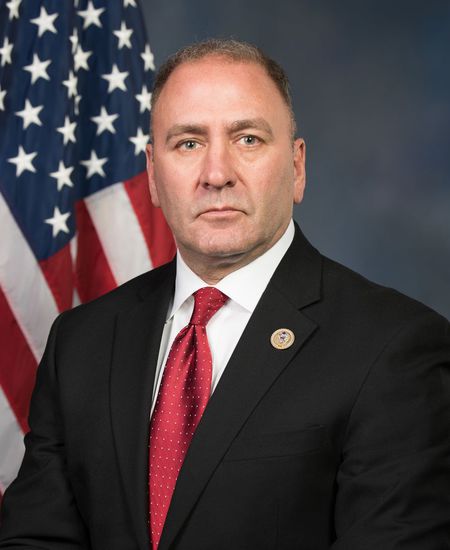
- Co-sponsors: The bill has at least two co-sponsors (Cory Mills and Clay Higgins), indicating bipartisan or cross-chamber support within the sponsoring chamber.
Potential impact and considerations
- Practical impact for service members: If enacted, eligible service members could carry concealed weapons across state lines in accordance with the federal framework, potentially improving mobility and safety for military personnel.
- State interaction: The bill interacts with existing state concealed carry laws and reciprocity schemes. States would implement the federal recognition for qualified service members while continuing to regulate civilian concealed carry outside the defined military eligibility.
- Public safety and training: The bill would likely rely on specified training, background checks, and eligibility standards for service members, with attention to safety and risk mitigation.
Note: This summary reflects the bill’s stated objectives and provisions as described in the available action history and bill text outlines. For precise statutory language, definitions, and any amendments considered during committee deliberations, reviewing the inserted text and committee report would be essential.
Start the Conversation
Be the first to share your thoughts on this petition. Your voice matters!