

WeVote

Bill

Bill

HR 2058

To amend the Workforce Innovation and Opportunity Act to define the term evidence-based.

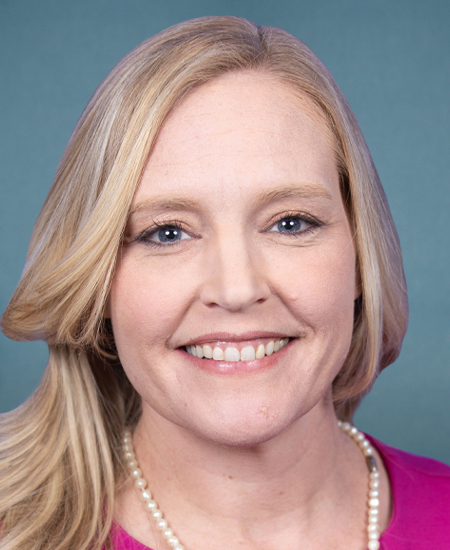
119th Congress Introduced by Erin Houchin and 2 co-sponsors

Defines evidence-based under WIOA and requires states to prioritize funding for such programs, report evidence levels, and pursue ongoing evaluation.

Introduced in House
0
WeVote Research Nonpartisan
Bill Summary · HR 2058

Summary: HR 2058 — To amend the Workforce Innovation and Opportunity Act to define the term “evidence-based”

Overview

HR 2058, introduced in the House on March 11, 2025, would define the term “evidence-based” for activities, services, strategies, interventions, or content of materials under the Workforce Innovation and Opportunity Act (WIOA). The bill aims to tie funding decisions and program descriptions to evidence standards and to require states to articulate how they prioritize evidence-based programs in statewide workforce development efforts. A companion bill is Senate S. 922.

What HR 2058 would do

  • Define “evidence-based” within WIOA, establishing specific thresholds based on study design and findings.
  • Require states to describe strategies prioritizing funding of evidence-based programs using funds for statewide workforce development activities (section 128(a)).
  • Adjust reporting/description requirements in WIOA to reflect the extent to which activities are evidence-based.

Key provisions and changes

New definition of “evidence-based” (Section 3, 29 U.S.C. 3102)

  • The term would cover:
    • (A) Evidence-based activity, service, strategy, or content of materials if there is a demonstrable statistically significant effect on participant or relevant outcomes based on:
    • (i) Strong evidence: at least 1 well-designed and well-implemented experimental study.
    • (ii) Moderate evidence: at least 1 well-designed and well-implemented quasi-experimental study.
    • (iii) Promising evidence: at least 1 well-designed and well-implemented correlational study with statistical controls for selection bias.
    • OR (B) Evidence-based rationale with ongoing evaluation:
    • (i) A rationale based on high-quality research findings or positive evaluations suggesting likely improvement in outcomes.
    • (ii) Ongoing efforts to examine effects of the activity, service, strategy, or intervention.

Amendments to Section 102(b)(1) (29 U.S.C. 3112(b)(1))

  • (1) In subparagraph (C): insert the extent to which activities are evidence-based after the phrase “of such activities.”
  • (2) In subparagraph (D): remove the trailing language “by striking and” (edits to streamline text).
  • (3) In subparagraph (E): remove the period and insert a semicolon and “and” (continuation/grammatical adjustment).
  • (4) Add new subparagraph (F): require a description of strategies the State will use to prioritize funding of evidence-based programs through statewide workforce development funds described in section 128(a).

Impact and who is affected

  • State Workforce Development Agencies: must evaluate and label activities as evidence-based and develop prioritization strategies for funding evidence-based programs.
  • Service providers and programs: may be required to meet stricter evidence criteria to qualify as evidence-based (or to demonstrate ongoing evaluation if relying on a broader rationale).
  • Recipients of WIOA funds: may need to incorporate design and evaluation practices aligned with the defined evidence standards.
  • Policymakers and evaluators: gain clearer criteria for assessing program effectiveness and funding decisions.

Procedural and timeline aspects

  • Status: Introduced in the House and referred to the Committee on Education and Workforce (March 11, 2025).
  • Legislative actions: Introduction and referral occurred on March 11, 2025.
  • Related legislation: S. 922 (companion bill).

Sponsors

  • Primary: Erin Houchin
  • Cosponsors: Michael Lawler, John James

Related bills

  • S. 922 (companion bill in the Senate)

This bill would formalize evidence standards within WIOA and tie state funding priorities to those standards, potentially reshaping how workforce programs are designed, evaluated, and funded.

Compiled from official sources — confirm details with the bill’s official record.

Sign in to ask a question.