

WeVote

Bill

Bill

HR 9177

To amend the Research and Development, Competition, and Innovation Act to direct the Director of the National Science Foundation to carry out a mentorship demonstration program, and for other purposes.

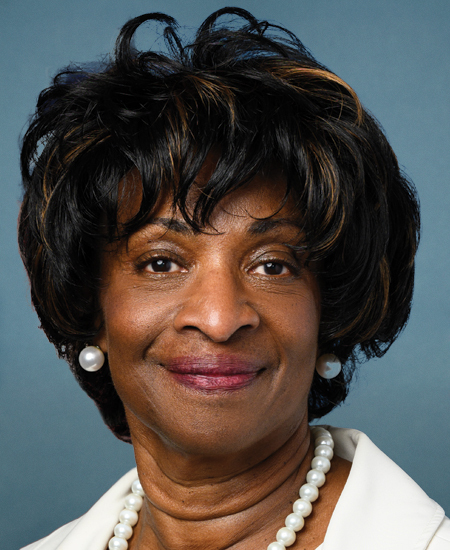
119th Congress Introduced by Valerie Foushee and 4 co-sponsors

NSF would establish a mentorship demonstration program to pair mentors with mentees and evaluate its impact on research capacity, career development, and innovation.

Introduced in House
0
WeVote Research Nonpartisan
Bill Summary · HR 9177

Summary of HR 9177 (Session 119)

Purpose and intent

  • HR 9177 aims to amend the Research and Development, Competition, and Innovation Act to authorize and direct the Director of the National Science Foundation (NSF) to establish and administer a mentorship demonstration program.
  • The underlying goal is to promote mentorship, likely linking mentors with students, early-career researchers, or small business/academic partners to strengthen research capacity, workforce development, and innovation. (The bill text would specify the target participants and scope; the summary focuses on the demonstrated purpose of mentorship within the NSF framework.)

Key provisions and changes

  • Mentorship Demonstration Program

    • Directs the NSF Director to carry out a mentorship demonstration program.
    • Program design likely includes objectives, duration, participant eligibility, mentor-mentee matching, and performance metrics, though exact details would be in the bill text.
    • May include funding authorization or allocation mechanisms to support mentorship activities (e.g., stipends, program administration, or related costs), subject to appropriations.
  • Administration and Oversight

    • Requires NSF to administer the program in coordination with appropriate NSF directorates or offices.
    • Establishes reporting or evaluation requirements to assess outcomes (e.g., increased research capacity, career progression, or collaborative projects).
  • Scope and Activities

    • Activities could include structured mentorship pairings, workshops, career development resources, and potential collaboration on research projects or grant readiness.
    • May specify eligible participants (e.g., graduate students, postdocs, early-career researchers, or underrepresented groups) and settings (universities, national labs, industry partners, or consortia).
  • Authorization and Funding

    • If the bill prescribes funding, it would outline authorized amounts and any conditions or limitations on use.
    • Could include reporting requirements to Congress on expenditures and outcomes.

Who would be affected

  • Primary Entity: National Science Foundation and its relevant directorates (e.g., directorates supporting research and education).
  • Participants: Potential mentors and mentees within the NSF ecosystem, including students, early-career researchers, and collaborating institutions (universities, national labs, and industry partners) participating in the demonstration program.
  • Institutions and Partners: Universities, colleges, research institutes, and possibly industry collaborators that engage with NSF programs.

Procedural and timeline aspects

  • Introduced and Referral: Introduced in the House and referred to the House Committee on Science, Space, and Technology on June 8, 2026.
  • Next Steps: The committee would consider, amend if needed, and vote to report the bill to the full House. If passed, it would move to the Senate for consideration and potential enactment.
  • Implementation Timeline: As a demonstration program, the bill would likely set a defined pilot period (e.g., 2–5 years) with milestones and a final evaluation to inform potential expansion or continuation, subject to appropriations.

Notes for readers

  • The summary reflects the bill’s stated aim to create a mentorship demonstration program within NSF as part of the broader Research and Development, Competition, and Innovation Act framework.
  • Specific program design elements (eligibility, match processes, duration, funding amounts, and performance metrics) would be detailed in the bill text and any accompanying committee reports.

Compiled from official sources — confirm details with the bill’s official record.

Sign in to ask a question.