

WeVote

Bill

Bill

HR 8526

To amend the Public Health Service Act to update quality standards for mammography facilities for the use of AI systems, and for other purposes.

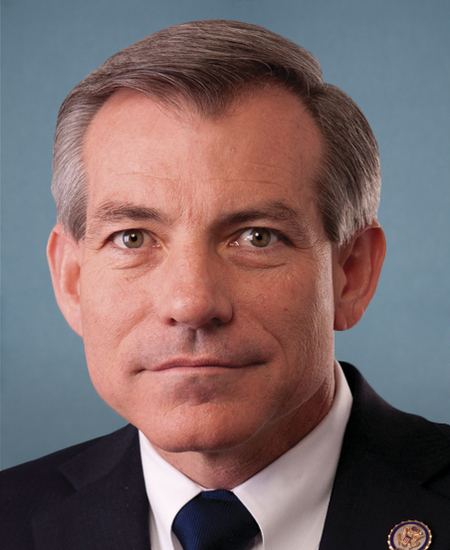
119th Congress Introduced by David Schweikert

Updates to mammography quality standards to explicitly include AI systems in interpretation and remove physician-only signatures.

Introduced in House
0
WeVote Research Nonpartisan
Bill Summary · HR 8526

Overview

HR 8526, introduced in the 119th Congress, aims to amend the Public Health Service Act to update quality standards for mammography facilities when using artificial intelligence (AI) systems. The bill is sponsored by Rep. David Schweikert and referred to the House Committee on Energy and Commerce.

Purpose and intent

  • Modernize quality standards for mammography facilities to explicitly account for the use of AI and machine-learning systems in interpreting or assisting with mammography results.
  • Ensure that facilities integrating AI tools are subject to updated criteria that reflect the involvement of automated systems in imaging interpretation.

Key provisions and changes

  • The bill amends Section 354(f)(1) of the Public Health Service Act (42 U.S.C. 263b(f)(1)).
  • Specific changes (as drafted):

    • In subparagraph (D):
    • The language before clause (i) is amended to replace “physician who” with “physician, or a machine-learning or artificial intelligence system, that” – expanding the defined role in the standard to include AI systems alongside physicians.
    • In clause (ii), the reference to “physician” is replaced with “that,” further broadening the applicability to include AI systems performing relevant functions.
    • In subparagraph (G)(ii)(I):
    • The phrase “signed by the interpreting physician” is removed, indicating that interpretations or determinations may be valid without a physician’s signature in certain contexts, potentially accommodating AI-assisted interpretations.
  • Overall effect: The amendments appear to explicitly recognize AI systems as part of the chain of custody or responsibility in mammography interpretation and remove a physician-only signature requirement, signaling a shift toward AI-inclusive quality standards.

Who would be affected

  • Mammography facilities that use AI or machine-learning systems in the interpretation, analysis, or reporting of mammography results.
  • Clinicians and radiologists who work with AI tools, as the standards would no longer be limited to physician-only considerations in certain subparagraphs.
  • Entities responsible for quality assurance and regulatory compliance in breast imaging services, who would need to align policies with the updated language.

Procedural and timeline aspects

  • Status: Referred to the House Committee on Energy and Commerce (as of the bill’s 2026 introduction date).
  • No specific effective date or phase-in period is provided in the text excerpt; such details would typically be established in the committee report or subsequent floor action.
  • The bill is limited in scope to updating quality standards under the Public Health Service Act related to mammography facilities and AI usage.

Potential impact and considerations

  • Could accelerate integration of AI in mammography by embedding AI considerations into federal quality standards.
  • May require facilities to update training, documentation, and verification processes to reflect AI involvement and to accommodate non-physician signatures in certain contexts.
  • Regulators and accreditation bodies would need to align with the revised statutory language when evaluating facility compliance.

Note: The summary reflects the bill text as presented. For a full understanding, review the committee report, any floor amendments, and accompanying legislative analyses once available.

Compiled from official sources — confirm details with the bill’s official record.

Sign in to ask a question.