

WeVote

Bill

Bill

HR 8559

To amend the National Defense Authorization Act for Fiscal Year 2021 to prohibit certain institutions of higher education from receiving research and development awards, and for other purposes.

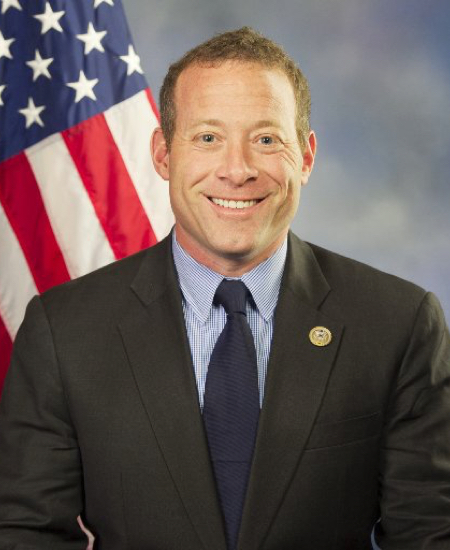
119th Congress Introduced by Josh Gottheimer and 2 co-sponsors

Prohibits five-year R&D awards to higher education institutions that receive foreign funds for national-security AI, biotech, or quantum tasks.

Introduced in House
0
WeVote Research Nonpartisan
Bill Summary · HR 8559

Summary of Bill: HR 8559 (119th Congress)

Purpose and intent

  • HR 8559 aims to amend the National Defense Authorization Act (NDAA) for Fiscal Year 2021.
  • The core intent is to restrict research and development (R&D) awards to certain institutions of higher education (IHEs) if they receive funds from foreign sources for specified tasks related to national security or military applications, including artificial intelligence, biotechnology, and quantum information science.
  • The bill would impose a five-year prohibition on R&D awards for affected IHEs after receipt of foreign funding for a specified task.

Key provisions and changes

  • Section being added: New Section 223A (Prohibition on Research and Development Awards for Certain Institutions of Higher Education)
    • General rule (subsection a):
    • If an institution of higher education receives funds from a foreign source to carry out a specified task, the institution may not be awarded a research and development (R&D) award for five years after receipt of that foreign funding.
    • Definitions (subsection b):
    • Artificial intelligence: As defined in section 5002.
    • Biotechnology: Application of science/engineering involving living organisms or their parts/products.
    • Foreign source: Broadly defined to include:
      • A specified foreign government
      • An entity established under that government's laws
      • An entity in which the government holds at least 25% ownership
      • An agent or successor entity (including subsidiaries, foundations, educational/cultural/language entities)
    • Institution of higher education: As defined in the Higher Education Act of 1965.
    • Quantum information science: As defined in the National Quantum Initiative Act.
    • Research and development award: As defined in NDAA section 223.
    • Specified foreign government: A list including Venezuela, North Korea, Iran, China, Cuba, Turkey, Russia, Qatar, and any other country designated by the Secretary of State.
    • Specified task: R&D relating to national security or military applications, specifically including AI, biotechnology, and quantum information science.
  • Clerical amendments (section 223A insertion):
    • Amends the NDAA 2021 table of contents to insert a new Sec. 223A: Prohibition on research and development awards for certain institutions of higher education.

Who would be affected

  • Institutions of Higher Education (colleges and universities) that receive foreign-sourced funds for specified tasks (AI, biotechnology, quantum information science related to national security or military applications).
  • The prohibition applies for five years after the date of receipt of the foreign funds for the specified task.
  • The definition of foreign source includes governments and entities with substantial government ownership or control, as well as agents and subsidiaries acting under those governments.
  • The policy targets R&D awards administered under the NDAA framework (federal funding programs for defense-related research).

Procedural and timeline aspects

  • Introduced date: April 28, 2026.
  • Referral: House Committee on Science, Space, and Technology.
  • No changes to the NDAA passage timeline are specified beyond the proposal to amend the 2021 NDAA.
  • The bill’s impact would hinge on implementation rules set by the executive branch (e.g., Secretary of State and related agencies) for determining “specified foreign government” eligibility and triggers for the five-year penalty.

Practical implications and considerations

  • Increase in scrutiny of foreign-funded research by IHEs engaged in national-security-related R&D.
  • Institutions may face longer-term funding gaps if they participate in foreign-sourced tasks related to AI, biotech, or quantum information science.
  • Critics may seek to clarify scope, define “specified task,” or address potential compliance challenges for multi-source funding or collaboration with international partners.
  • The bill creates a potential deterrent effect for foreign-directed funding in sensitive defense-relevant research conducted at U.S. higher education institutions.

If you’d like, I can provide a glossed-by-section outline or compare this proposal to similar foreign influence or security-related funding restrictions.

Compiled from official sources — confirm details with the bill’s official record.

Sign in to ask a question.