

WeVote

Bill

Bill

HR 8475

Savings Opportunity and Affordable Repayment Act

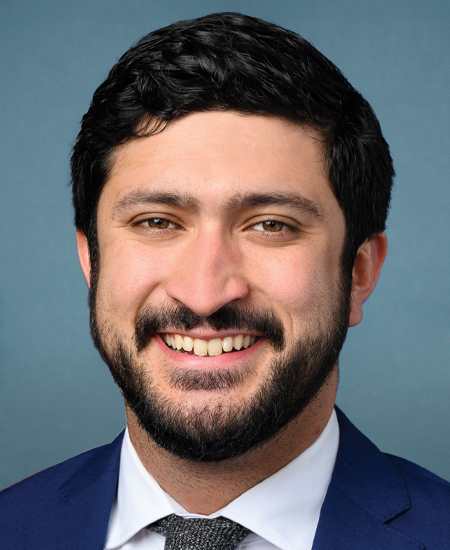
119th Congress Introduced by Greg Casar and 8 co-sponsors

The SOAR plan creates an income-contingent student loan repayment with a savings component to lower monthly payments and reduce debt over time.

Introduced in House
0
WeVote Research Nonpartisan
Bill Summary · HR 8475

Summary of HR 8475 (113th? 119th Congress context)

Note: The bill name indicates an amendment to the Higher Education Act of 1965 to create a Savings Opportunity and Affordable Repayment (SOAR) plan as an income-contingent repayment option. The action history shows introduction and referral to the House Education and Workforce Committee on 2026-04-23, with multiple notable sponsors.

Below is an accessible, structured briefing of the bill’s purpose, key provisions, affected parties, and procedural/timeline aspects as described by the bill text and related filing information.

Purpose and intent

  • The primary objective is to modify the Higher Education Act of 1965 to establish a new loan repayment pathway named the Savings Opportunity and Affordable Repayment (SOAR) plan.
  • The SOAR plan is proposed as an income-contingent repayment option intended to provide more affordable, predictable student loan repayment by tying payments to income and savings opportunities.

Key provisions and changes (highlights)

  • Creation of SOAR Plan: Establishes a distinct repayment program within the federal student loan framework under the Higher Education Act.
  • Income-Contingent Mechanics: Replaces or supplements standard repayment with payments calculated based on borrower income. The exact methodology (income percentage, family size, caps, and forgiveness features) would be defined in the bill text.
  • Savings Component: Incorporates a savings-related feature aimed at encouraging and/or rewarding savings behavior to reduce overall debt service costs. Details may include savings thresholds, matched deposits, or incentives that reduce monthly payments.
  • Affordability and Predictability: Aims to provide more stable monthly payments relative to traditional plans, with a focus on reducing “payment shock” during income fluctuations or economic downturns.
  • Eligibility and Scope: Applies to federally held student loans under the Act; specifics on which loan types (e.g., Direct Loans, FFEL loans if reauthorized under program rules) are eligible would be defined in the bill.
  • Interest and Forgiveness: The plan could include adjustments to how interest accrues, capitalization, or forgiveness terms within the SOAR framework. The bill would specify when forgiveness is triggered (e.g., after a certain period of time or amount repaid) and how it interacts with the savings component.

Note: The summary above highlights anticipated structural elements based on the bill’s title and purpose. The precise formulas, caps, durations, or triggers would be detailed in the bill text itself.

Who would be affected

  • Borrowers with federal student loans would access the SOAR repayment option if enacted and implemented.
  • Servicers and the U.S. Department of Education would implement and administer the SOAR plan, including income verification, savings tracking, and payment processing.
  • Institutions of higher education and lenders (for eligibility and disclosure requirements) would need to provide information and counseling about the new repayment option.

Procedural and timeline aspects

  • Action history indicates:
    • 2026-04-23: Introduced in the House
    • 2026-04-23: Referred to the House Committee on Education and Workforce
  • As a new bill, it would proceed through committee consideration, potential amendments, and then floor debate and voting in the House. If passed, it would need Senate consideration and, if enacted, signature by the President to become law.
  • No specific effective dates or phase-in timelines are provided in the summary line; the full bill text would outline effective dates, implementation timelines, and transitional provisions.

Sponsor and co-sponsors

  • Main sponsor: House member (not specified in the provided snippet)
  • Co-sponsors:
    • Rosa DeLauro
    • Greg Casar
    • Eleanor Holmes Norton
    • Pramila Jayapal
    • Chellie Pingree
    • Lateefah Simon
    • Shri Thanedar

Additional considerations for readers

  • The bill represents a shift toward income-driven, savings-linked repayment in federal student loans, emphasizing affordability and long-term debt reduction.
  • Implementation details (exact calculation methods, eligibility, forgiveness terms, interaction with existing repayment plans) are critical for assessing the net impact on borrowers and federal costs.
  • Stakeholders to watch include borrower advocacy groups, higher education institutions, student loan servicers, and fiscal analysts evaluating cost to the federal loan portfolio.

If you’d like, I can tailor this summary to include a side-by-side comparison with existing income-driven repayment options (e.g., ICR, IBR, PAYE/REPAYE) once the full bill text is available, or extract and annotate the exact provisions, timelines, and numerical parameters verbatim.

Compiled from official sources — confirm details with the bill’s official record.

Sign in to ask a question.