

WeVote

Bill

Bill

HR 8676

To amend the Elementary and Secondary Education Act of 1965 to authorize the Secretary of Education to award grants to State educational agencies to carry out wellness programs for school personnel, and for other purposes.

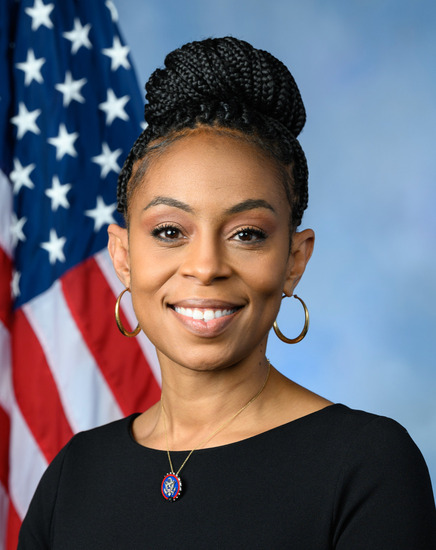
119th Congress Introduced by Shontel Brown and 1 co-sponsor

HR 8676 creates a new Part C under ESEA to fund state and local wellness programs for school personnel, aiming to improve wellbeing and retention.

Introduced in House
0
WeVote Research Nonpartisan
Bill Summary · HR 8676

Overview

  • Bill: HR 8676
  • Session: 119th Congress
  • Title: To amend the Elementary and Secondary Education Act of 1965 to authorize the Secretary of Education to award grants to State educational agencies to carry out wellness programs for school personnel, and for other purposes.
  • Introduced: May 7, 2026
  • Primary sponsors: Rep. Shontel Brown (with Rep. Johnny Olszewski)
  • Committee assignment: Education and Workforce

Purpose and intent

  • The bill would create a new framework (Part C) under Title II of the ESEA to fund wellness programs for school personnel.
  • The core objective is to improve the mental, emotional, and physical well-being of school staff (teachers, principals, other leaders, specialized instructional staff, and paraprofessionals) and, by doing so, support workforce sustainability, retention, and overall school climate.

Key provisions and changes

Authorized funding and schedule

  • Replaces the prior funding window (2017–2022) with a new, multi-year window (2026–2030) for appropriations and state allocations.
  • Authorization to appropriate such sums as may be necessary for fiscal years 2026–2030 for wellness programs for school personnel.

Grants to States (new Part C)

  • Title II is amended to designate a new Part C (later sections 2250–2252) focused on wellness programs for school personnel.
  • Secretary’s role:
    • Award grants to State Educational Agencies (SEAs) on a competitive basis to fund subgrants to Local Educational Agencies (LEAs).
    • Provide technical assistance to SEAs.
    • Grant period for funded programs is 5 years.

State and LEA grant process

  • SEA applications must describe:
    • Workforce sustainability challenges (workload, support structures, morale/climate, access to wellness resources) and workforce retention issues.
    • Plans to consult with superintendents/LEA heads.
    • Evaluation plans for program effectiveness.
  • Priority in awarding SEA grants goes to states with administrator or educator shortages, using the latest public state-level data.

Subgrants to LEAs

  • SEAs must award subgrants to LEAs to implement wellness programs in all elementary and secondary schools within the LEA.
  • LEAs must demonstrate:
    • Challenges related to workforce sustainability and retention.
    • How they will implement wellness programs and consult with the SEA.
    • How they will evaluate program effectiveness.
  • Priority for subgrants is given to LEAs serving high-need student populations.

Program requirements for LEAs

  • Subgrants must fund programs that:
    • Create healthier, more sustainable working environments.
    • Improve retention rates.
    • Measure and improve well-being (mental, emotional, physical) of school personnel.
    • Focus areas include stress management, workplace conditions, workload manageability, access to support, and job satisfaction.

Reporting requirements

  • SEAs must annually report to Congress and the Secretary for the first four years of the grant period, including:
    • Description and updates on wellness programs implemented by LEAs.
    • Retention and vacancy data for school personnel, including changes from the prior year.
  • At the end of the grant period, SEAs must submit a final report detailing programs, impacts on retention/vacancies, school climate, and best practices.

Table of contents and structure

  • Adds a new Article/Part structure to ESEA to house the wellness program provisions:
    • Sec. 2250. Grants to States.
    • Sec. 2251. Subgrants to Local Educational Agencies.
    • Sec. 2252. State Report.
  • Reorganizes the table of contents to reflect Part C (renamed to Part D: General Provisions) to accommodate the new wellness program section.

Who would be affected

  • State Educational Agencies (SEAs): Receive competitive grants to fund wellness initiatives and must administer subgrant programs to LEAs; responsible for annual reporting to Congress.
  • Local Educational Agencies (LEAs): Receive subgrants to implement wellness programs in all schools they serve; required to develop, implement, and evaluate programs targeting school personnel wellbeing and retention.
  • School personnel: Teachers, principals and other leaders, specialized instructional staff, and paraprofessionals would be the primary beneficiaries through improved workplace wellness programs.
  • State-level and school-level administrators: Increased focus on workforce sustainability, mental health, stress management, and job satisfaction.

Procedural and timeline aspects

  • Funding window extended: 2026–2030 for both federal appropriations and state allocations.
  • Grant period for awarded funds: 5 years.
  • Reporting cadence:
    • Annual state reports due within 180 days after each of the first four grant years.
    • Final state report due within 180 days after the grant period ends.
  • Competitive grant framework: Grants to SEAs awarded on a competitive basis, with technical assistance available from the Secretary.
  • Priority criteria: Preference to states and LEAs facing shortages or serving high-need student populations, based on latest state-level data.

Potential impact and considerations

  • Could strengthen school workforce stability and climate by addressing workload, support, and well-being.
  • May improve recruitment and retention of educators in shortage areas.
  • Costs and implementation timelines depend on annual appropriations; program effectiveness would hinge on robust evaluation from SEAs and LEAs.
  • Additional reporting requirements introduce accountability and data collection on wellness outcomes.

Compiled from official sources — confirm details with the bill’s official record.

Sign in to ask a question.