

WeVote

Bill

Bill

HB 5435

The purpose of this bill is to increase funding for rural counties in this state by adding a multiplier to the IEP calculation.

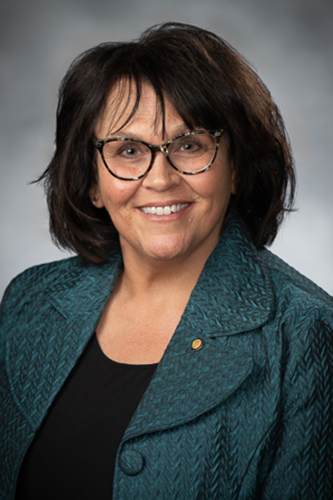
2026 Regular Session Introduced by Lori Dittman and 4 co-sponsors

The bill adds a 3:1 per-child funding multiplier for rural counties with students who have an IEP to boost rural school funding.

To House Education
0
WeVote Research Nonpartisan
Bill Summary · HB 5435

Summary of Bill HB 5435 (2026, West Virginia)

Purpose and Intent

  • The bill aims to increase funding for rural county school systems in West Virginia by modifying the calculation for per-child funding to include a multiplier related to students with an Individualized Education Program (IEP).
  • Specifically, it adds a 3:1 per-child allotment multiplier for rural counties that have students with an IEP in their school system.
  • The overarching goal is to provide greater financial support to rural districts, particularly those serving students who require special education services.

Key Provisions and Changes

Section §18-9A-2 (Definitions)

  • The bill retains and clarifies existing definitions used to determine funding under the Public School Support article (Article 9A).
  • Adds definitions and language context for rurality and net enrollment, as well as various categories of school personnel and enrollment considerations.

New Section §18-9A-2a: Per-Child Allotment Multiplier

  • Establishes a new per-child allotment multiplier:
    • Rural counties with students who have an IEP will receive a 3:1 ratio for those eligible per-child funds.
  • Implementation and oversight:
    • The state Board of Education and the local county Board of Education in the relevant rural county will assist in implementing the increased per-child allotment.
  • Purpose:
    • The explicit note states the purpose is to increase funding for rural counties by adding a multiplier to the IEP-based calculation.

Who Would Be Affected

  • Targeted Beneficiaries:
    • Rural counties in West Virginia that have students with IEPs enrolled in their public schools.
  • Directly Affected Entities:
    • County Boards of Education in the rural counties.
    • The West Virginia State Board of Education.
  • Indirectly Affected Populations:
    • Students with IEPs in rural counties, as funding for their schools would be increased through the multiplier.
    • School personnel and programs supported by the funding (e.g., special education services) due to increased resources.

Procedural and Timeline Aspects

  • Status: Introduced February 11, 2026; referred to Committee on Education, then Finance.
  • Next steps (typical legislative process):
    • The bill would be reviewed, debated, and potentially amended in the standing committees (Education and Finance).
    • If advanced, it would move to the floor for consideration by the House and, if passed, proceed through the Senate (and potential conference committee) before any final passage and potential gubernatorial action.
  • Effective Date: The bill text provided does not specify an effective date; typical enactments would include an effective date for the new multiplier if enacted. The absence of a stated date in the excerpt means the effective date would likely be determined during committee deliberations or upon passage.

Potential Impact and Considerations

  • Financial Impact:
    • The bill introduces a 3:1 multiplier for per-child funding in rural counties with IEP students, which would increase per-child funding in those districts beyond current IEP-based calculations.
    • The magnitude of the impact depends on the number of IEP students and the rural counties affected.
  • Equity and Targeting:
    • The provision focuses resources on rural counties with IEP students, potentially addressing disparities in funding between rural and more urban districts.
  • Implementation:
    • Requires coordination between the State Board of Education and local county Boards of Education to administer and monitor the increased per-child allotment.

Notable Details

  • The bill is framed as an amendment to and reenactment of §18-9A-2 and adds §18-9A-2a.
  • Strikethroughs and underscores in the bill indicate amendments to current law and newly added language, respectively.
  • Co-sponsors include Delegates Sarah Drennan, Mickey Petitto, Lori Dittman, Erica Moore, and Jonathan Kyle.

If you would like, I can provide a side-by-side comparison with the current statute to illustrate exactly how the new §18-9A-2a would modify funding calculations.

Compiled from official sources — confirm details with the bill’s official record.

Sign in to ask a question.