

WeVote

Bill

Bill

HR 7758

The Dalilah Law

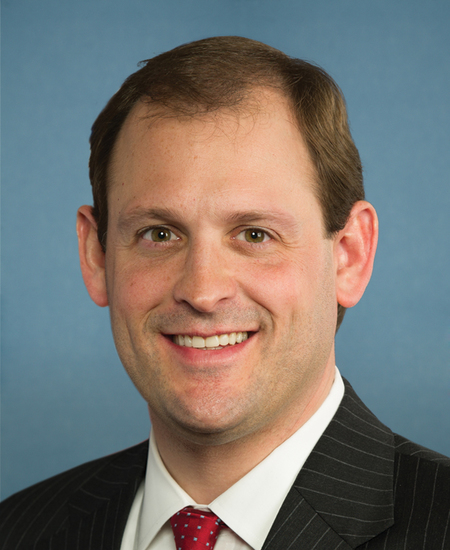
119th Congress Introduced by Andy Barr and 8 co-sponsors

The bill would restrict CDL issuance to citizens, lawful permanent residents, or certain visa holders with valid status, and withholds federal funding from states that fail to veri

Referred to the Subcommittee on Highways and Transit.
0
WeVote Research Nonpartisan
Bill Summary · HR 7758

Summary of HR 7758 — The Dalilah Law

Purpose and intent

  • HR 7758, introduced in the 119th Congress, seeks to prohibit the issuance of commercial driver’s licenses (CDLs) to individuals who are not citizens or lawful permanent residents of the United States, and who are not holders of certain work visas. The bill aims to ensure that CDL issuance is limited to U.S. citizens, lawful permanent residents, or specific categories of valid nonimmigrant visa holders, tying continued access to ongoing compliance measures and funding.

Key provisions and changes

  • Definition framework

    • Establishes definitions for terms related to CDLs and commercial motor vehicles under 49 U.S.C. § 31301.
    • Defines “covered examination,” “covered funding,” and “covered license or authorization.”
    • Introduces and clarifies “non-domiciled CDL” as a CDL issued to someone not domiciled in the issuing state (per 49 C.F.R. part 383).
  • Prohibition on issuance

    • Amends 49 U.S.C. § 31311(a)(12) to require that a CDL applicant must be:
    • a citizen or lawful permanent resident, or
    • a nonimmigrant described in specified visa classifications of the Immigration and Nationality Act (INA) and possess a valid, unexpired nonimmigrant visa issued under those subparagraphs.
    • Adds explicit language to ensure the license is not issued to those outside these statuses unless meeting the visa-based exception.
  • Disqualifications and penalties

    • Adds a new disqualification provision (Section 31310) to permanently disqualify from operating a CMV an individual who operates a CMV in the United States without qualifying status, unless they hold a valid exception (e.g., valid nonimmigrant visa or travel authorization with appropriate records).
    • Specifies conditions under which a person could still operate a CMV if they hold a valid travel authorization or an admission record as per the INA.
  • Recertification and verification requirements for states

    • Requires states to recertify all current covered licenses/authorizations within 180 days of enactment.
    • Recertification must verify:
    • Citizenship or lawful permanent residency, or appropriate nonimmigrant status with a valid visa.
    • English language proficiency as defined in 49 C.F.R. § 391.11(b)(2).
    • Passing all covered examinations in English.
    • States must revoke licenses/authorizations if recertification fails to meet these criteria.
  • Withholding of federal funding

    • Establishes a framework to withhold “covered funding” from states for:
    • Recertification failures or revocation failures by deadlines.
    • Issuing covered licenses to individuals not meeting eligibility.
    • Failures in English proficiency verification or administering examinations in languages other than English.
    • Withholding applies beginning in the first fiscal year after the relevant deadlines.

Who/what is affected

  • Affected entities:

    • Individuals applying for or holding CDLs and other covered licenses/authorizations.
    • State Departments of Motor Vehicles and other state agencies responsible for CDL issuance and license administration.
    • States receiving federal funding that are required to administer covered programs (e.g., transportation-related funding).
  • Affected populations:

    • Non-citizens, non-lawful permanent residents, and certain nonimmigrant visa holders in the U.S. who would otherwise seek CDL privileges, unless meeting the specified eligibility requirements.
    • States implementing CDL-related programs and compliance requirements.

Procedural and timeline aspects

  • Introduction and referral

    • Introduced March 3, 2026, and referred to the House Committee on Transportation and Infrastructure, with a subsequent referral to the Subcommittee on Highways and Transit.
  • Recertification timeline

    • States must complete recertification of all covered licenses/authorizations within 180 days after enactment.
  • Funding and compliance timeline

    • Federal funding withholds would begin in the first fiscal year after respective deadlines (recertification, revocation, status verification, and English-language verification).

Potential impact (high-level)

  • Policy impact:

    • Tightens eligibility for CDLs to U.S. citizens, lawful permanent residents, or specific visa holders with valid evidence.
    • Creates additional verification, testing in English, and language-based administration requirements for states.
  • Fiscal impact:

    • Introduces financial penalties (withholding of covered funding) to incentivize compliance by states.
  • Administrative impact:

    • Increases state-level verification, recertification, and monitoring requirements.
    • Requires English-language proficiency and English-only testing for covered CDL-related examinations.

Note: The bill outlines significant new restrictions and compliance mechanisms. As drafted, it would materially affect CDL issuance for non-citizens and certain visa holders, while tying federal funding to conformity with these requirements.

Compiled from official sources — confirm details with the bill’s official record.

Sign in to ask a question.