

Bill

BILL • US SENATE

S 3393

Support UNFPA Funding Act

119th Congress
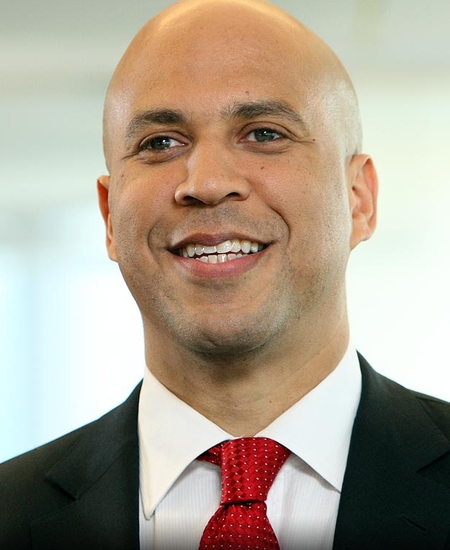
Introduced by Cory Booker, Chris Coons, Tammy Duckworth and 14 other co-sponsors

Authorizes U.S. funding to UNFPA to restore and sustain support for maternal health, family planning, gender-based violence prevention, reproductive health in humanitarian crises.

Introduced in Senate
0
0
Bill Summary • S 3393

S.3393 — Support UNFPA Funding Act

Status: Introduced in the Senate (read twice and referred to the Committee on Foreign Relations on December 9, 2025). Introduced January 27, 2025. Companion bill: A.2278.

Purpose and intent

The bill authorizes United States contributions to the United Nations Population Fund (UNFPA). Its stated aim is to restore and sustain U.S. financial support for UNFPA’s global sexual and reproductive health programs — particularly maternal health, family planning, gender‑based violence prevention and response, and reproductive health services in humanitarian crises — and to reaffirm U.S. policy support for those activities.

Key findings (from the bill)

  • UNFPA is the UN’s sexual and reproductive health agency, operating in 150+ countries and reaching many areas U.S. bilateral programs do not.
  • The Multilateral Organization Performance Assessment Network (MOPAN) evaluation (January 2025) found UNFPA effective and a sound steward of U.S. funds; the bill states UNFPA keeps U.S. contributions segregated and in compliance with U.S. legal restrictions.
  • UNFPA does not fund or promote abortion as a method of family planning and opposes coercion and involuntary sterilization.
  • UNFPA’s 2024 service metrics cited by the bill include: ~10 million people reached with sexual and reproductive health services across 49 countries; ~3.6 million reached with gender‑based violence prevention/response services; >825,000 women assisted with safe delivery in 37 countries; support for 3,500 health facilities in 55 countries.
  • The bill documents harms attributed to the 2025 U.S. halt in funding (e.g., closures or reduced services in Afghanistan, Sudan, Yemen, Bangladesh) and highlights global needs: high maternal mortality, unmet contraceptive need, prevalence of gender‑based violence, female genital mutilation survivors, and child marriage.

Main provisions (summary)

  • Authorizes U.S. contributions to UNFPA (text of the authorizing provisions beyond findings and the beginning of a policy statement is truncated in the available version).
  • Reiterates U.S. policy support for voluntary family planning, reproductive health, and UNFPA’s role in humanitarian settings.
  • Affirms that UNFPA’s programming adheres to principles from the 1994 International Conference on Population and Development (voluntary, non‑coercive reproductive health programs).

Note: The public version supplied is truncated; the bill text included detailed findings and a policy statement but the specific authorization language (e.g., amounts, appropriation mechanism, conditions, reporting requirements) is not present in the excerpt.

Who would be affected

  • UNFPA would be the direct recipient of authorized U.S. funding.
  • Women, girls, and communities served by UNFPA programs — particularly in fragile and humanitarian contexts — could see restored or expanded access to contraceptives, maternal and newborn care, midwife training, gender‑based violence prevention and response, and programs to prevent child marriage and female genital mutilation.
  • U.S. foreign assistance program planning and budgeting processes would be affected to the extent funds are authorized and appropriated.

Timeline and procedural posture

  • Introduced in the Senate (Sen. Jeanne Shaheen as primary sponsor) and read twice; referred to the Senate Foreign Relations Committee (December 9, 2025).
  • Companion/related actions show parallel activity on A.2278 (assembly actions listed), and numerous legislative steps in state or chamber-level proceedings (e.g., substitutions, committee referrals, third‑reading actions) consistent with coordination between Congressional and companion bill activity.
  • Sponsors/cosponsors include multiple Senate Democrats (e.g., Shaheen, Durbin, Murray, Coons, Kaine, Booker, Sanders, Duckworth, Schumer, Van Hollen).

Potential impact

  • If enacted and funded, the bill would restore formal U.S. financial support to UNFPA programs that address maternal mortality, contraceptive access, gender‑based violence, and reproductive health in humanitarian crises — potentially reversing service disruptions described in the findings.
  • The magnitude and timing of impact depend on subsequent appropriation decisions, any statutory conditions or reporting requirements included in the full bill text, and UNFPA program priorities.

If you’d like, I can:
- Track the bill’s status and amendments,
- Compare the full bill text (if/when available) with the findings to identify specific funding levels, conditions, or reporting mandates, or
- Draft a concise one‑page briefing for stakeholders summarizing likely budgetary and programmatic effects.

Hi! I'm your AI assistant for S 3393. I can help you understand its provisions, impacts, and answer any questions.

Key Provisions Impacts Timeline
Sign in to chat

Start the Conversation

Be the first to share your thoughts on this petition. Your voice matters!

Share your opinion above