

WeVote

Bill

Bill

SB 935

Supplementing and amending appropriations to Department of Homeland Security

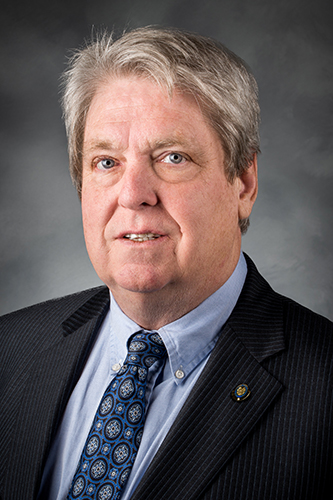
2025 Regular Session Introduced by Mike Woelfel

Creates three regional transportation authorities with dedicated funds funded by optional county surcharges to plan, fund, and implement regional projects.

To Finance
0
WeVote Research Nonpartisan
Bill Summary · SB 935

SB 935 — Transportation: Regional Authorities Established (Maryland)

Status: Hearing scheduled Mar 5, 2025, 1:00 p.m. (Budget & Taxation)
Introduced: late January 2025 (sponsor: Sen. Benjamin Benson)
Primary subject: Establish regional transportation authorities and funds; authorize local tax surcharges to capitalize them

Main purpose

Create three regional transportation authorities to plan, fund, and implement transportation projects of regional significance in the Baltimore, Capital, and Southern Maryland regions, and to establish dedicated, nonlapsing special funds to finance those authorities’ activities.

Key provisions

  • Establishes three authorities and corresponding special funds:
    • Baltimore Region Transportation Authority (Anne Arundel, Baltimore, Harford, Howard counties and Baltimore City) and Baltimore Region Transportation Fund.
    • Capital Region Transportation Authority (Frederick, Montgomery, Prince George’s counties) and Capital Region Transportation Fund.
    • Southern Maryland Region Transportation Authority (Calvert, Charles, St. Mary’s counties) and Southern Maryland Region Transportation Fund.
  • Authorities are bodies politic and corporate and instrumentalities of the State.
  • County participation is elective — counties may vote to join their region’s authority.
  • Powers and duties include:
    • Preparing and revising a regional transportation plan identifying projects of regional significance.
    • Constructing, acquiring, leasing, operating, and overseeing transportation facilities and projects.
    • Recommending regional priorities to State/federal agencies (including MDOT) and seeking grants.
    • Allocating and directly overseeing funds for priority projects; advising on toll/fee usage.
    • Hiring staff, entering contracts, owning entities, and fixing fees.
    • Consulting with MDOT, MPOs, and stakeholders; reporting annually to the General Assembly (first report due Jan 1, 2026).
  • Financing:
    • Each authority administers a special, nonlapsing fund composed of State appropriations, interest, and revenue from three optional county surcharges: (1) sales tax surcharge (transportation authority surcharge), (2) hotel surcharge, and (3) transfer tax surcharge.
    • Authorities may issue various bonds payable from their revenues; bonds are specified as not State debt.
    • Funds may also accept grants, loans, gifts, and other revenues.
  • Administrative details: authorities must adopt bylaws, may acquire and dispose of property, and may sue/ be sued.

Fiscal impact / timeline

  • If counties fully implement the authorized surcharges, special fund revenues could increase by more than $1.0 billion in the first full year of implementation (earliest FY 2026), supporting large capital programs and authority operations.
  • Special fund expenditures will rise substantially to cover operating costs and projects beginning as early as FY 2026.
  • General fund expenditures for the Comptroller’s Office estimated to increase by about $879,000 in FY 2026 (for surcharge administration), with ongoing costs thereafter.
  • Interest earnings on new funds could increase general fund receipts through FY 2028.
  • If counties do not adopt the surcharges, alternate capital sources would be required.

Who is affected

  • Participating counties and their taxpayers (through optional surcharges).
  • Travelers, hotel visitors, buyers/sellers in real estate transactions (if transfer tax surcharge is used), and businesses (through a sales-tax surcharge).
  • Maryland Department of Transportation (MDOT), metropolitan planning organizations, and the Comptroller (administration/reporting).
  • Potentially small businesses and industries sensitive to sales/hotel/transfer taxes.

Notes / considerations

  • County membership is voluntary; the scale of funding and projects depends on how many counties opt in and which surcharges they impose.
  • Bonds issued by authorities are treated as non-State debt, which could influence State debt affordability and Transportation Trust Fund considerations.

Compiled from official sources — confirm details with the bill’s official record.

Sign in to ask a question.