

WeVote

Bill

Bill

HR 8966

Subpoena Abuse Prevention Act

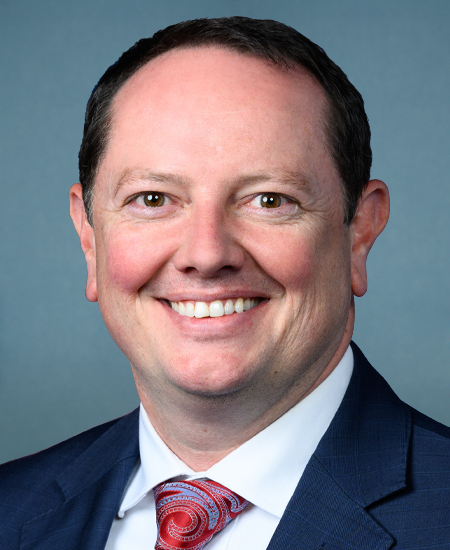
119th Congress Introduced by Eric Burlison and 3 co-sponsors

It strengthens safeguards on administrative subpoenas by limiting bulk collection, protecting constitutionally protected activities, requiring purpose certifications, and adding an

Introduced in House
0
WeVote Research Nonpartisan
Bill Summary · HR 8966

Subpoena Abuse Prevention Act (H.R. 8966)

Purpose and intent

  • Introduces reforms to section 2703 of title 18, United States Code, with the aim of curbing the misuse of administrative subpoenas to obtain customer communications and records.
  • Seeks to increase protections for individuals’ constitutional rights (free speech, press, religion, assembly, and petition) and to add transparency and accountability in the use of administrative subpoenas.

Key provisions and changes

  1. Consistent protections for phone and app-based records (Section 2703(c)(2))

    • Eliminates existing subparagraph (C) and restructures subsequent subparagraphs (D, E) as the new (C), (D), and (E).
    • Standardizes protections across different types of communications and records requests.
  2. Restriction on bulk collection of subscriber information (Section 2703(c)(2))

    • Prohibits administrative, grand jury, or trial subpoenas that seek bulk collection of subscriber information unless the government identifies the subscriber by name, address, temporarily assigned network address, or account identifier (e.g., username).
  3. Protections against investigating constitutionally protected activity (New subparagraph (4))

    • Prohibits subpoenas that are aimed at investigating, monitoring, or extracting information about activities protected by the Constitution (free speech, press, religion, assembly, petition) or retaliating against individuals for engaging in those activities.
    • Adds a certification requirement:
      • Government must certify under penalty of perjury that the subpoena is for a legitimate, lawful purpose and not for targeting protected activities.
      • Certification is required to both the service provider and, when applying for a 2705(b) preclusion of notice order, to the court.
  4. Required disclosures to service providers (Section 2703(c)(2) continued; new subparagraph (5))

    • Service providers may notify customers or subscribers about the receipt of a subpoena and may seek legal advice.
    • Government must inform the provider:
      • It may notify the customer/subscriber and may consult with an attorney.
      • It must state that it is not being instructed to notify others about the subpoena, unless a preclusion of notice order (2705(b)) applies.
    • If a preclusion of notice order is in place, the disclosure requirements must be adjusted to comply with that order.
  5. Public reporting of federal use of administrative subpoenas (Section 2703(c)(2) continued; new subparagraph (6))

    • Federal agencies using administrative subpoenas must publish annually a public report.
    • The report must include:
      • The number of administrative subpoenas issued, disaggregated by the statutory authority cited.
      • The number of accounts for which information was obtained, disaggregated by the statutory authority cited.

Who/what is affected

  • Federal government entities that issue administrative subpoenas under 18 U.S.C. 2703.
  • Service providers that disclose subscriber information in response to subpoenas.
  • Individuals and organizations whose communications or records are sought; heightened protections for those engaging in constitutionally protected activities.
  • Oversight and accountability mechanisms through annual public reporting.

Procedural and timeline aspects

  • Status: Introduced in the 119th Congress on May 21, 2026; referred to the House Judiciary Committee.
  • Effective date: The bill outlines new requirements and reporting obligations, which would take effect upon enactment. Specific dates for certification and reporting would align with standard rules for new federal statutory requirements after enactment.
  • Oversight: Annual public reporting creates a continuous, transparent accounting of agency use of administrative subpoenas.

Summary takeaway

The Subpoena Abuse Prevention Act strengthens safeguards around the use of administrative subpoenas in civil and criminal processes. It requires clearer identification of targets, prohibits bulk collection of subscriber information, protects rights related to constitutionally protected activities, imposes certifications to deter improper use, mandates disclosures to service providers with limited notifying obligations, and establishes annual public reporting to enhance transparency and accountability.

Compiled from official sources — confirm details with the bill’s official record.

Sign in to ask a question.