

WeVote

Bill

Bill

HR 8045

Student Loan Interest Elimination Act

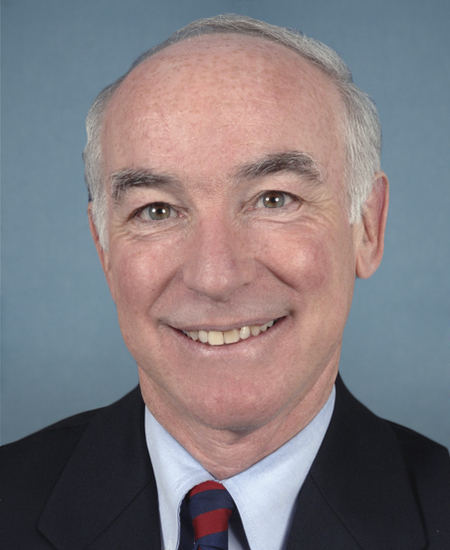
119th Congress Introduced by Joe Courtney and 6 co-sponsors

Eliminate interest on all federal loans starting July 1, 2026, auto-modify/refinance existing loans with opt-out, and fund this via a new Education Affordability Trust Fund.

Introduced in House
0
WeVote Research Nonpartisan
Bill Summary · HR 8045

Overview

HR 8045, the Student Loan Interest Elimination Act, introduced in the 119th Congress by Rep. Courtney (with multiple co-sponsors), proposes sweeping changes to federal student lending. The core aims are to eliminate interest on federal student loans, create a dedicated Education Affordability Trust Fund to finance these changes, and expand loan limits. The bill also establishes a framework for modifying existing loans, refinancing certain non-federal loans into federal types, and phasing out subsidized interest on new loans beginning July 1, 2026.

Main purpose and intent

  • Eliminate interest accrual on federal student loans for both existing and new loans.
  • Create an Education Affordability Trust Fund to finance loan modifications, refinancings, Pell grants, and related programs.
  • Increase annual and aggregate loan limits for federal student loans.
  • Provide a pathway to modify existing loans automatically and refinance eligible loans without borrower action, while preserving borrower opt-out rights.

Key provisions and changes

  • Title I — Loan modification and refinancing for existing federal student loans

    • Section 460A would authorize the Secretary to automatically modify eligible Federal Direct Loans so that no interest accrues starting July 1, 2026, with an opt-out option for borrowers.
    • Non-federal direct loans held by borrowers could be refinanced into Federal Direct Consolidation Loans, with terms set to be interest-free and with protections mirroring standard consolidation terms, including no origination fee and no automatic extension of the repayment period.
  • Title II — Terms and conditions for new federal student loans

    • Section 201–202 would end interest charges on new loans after July 1, 2026.
    • No new subsidized Direct Stafford Loans would be issued after June 30, 2026; post-grant borrowing limits would be adjusted to reflect the new framework (essentially eliminating subsidized loans and relying on unsubsidized terms with inflation-adjusted limits).
  • Section 203 — Annual and aggregate loan limits

    • Adds a new ninth category, adjusting annual and aggregate loan limits to reflect inflation and the expanded framework.
  • Title III — Trust Fund: Education Affordability Trust Fund

    • Establishes the Education Affordability Trust Fund, governed by a 6-member Board appointed by the President with Senate advice and consent.
    • Board duties include appointing independent fund managers, setting investment guidelines, and overseeing the fund’s operations.
    • Investment rules emphasize diversification, ratings requirements, and limits on investments in certain entities or countries.
    • The Trust Fund would finance:
    • Zero-interest loans for current and future borrowers.
    • Administrative costs of loan administration.
    • Potential transfer of excess assets to Pell Grants and related programs (with defined caps and conditions).
  • Section 494A and 494B (Use of funds and Trust Fund)

    • Repeats and clarifies how loan repayments flow into the Trust Fund and how funds may be used, including potential supplemental Pell Grants when excess funds exist.
  • Title IV — General provisions

    • Implementation flexibility for the Education Department, including waivers of certain administrative requirements as needed.

Who/what would be affected

  • Current and future federal student loan borrowers:
    • Interest-free status on existing loans through modification/refinancing.
    • New loans issued on or after July 1, 2026, with 0% interest.
  • Borrowers with non-federal loans that can be refinanced into federal consolidation loans under the new program.
  • Postsecondary institutions and the Department of Education, which would administer the modified loan programs and oversee the Trust Fund.
  • The Education Affordability Trust Fund Board and its fund managers, responsible for investment and governance.

Procedural and timeline notes

  • Applicable starting July 1, 2026, for interest elimination on new loans and for the loan modification/refinancing processes.
  • Annual reporting to Congress on modifications/refinancings and delinquencies under the new program.
  • The Trust Fund would be established with a dedicated governance structure, subject to Senate confirmation and ongoing reporting, audits, and public disclosures.

Note: This summary reflects the bill text as introduced and focuses on substantive provisions and potential impacts.

Compiled from official sources — confirm details with the bill’s official record.

Sign in to ask a question.