

WeVote

Bill

Bill

SB 480

STUDENT GRADUATION REPORTING

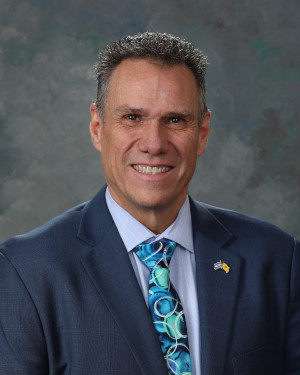
2025 Regular Session Introduced by Craig Brandt and 4 co-sponsors

SB 480 would require annual PED reports listing public school students who don’t graduate within four years, sharing the data with postsecondary and workforce programs to boost out

Pocket Veto
0
WeVote Research Nonpartisan
Bill Summary · SB 480

SB 480 — Student Graduation Reporting (Education, Public Schools)

Status: Pocket veto (did not become law)
Introduced: February 19, 2025
Primary subject: Education / Public schools

Purpose

SB 480 would have required the state Public Education Department (PED) to create an annual list of public-school “out‑of‑cohort” students — those of school age who have not graduated high school within four years of entering 9th grade — and to share that directory information, on request, with postsecondary, adult‑education, workforce and legislative entities. The bill’s intent was to improve outreach and connect nongraduates to programs (adult basic education, high‑school equivalency, workforce training) that could raise credential attainment and labor‑market participation.

Key provisions

  • PED must compile an annual report (directory information) listing all out‑of‑cohort students who were enrolled in a public school during any of the immediately preceding four school years.
  • Report deadline: no later than July 15 following each school year.
  • On request, PED must provide the report to:
    • Higher Education Department and public postsecondary institutions,
    • School districts and charter schools,
    • Legislative Education Study Committee and Legislative Finance Committee,
    • New Mexico–based adult basic education providers and workforce development programs serving out‑of‑cohort students.
  • Defines “out‑of‑cohort students” as school‑age persons not graduating within four years after starting 9th grade.
  • No appropriation included.

Who would be affected

  • Primary: students who do not complete high school on the four‑year timeline.
  • State agencies: PED (responsible for production/distribution), HED, and legislative committees (recipients/partners).
  • Service providers: adult education programs, community colleges, workforce programs, and local schools that might use the data for outreach and recruitment.
  • Fiscal impact: PED and recipients may need modest staff time and data‑sharing agreements; analyses estimated minimal recurring costs but noted potential administrative efforts to manage privacy and distribution. No direct appropriation in the bill.

Privacy and implementation notes

  • The bill relies on directory information already reported by schools (PED/Nova submissions). Any redistribution would require attention to FERPA and data‑sharing controls.
  • Supporters argued the measure could improve connections to adult education and raise diploma/equivalency attainment, with downstream labor‑market and social benefits; critics raised privacy and implementation workload concerns.

Procedural/timeline

  • Introduced Feb 19, 2025; advanced through committee stages.
  • Required annual reports to be completed by July 15 each year if enacted.
  • According to provided status information, the measure was pocket‑vetoed by the governor (did not become law).

Compiled from official sources — confirm details with the bill’s official record.

Sign in to ask a question.