

WeVote

Bill

Bill

HR 6338

Stop Illegal Fishing Act

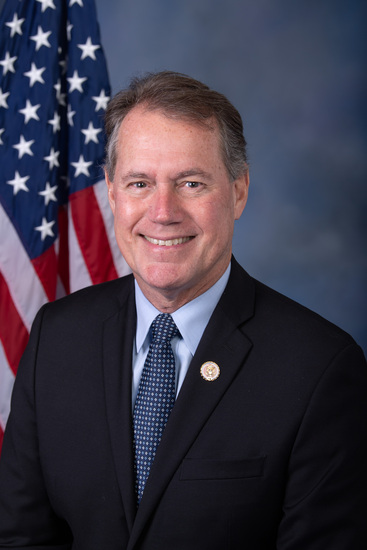
119th Congress Introduced by Ed Case and 3 co-sponsors

Imposes targeted sanctions on foreign individuals and vessels involved in IUU fishing, including asset freezes and visa bans, to deter illegal fishing.

Received in the Senate and Read twice and referred to the Committee on Foreign Relations.
1
WeVote Research Nonpartisan
Bill Summary · HR 6338

Overview

HR 6338, the Stop Illegal Fishing Act, introduced in the 119th Congress, seeks to combat illegal, unreported, and unregulated (IUU) fishing by imposing targeted sanctions on foreign persons and foreign vessels engaged in IUU fishing. The bill directs the President to establish and administer an IUU fishing sanctions program, with enforcement mechanisms, reporting requirements, and limited exceptions.

Objective and rationale

  • Main aim: Deter and prevent IUU fishing by imposing penalties on those responsible, thereby protecting global fisheries, marine ecosystems, and national and maritime security interests.
  • Policymaking rationale highlighted in the bill’s sense-of-Congress section: IUU fishing is a growing global problem, with China identified as a major perpetrator; IUU fishing undermines coastal communities, international law, and the rules-based order, and can involve poor labor conditions aboard vessels. The United States is urged to use sanctions to deter such activities.

Key provisions and changes

  • Sanctions targets (section 3(a) and 3(b)):
    • Foreign persons: sanctions apply to individuals who knowingly
    • Own vessels that engage in IUU fishing,
    • Serve as captain or senior crew on such vessels,
    • Operate as an entity primarily engaged in IUU fishing,
    • Hold officer or senior managerial roles in entities primarily engaged in IUU fishing.
    • Foreign vessels: sanctions apply to vessels that engage in IUU fishing.
  • Sanctions program (section 3(d) and (e)):
    • Requires the President to create an IUU fishing sanctions program and to implement specified sanctions.
    • Sanctions include:
    • Asset blocking: authority to block and prohibit all transactions in property of sanctioned foreign persons or vessels, including property in the United States or under U.S. control.
    • Visa/admission restrictions: inadmissibility and denial of visas or entry documentation for designated individuals; existing visas can be revoked with immediate effect and cancelation of other entry docs.
  • Reporting (section 3(c)):
    • Requires a biennial reporting schedule to Congressional committees (first due within 180 days after enactment, then annually for five years) detailing enforcement efforts and lists of sanctioned targets.
  • Exceptions (section 3(f)):
    • Complying with certain international obligations (e.g., UN Headquarters Agreement).
    • Humanitarian exemptions: not imposing sanctions on activities related to humanitarian aid, sale of food, medicine, or necessary goods, and related transactions.
    • Intelligence, law enforcement, and national security activities are exempt.
    • Vessel safety provisions: sanctions do not apply to provisions supplied for crew safety and vessel maintenance to prevent harm or environmental damage.
  • Implementation and penalties (sections 3(g)-(h)):
    • Allows use of authorities under the International Emergency Powers Act (IEEPA) to administer sanctions.
    • Penalties align with those in IEEPA, including penalties for violations, attempts, conspiracies, or facilitating violations of sanctions.
    • Waiver authority: the President may waive sanctions for national security interests, with notification to Congress at least 15 days in advance.
  • Definitions (section 3(i)):
    • Defines “foreign person,” “foreign vessel,” “IUU fishing,” and “United States person.”
    • Clarifies appropriate congressional committees and other terms to avoid ambiguity.

Who is affected

  • Foreign individuals and entities involved in IUU fishing (owners, captains, senior crew, operators, officers, and managers).
  • Foreign vessels engaged in IUU fishing.
  • United States persons may encounter asset freezes and restricted dealings related to sanctioned targets.

Procedural and timeline aspects

  • Enactment would trigger a mandated sanctions program, with initial reporting due within 180 days and annual updates for five years.
  • Sanctions could be waived under specified national security justifications.
  • Several exceptions apply to humanitarian and international obligations, ensuring flexibility for essential activities.

Potential impact

  • Strengthened U.S. leverage to deter IUU fishing through financial and immigration sanctions.
  • Increased transparency and accountability for individuals and entities linked to IUU fishing.
  • Possible broader impact on international fisheries governance and maritime security cooperation.

Compiled from official sources — confirm details with the bill’s official record.

Sign in to ask a question.