

WeVote

Bill

Bill

HF 602

Stephen; water and sewer infrastructure and street reconstruction improvement funding provided, bonds issued, and money appropriated.

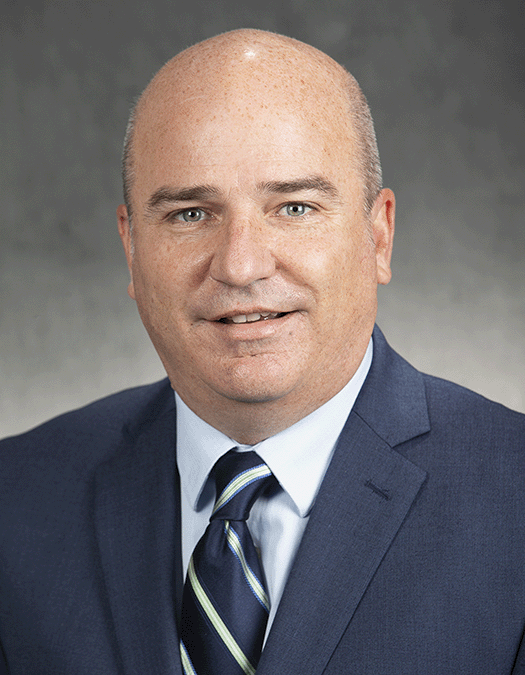
2025-2026 Regular Session Introduced by John Burkel

HF 602 would authorize state bonds and appropriations to finance water and sewer infrastructure upgrades and street reconstruction projects.

Introduction and first reading, referred to Capital Investment
0
WeVote Research Nonpartisan
Bill Summary · HF 602

Summary of HF 602 (2025-2026) – Minnesota

Overview

HF 602 is a bill introduced in the Minnesota House during the 2025-2026 session. The primary intent is to provide funding for water and sewer infrastructure and street reconstruction, including the issuance of bonds and appropriation of state money to support these projects. The bill is introduced in the Capital Investment committee and has a co-sponsor: John Burkel. The action history shows introduction and first reading on February 13, 2025.

Purpose and Intent

  • To support the improvement and expansion of water and sewer infrastructure.
  • To fund street reconstruction projects.
  • To authorize the issuance of bonds to finance the proposed projects.
  • To appropriate state dollars to back the bond financing and project costs.

Key Provisions and Changes (Expected Components)

Note: The summary below reflects typical features of infrastructure bonding and appropriation bills in Minnesota. The specific text of HF 602 would detail exact programs, project lists, and financing mechanisms. When available, readers should consult the bill’s official language for precise provisions.

  • Bond Authorization
    • Authorization for state-issued bonds to finance water/wastewater infrastructure and street reconstruction.
    • Determination of bond term lengths, interest rate management, and debt service requirements.
  • Funding Focus Areas
    • Water infrastructure improvements (e.g., water mains, treatment facilities, distribution systems).
    • Sewer infrastructure upgrades (e.g., sewer lines, interconnection upgrades, stormwater considerations as applicable).
    • Street reconstruction and related transportation infrastructure improvements (paving, curbs, gutters, sidewalks, drainage).
  • Appropriations
    • Specific appropriation amounts to fund identified projects or to establish grant/loan programs for local governments.
    • Potential allocation guidance by region or municipality, prioritizing projects with timelines or match requirements.
  • Program Administration
    • Roles for state agencies (likely the Department of Employment and Economic Development, Department of Transportation, or Board of Water and Soil Resources in Minnesota) responsible for implementing the program.
    • Application, scoring, and approval processes for project funding.
    • Compliance with state environmental, labor, and procurement standards.
  • Local Match and Accountability
    • Potential local match requirements or leverage standards.
    • Reporting and accountability measures to monitor project progress, expenditures, and outcomes.
  • Timelines and Deadlines
    • Project initiation windows, deadline for project submissions, and anticipated milestones for bond issuance and fund availability.
    • Potential sequencing: initial bond sale, followed by disbursement of funds upon project approval.

Affected Parties and Impact

  • Local governments (cities, counties) planning water/sewer upgrades and street reconstruction projects.
  • Utilities and water/sewer operators undertaking infrastructure improvements.
  • Taxpayers and bondholders, due to state debt and debt service obligations.
  • Contractors and construction industry stakeholders participating in funded projects.

Procedural and Timeline Considerations

  • Introduced and referred to the Capital Investment committee on February 13, 2025.
  • As an infrastructure bonding measure, the bill would typically progress through committee reviews, possible amendments, and floor consideration, with potential pass/fail votes and subsequent reconciliation if there are companion bills or Senate counterparts.
  • If enacted, bond issuance and fund disbursement would follow the approved debt plan and appropriation schedule, with project-level milestones guiding expenditure.

Notes for Further Review

  • The exact project list, eligible costs, match requirements, and distribution methodology are not specified in the provided summary. Review the bill text for:
    • Total bondable amount and issuance schedule
    • Eligible project types and geographic distribution
    • Local government match requirements and fiduciary oversight
    • Environmental review, bidding, and labor standards
    • Timeline for project readiness and fund availability

This summary provides a high-level understanding of HF 602’s objectives and potential impact based on the bill’s title, action history, and standard infrastructure financing practices in Minnesota. For precise details, consult the official bill language and fiscal notes.

Compiled from official sources — confirm details with the bill’s official record.

Sign in to ask a question.