

WeVote

Bill

Bill

HR 9915

Stealth Bot Prohibition Act

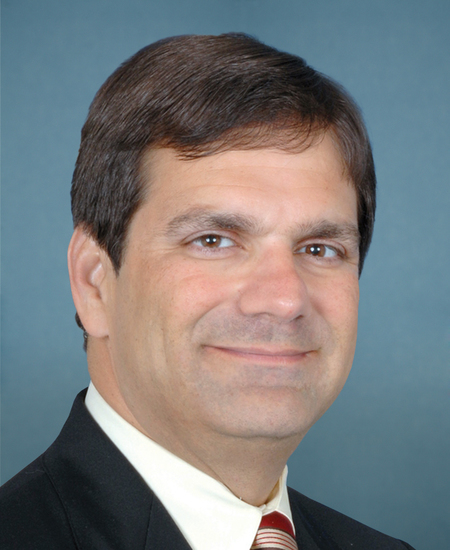
119th Congress Introduced by Gus Bilirakis and 2 co-sponsors

Prohibits stealth bots that harm sites or disguise as humans, and lets the FTC and states seek penalties for violations.

Introduced in House
0
WeVote Research Nonpartisan
Bill Summary · HR 9915

Stealth Bot Prohibition Act (HR 9915)

What this bill aims to do

  • Prohibits the deployment and use of stealth bots that access websites or online services in ways that could damage, impair, or burden a site’s operation.
  • Prohibits misrepresenting or concealing a bot’s identity or purpose to resemble a human user, particularly in connection with generative AI models or services.
  • Establishes enforcement and penalties, with state-level participation allowed through a framework that coordinates with the Federal Trade Commission (FTC).

Key provisions and changes

  • Prohibition scope (Section 2(a))

    • It is illegal to:
    • Deploy a stealth bot to access a website, digital platform, or online service in a way that is reasonably likely to harm or burden the site’s operation.
    • Intentionally misrepresent or conceal the bot’s nature to appear as a human user when used with generative AI.
  • Enforcement and penalties (Section 2(b))

    • The FTC may bring civil actions in federal courts to seek civil penalties or to enjoin violations.
    • Individual civil penalties for each violation may not exceed $53,000, adjusted annually for inflation via the Consumer Price Index.
    • The FTC is given broad enforcement authority, aligned with the FTC Act.
  • State actions (Section 2(c))

    • States (through their attorneys general or equivalent agencies) can bring civil actions on behalf of residents for violations.
    • States must provide written notice to the FTC before filing (or immediately after if pre-notice isn’t feasible).
    • The FTC can intervene, participate, and file appeals in such state actions.
    • If the federal action is already underway, state actions against the same defendants for the same violations are limited during the pendency of the federal action.
  • Definitions (Section 2(d))

    • Artificial Intelligence (AI): As defined in the National AI Initiative Act of 2020.
    • Bot: Software that retrieves, scans, indexes, scrapes, or otherwise accesses a website or internet source (includes crawlers, spiders, fetchers, user agents, AI agents, etc.).
    • Stealth Bot: A bot that operates without disclosing its identity or purpose, including failing to identify itself via a proper user-agent string or failing to disclose the bot’s specific nature and intended use of content or data mining, AI development, training, or other automated processing.
    • Generative AI: AI capable of generating content such as code, images, text, music, simulations, 3D renderings, or videos.
    • Other standard terms: Commission (FTC), State, etc.
  • Limitations and relationships (Section 2(e))

    • Civil actions must be filed within six years of the violation.
    • The act does not affect other federal or state rights, limitations, or remedies.
    • The act does not authorize new regulations beyond the enforcement provisions described.
  • Effective date (Section 2(f))

    • The act becomes effective 180 days after enactment.

Who is affected

  • Individuals and entities that deploy automated bots to access websites or online services, particularly stealth bots that disguise as human users or obscure bot purposes.
  • Operators of websites and online platforms that could be impacted by stealth bot activity.
  • Businesses and developers working with AI, including generative AI services that might rely on bot-operated data collection or interaction.
  • State attorneys general and other state agencies that enforce consumer protection laws, in coordination with the FTC.

Procedural and timeline notes

  • Introduces a 180-day “effective date” from enactment before provisions take effect.
  • Establishes a framework for concurrent federal and state enforcement:
    • FTC enforcement in federal courts and coordination with state actions.
    • States may sue on behalf of residents but must notify the FTC prior to filing (or immediately after if pre-notice isn’t feasible).
    • Federal action can limit parallel state actions against the same defendants and allegations during its pendency.
  • Civil penalties are capped and indexed for inflation, providing a clear monetary consequence for violations.
  • Definitions tie stealth bots to disclosure requirements and specific uses related to AI and data processing.

Potential impact and considerations

  • Creates a clearer legal standard against stealth bot use and disguising bot identity, with a tool for platform operators to seek remedies.
  • Could influence how researchers, marketers, and developers deploy automated crawlers or AI-related data processing.
  • The broadened enforcement structure may increase regulatory risk for entities deploying automated access tools without transparent disclosure of bot identity and purpose.
  • The six-year limitation period affects when claims can be brought, shaping strategy for detection and enforcement.

Compiled from official sources — confirm details with the bill’s official record.

Sign in to ask a question.