

WeVote

Bill

Bill

H 467

STATE PENITENTIARY – Adds to existing law to establish provisions regarding rehabilitation achievements and credits toward a reduction of sentence.

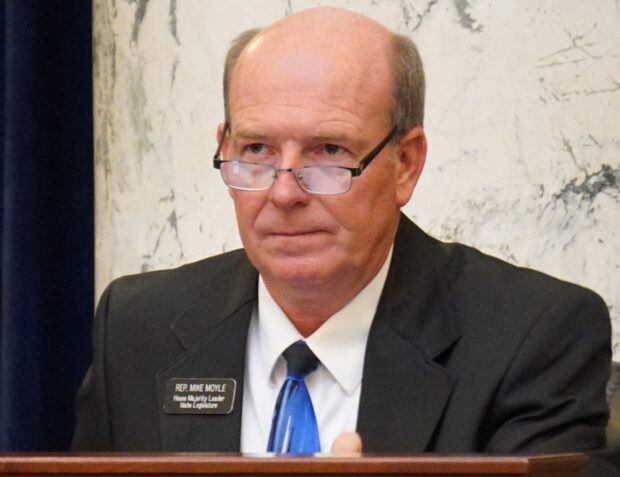
68th Legislature, 1st Regular Session (2025) Introduced by Mike Moyle

House Bill H 467 allows Idaho inmates to earn sentence-reducing credits for rehabilitation efforts, aiming to cut costs, reduce recidivism, and enhance public safety.

Reported Printed; Filed in the Office of the Chief Clerk
0
WeVote Research Nonpartisan
Bill Summary · H 467

Summary of House Bill H 467

Bill Overview

  • Bill Number: H 467
  • Title: STATE PENITENTIARY – Adds to existing law to establish provisions regarding rehabilitation achievements and credits toward a reduction of sentence.
  • Introduced: March 28, 2025
  • Status: Reported Printed; Filed in the Office of the Chief Clerk
  • Classification: Bill
  • Subject Areas: Colleges and Universities, Correction Department, Courts, Criminal Offenses and Procedures, Education, Law Enforcement

Purpose and Intent

House Bill H 467 aims to establish a system of productivity credits for offenders in the Idaho Department of Corrections. The bill is inspired by the First Step Act, which seeks to incentivize rehabilitation efforts among incarcerated individuals. The primary goals are to reduce recidivism, enhance public safety, improve conditions for corrections officers, and lower overall corrections costs.

Key Provisions

The bill introduces a new section (20-101E) to the Idaho Code, detailing how offenders can earn credits toward a reduction of their sentences based on their rehabilitation achievements. Key provisions include:

  1. Eligibility:

    • Applies to individuals sentenced for offenses committed on or after July 1, 1986, excluding those sentenced to life or death.
    • Individuals must demonstrate prosocial behavior and engage in rehabilitation activities.
  2. Credit System:

    • Prosocial Behavior: Up to 10 days of credit per month for maintaining a clean disciplinary record.
    • Rehabilitation Activities:
      • Up to 20 days per month for maintaining employment or volunteer positions.
      • Up to 18 days per month for participation in drug and alcohol treatment or self-improvement programs.
    • Educational Achievements:
      • Credits for completing educational programs range from 40 days for core education to 180 days for a master's or professional degree.
  3. Limitations:

    • Credits cannot reduce the minimum period of confinement as mandated by existing laws.
    • Certain offenses, such as crimes against children and murder, disqualify individuals from earning credits.
  4. Forfeiture of Credits:

    • Credits may be forfeited due to misconduct or disciplinary actions, with specific conditions outlined for restoration.
  5. Transparency:

    • The Department of Corrections is required to maintain and publish records of modified sentence satisfaction dates for eligible individuals.

Impact

  • Financial Implications: The bill is projected to save approximately $13 million in corrections costs over the first five years and an additional $5 million annually thereafter. It is also expected to generate between $2 million and $5 million in economic stimulus.
  • Target Population: The bill primarily affects individuals incarcerated in state correctional facilities who are actively engaged in rehabilitation programs.

Procedural Aspects

  • The bill was introduced and read for the first time on March 28, 2025, and has been reported printed and filed with the Chief Clerk as of March 31, 2025.

This summary provides a comprehensive overview of House Bill H 467, highlighting its objectives, key provisions, and potential impacts on the correctional system and affected individuals in Idaho.

Compiled from official sources — confirm details with the bill’s official record.

Sign in to ask a question.