

WeVote

Bill

Bill

S 4849

State and Local Election Security Act of 2026

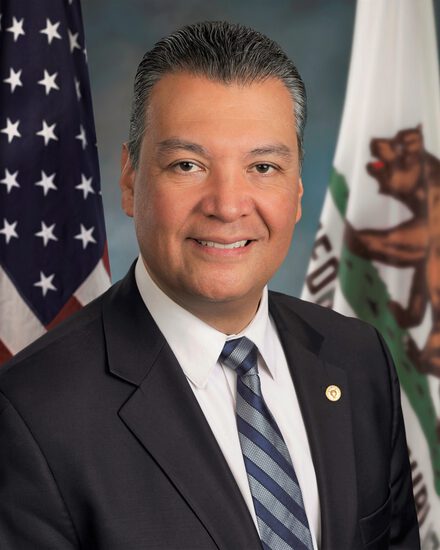
119th Congress Introduced by Alex Padilla and 1 co-sponsor

Authorizes multi-year Federal Election Security Grants under HAVA to fund state/local election security upgrades, admin, and information sharing, with reporting and pass-through ru

Introduced in Senate
0
WeVote Research Nonpartisan
Bill Summary · S 4849

Overview

  • Bill: S. 4849, State and Local Election Security Act of 2026
  • Session: 119th Congress
  • Purpose: Authorize federal funding for election security grants for fiscal years 2026–2028 and make related amendments to the Help America Vote Act (HAVA) of 2002, along with provisions related to election information sharing and territorial grants.
  • Introduced by: Senator Padilla (with Senator Schiff); House sponsor not listed
  • Current status: Read twice and referred to the Committee on Rules and Administration (as of introduction on June 22, 2026)

Main purpose and intent

  • Ensure stable, ongoing federal funding to bolster state and local election administration and security.
  • Reassure voters that elections are safe and secure, while clarifying the need for consistent federal support.
  • Enhance coordination and information sharing to defend against election threats and interference.

Key provisions and changes

Title X of the Help America Vote Act (HAVA) – Election Security Grants

  • Establishes a new grant program (TITLE X—Election Security Grants) under HAVA.
  • For each fiscal year, the Federal Election Commission (FEC) would pay grants to states (and in coordination with local governments) to fund election security activities.
  • Eligible uses of funds (Section 1001(b)(1)):
    • Modernizing election infrastructure
    • Improving election administration efficiency
    • Preventing, preparing for, and responding to election security threats
  • Restrictions on use (Section 1001(b)(2)):
    • Funds cannot be used to pay for ongoing litigation costs (except as otherwise permitted by the section)
    • Funds cannot be used to pay judgments
  • Compliance and assurances (Section 1001(c)):
    • Recipients must certify consistency with applicable laws and with other requirements of the bill (and related laws)
  • Payment mechanics (Section 1001(d)):
    • Annual payment amount determined by minimum payment plus a voting-age population proportion
    • Minimum payment: 0.5% of the total payments available for the fiscal year for most states/DC; 0.1% for other states
    • Voting-age population proportion: portion of remaining funds allocated in proportion to each state’s share of the national voting-age population (based on the latest decennial census)
    • Timing: payments made no later than 45 days after the first day of the fiscal year (31 days after enactment for the 2026 payment)
  • Distribution to local election officials (Section 1002(a)):
    • States must pass through at least 50% of the payment to units of local government responsible for federal elections
    • If a state certifies that it is primarily responsible for administering federal elections, the pass-through percentage may be adjusted to reflect the relative duties and costs
  • Reporting (Section 1002(b)):
    • States must report, within 50 days after each federal election, a full accounting of uses of the funds and how those uses improved federal election administration
    • Congress will receive a copy of these reports within 3 days of state submission
  • Use of funds in state election funds (Section 1002(c)):
    • Funds must be deposited into and maintained in a state election fund if the state has such a fund (for tracking and accountability)
  • Authorization of appropriations (Section 1003):
    • $5,000,000,000 for FY2026
    • $2,500,000,000 for FY2027
    • $2,500,000,000 for FY2028
    • Funds remain available to the state without fiscal year limitation (subject to certain controls)
    • Unobligated funds revert to the Treasury after 5 years unless extended (up to 3 additional years by state request)

Territorial and information-sharing provisions

  • Sector-wide territorial scope (Section 4):
    • Amends HAVA to explicitly include U.S. territories (e.g., Virgin Islands, Commonwealth of the Northern Mariana Islands) in the process of electing a Delegate or Resident Commissioner to Congress, aligning with related administrative changes
  • Election Information Sharing Grants (Section 5):
    • Authorizes $50,000,000 per year (FY2026–FY2028) to the Director of the Cybersecurity and Infrastructure Security Agency (CISA)
    • Purpose: provide grants to the Center for Internet Security to support the Elections Infrastructure Information Sharing and Analysis Center (EI-ISAC)

Who would be affected

  • State governments and units of local government responsible for administering elections for Federal office:
    • Eligible to receive annual security grant payments
    • Required to allocate a portion to local election offices and report on fund use
  • Local election offices:
    • Potential significant funding for modernization, security upgrades, and efficiency improvements
  • Voters:
    • Indirectly affected through improved election security, reliability, and countermeasures against interference
  • Territorial entities:
    • Virgin Islands, Northern Mariana Islands, and other territories receiving expanded eligibility for election-related support
  • EI-ISAC and the Center for Internet Security:
    • Potentially increased funding and support for information-sharing activities and cyber-security coordination

Procedural and timeline notes

  • Payments to states would commence in FY2026 and continue through FY2028, with potential for continued availability and extension for unobligated funds.
  • Reports to Congress are due within 3 days of state submission, aligning federal oversight with state progress.
  • Funds designated for pass-through to localities require compliance certification and ongoing accountability.
  • Unobligated funds have a built-in five-year clock for return to the Treasury, with possible extensions for up to three years.

Potential impacts and considerations

  • Accelerates federal financial support for state and local election security efforts.
  • Creates a formula-based allocation that accounts for population, while ensuring minimum funding levels for states and the District of Columbia.
  • Emphasizes accountability through reporting and certification requirements.
  • Expands information-sharing capacity by dedicating funds to EI-ISAC via the Center for Internet Security.
  • Addresses territorial representation concerns by updating HAVA to include certain territories in governance structures.

If you’d like, I can provide a side-by-side comparison with current law (HAVA 2002) or a brief pros/cons analysis for stakeholders.

Compiled from official sources — confirm details with the bill’s official record.

Sign in to ask a question.