

WeVote

Bill

Bill

SB 3452

ST BD EDUCATION-ELECT MEMBERS

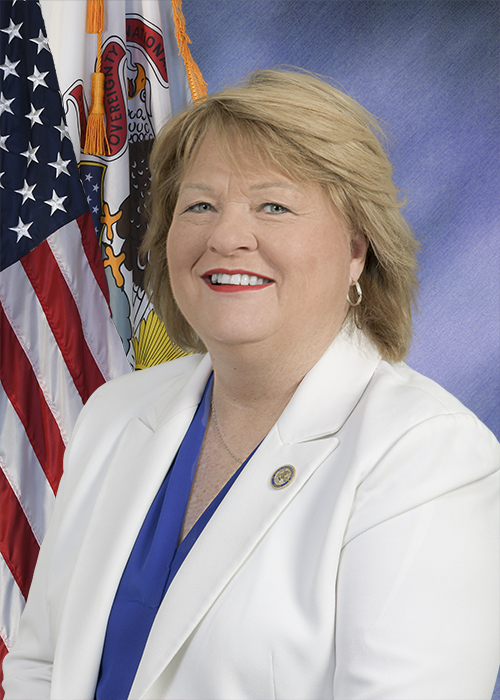
104th Regular Session Introduced by Terri Bryant

The bill would establish a five-member, nonpartisan, elected State Board of Education starting in 2028, replacing part of the current board with districts and four-year terms.

Referred to Assignments
0
WeVote Research Nonpartisan
Bill Summary · SB 3452

Overview

SB3452, introduced in the 104th General Assembly of Illinois, would reorganize the composition and election method of the State Board of Education (SBE) and make related changes to election timing and governance. The bill advances a shift from appointed/influencer-driven selection toward an elected, nonpartisan model for five SBE seats beginning with the 2028 general election and continuing every four years.

Purpose and Intent

  • Create a five-member, elected, nonpartisan State Board of Education beginning in 2028, with one member elected from each judicial district.
  • Establish that these five new SBE members will be elected at the general election every four years.
  • Set a nonpartisan framework for these elections and define petition and quorum rules.
  • Amend Election Code provisions to align school board elections and related processes with the new structure.
  • Reorganize quorum rules and certain governance procedures to reflect the expanded, mixed (elected and appointed) board structure.

Key Provisions and Changes

  • Election of 5 SBE Members:

    • Beginning with the November 7, 2028 general election (and every four years thereafter), five members of the State Board of Education shall be elected.
    • Each SBE seat corresponds to a judicial district (one per district).
    • Elections for these seats shall be nonpartisan.
    • Nomination petitions require at least 0.5% of registered voters in the respective judicial district.
  • Quorum Changes:

    • On the date the five initially elected SBE members take office, a majority of the entire SBE shall constitute a quorum for Board actions.
    • Prior to that date, a different (specified) threshold applies, allowing actions with a majority of the then-serving appointees/voting members.
  • Election Code Amendments:

    • Adds Section 2A-56 to establish the timing and mechanism for the five SBE seats to be elected.
    • Amends multiple sections (2A-1.2, 10-6, 10-9, 22-1, 22-7) to integrate the new SBE election framework with consolidated elections, nomination deadlines, and canvassing procedures.
    • Specifies filing and canvassing timelines, particularly:
    • Nomination papers generally due 162–169 days before elections (with variations for school district elections and nonpartisan offices).
    • Designated electoral boards for objections and the composition of those boards (state, county, municipal, township, education) with procedures when conflicts arise (e.g., a member running for the office in question).
  • School Code Revisions:

    • Sections 1A-1, 1A-2, 1A-2.1, and 1A-4 are amended.
    • Reconfigures the State Board of Education composition: 5 elected members (from nonpartisan elections) and 8 appointed members plus a chairperson.
    • Appointed members would be selected to reflect regional representation, including seats from Cook County, the counties adjacent to Cook, and at-large seats, with educator representation constraints.
    • Terms and rotation are laid out, with appointments by the Governor with Senate advice and consent, and 4-year terms for appointed members.
    • Establishes that a newly elected Governor starting a term after the effective date will oversee appointment processes for vacancies.
    • Addresses governance structure for the chief education officer (State Superintendent) and performance-based contracting, while preserving Board authority and accountability.
    • Creates a joint Education Committee structure linking K-12 policy with higher education and workforce development; the committee is to meet regularly and report findings.

Who Would Be Affected

  • Illinois students and families, through potential changes in governance and policy direction of public education from pre-K through 12th grade, and vocational education.
  • Local and regional school districts governed by standards and policies set by the SBE.
  • Election administrators and voters, due to new nonpartisan SBE seats elected by judicial district.
  • The Governor and the General Assembly, due to restructured appointment roles, contract terms for the State Superintendent, and new governance mechanisms.
  • Agencies involved in education policy, workforce development, and higher education (via joint Education Committee and coordination responsibilities).

Procedural and Timeline Aspects

  • Effective Implementation:
    • The five elected SBE members would begin serving after the 2028 general election, with terms lasting four years.
    • Quorum shifts to a majority of the Board once those five members are seated.
  • Nomination and Filing:
    • Petition and filing deadlines align with standard Illinois election timelines, with petition requirements set at 0.5% of district voters.
    • Various sections of the Election Code would be amended to reflect the new nonpartisan SBE seats and the associated election mechanics.
  • Canvassing and Certification:
    • The State Board of Elections and other electoral boards would handle objections, canvassing, and certification under the revised framework.
  • Governance:
    • The Board would appoint a State Superintendent of Education under a performance-based contract framework, with defined terms and renewal cycles tied to Governor terms.
    • A standing joint Education Committee would be established (and later abolished) as part of governance realignment.

Note: The bill includes transitional provisions for the shift from the existing structure to the new elected framework and preserves certain governance mechanisms during the transition.

Compiled from official sources — confirm details with the bill’s official record.

Sign in to ask a question.