

WeVote

Bill

Bill

HR 8833

Sister City Transparency Act

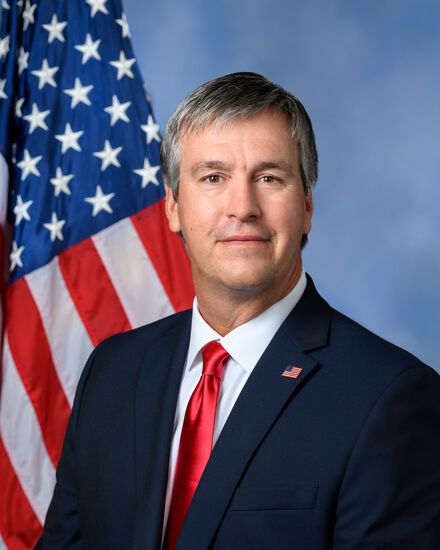
119th Congress Introduced by Barry Moore and 2 co-sponsors

The act directs a GA study to assess transparency, safeguards, and risks of sister city partnerships with foreign communities from higher-corruption countries.

Introduced in House
0
WeVote Research Nonpartisan
Bill Summary · HR 8833

Summary of H.R. 8833 – Sister City Transparency Act

Purpose

  • To direct the Comptroller General of the United States to conduct a study evaluating the activities of sister city partnerships operating within the United States, focusing on partnerships involving foreign communities from countries with significant public sector corruption.
  • The goal is to assess transparency, safeguards, and potential risks associated with these partnerships, and to identify best practices.

Key Provisions

  • Short Title: The act may be cited as the “Sister City Transparency Act.”

  • Definitions (Section 2)

    • Appropriate Congressional Committees: Lists six committees from the Senate and House that would oversee the study (including Foreign Relations, Health, Education, Labor, Pensions, Armed Services in both chambers).
    • Foreign Community: Any subnational unit of government outside the United States.
    • Sister City Partnership: A formal agreement between a U.S. community and a foreign community recognized by Sister Cities International and operating within the United States.
    • United States Community: A state, county, city, or other local government unit in the United States.
  • Study Mandate (Section 3)

    • The Comptroller General must conduct a study focusing on sister city partnerships that involve foreign communities from countries with a 2019 Transparency International Corruption Perceptions Index score of 45 or less (i.e., relatively higher perceived corruption).
    • Elements of the Study (what the study must examine):
    • How foreign communities identify U.S. communities as candidates for partnerships, including economic activities and demographics.
    • Activities conducted within sister city partnerships.
    • Economic and educational outcomes of those activities.
    • Information that partnerships publicly share (e.g., contracts, activities).
    • How U.S. communities safeguard freedom of expression within partnerships.
    • Oversight practices to mitigate risks of foreign espionage and economic coercion.
    • Assessments to be Included:
    • Transparency of contracts and activities.
    • Presence of economic arrangements that could expose U.S. communities to malign market practices.
    • Educational arrangements that might affect freedom of expression.
    • Access of foreign nationals to local commercial, educational, and political institutions.
    • Whether partnerships could be used to advance strategic objectives harmful to U.S. interests.
    • Potential for partnerships to enable or contribute to human rights abuses or academic/industrial espionage.
    • Mitigation of foreign nationals’ use of visa programs in relation to partnerships.
    • Review of Activities:
    • Range of activities, including cultural exchange and economic development.
    • Differences in activities across partnerships.
    • Identification of best practices to ensure transparency of agreements, activities, and personnel.
    • Oversight, Transparency, and Safeguards: The study should consider how to improve transparency regarding agreements, activities, and personnel involved.
    • The study may also address whether partnerships could expose U.S. communities to inappropriate influence or risks.
    • Source Countries: Focuses on partnerships with foreign communities from countries with low Transparency International scores (i.e., higher perceived corruption).
  • Report to Congress (Section 3, Subsection (c))

    • The Comptroller General must submit a report to the appropriate congressional committees no later than 6 months after initiating the study.
    • The report should include findings, conclusions, and any recommendations. A classified annex may be included if necessary.

Who Is Affected

  • United States communities engaging in or considering sister city partnerships with foreign communities, particularly those from countries with higher corruption perceptions.
  • Oversight and compliance personnel in U.S. local governments, as well as policymakers within the listed congressional committees.

Timeline and Procedural Aspects

  • Introduction date: May 14, 2026.
  • The act directs the Comptroller General to initiate the study and deliver the report within 6 months of starting.
  • The bill is referred to the House Committee on Foreign Affairs (with potential consideration by the listed appropriate congressional committees upon further action).

Potential Impact

  • Aims to increase transparency and oversight of sister city partnerships, especially where foreign partners come from higher-risk jurisdictions.
  • Could influence how U.S. communities select partner cities, disclose contracts, and manage educational and cultural exchanges.
  • May lead to policy changes or recommended best practices to mitigate risks of foreign influence, espionage, or coercion, and to ensure freedom of expression within partnerships.

Notes

  • The bill does not create new funding or penalties; it establishes a study and reporting requirement.
  • The focus on 2019 Corruption Perceptions Index scores ties the scope to countries perceived as higher risk for corruption.

If you’d like, I can provide a one-page briefing with bullet-point takeaways for policymakers or a slide-friendly version.

Compiled from official sources — confirm details with the bill’s official record.

Sign in to ask a question.