

WeVote

Bill

Bill

HR 8549

Second Look Act of 2026

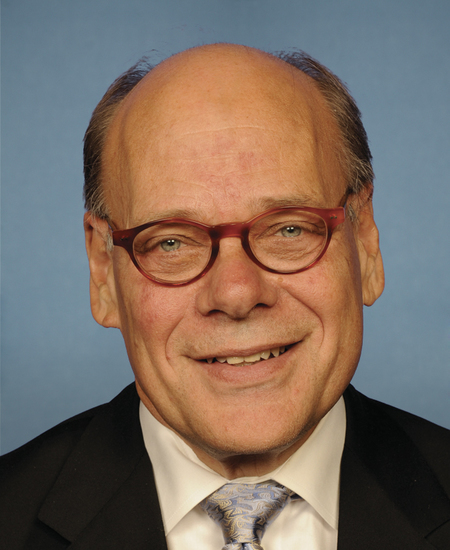
119th Congress Introduced by Steve Cohen and 8 co-sponsors

Allows federal prisoners over 50 with 10+ years served to petition for a potentially reduced sentence with supervised release, if not a danger and meets factors.

Introduced in House
0
WeVote Research Nonpartisan
Bill Summary · HR 8549

Summary of HR 8549 — Second Look Act of 2026

Purpose and Intent

  • Establishes a mechanism for incarcerated individuals in the Federal system to petition a court for a second look at long sentences.
  • Specifically targets sentences longer than 10 years and allows review when the defendant is not a danger to others and has demonstrated readiness for reentry.
  • Aims to address concerns about lengthy or life-like sentences, provide potential pathways for reentry, and introduce periodic review opportunities consistent with evolving views on sentencing and rehabilitation.

Key Provisions and Changes

  • New statutory provision: Section 3627 (Modification of Certain Terms of Imprisonment)
    • Courts may reduce a term of imprisonment if:
    • The original sentence is more than 10 years.
    • The defendant has served at least 10 years.
    • The court finds, after weighing specified factors, that the defendant is not a danger and is ready for reintegration, and that reducing the sentence is in the interests of justice.
  • Unsupervised Release/Supervised Release
    • Any reduced sentence must include a term of supervised release.
    • The length and conditions of supervised release follow existing rules (including 18 U.S.C. 3583), with potential modifications as needed.
  • Factors for Court Consideration (Subsection c)
    • Courts may consider the standard 18 U.S.C. 3553(a) factors (nature of the offense, history and characteristics of the defendant).
    • Mandatory considerations include:
    • Age at the time of the offense and at the time of petition.
    • Counseling of counsel, Bureau of Prisons (BOP) report, and prosecutor input.
    • Victim impact statements, family/community context, and potential for reunification.
    • Physical/mental health evaluations.
    • Juvenile status at the time of the offense (if applicable) and diminished culpability.
    • Research and data regarding aging inmates and recidivism trends.
    • Input from victims, family members, and community.
  • Rebuttable Presumption for Older Defendants
    • A 50-year-old defendant at the time of filing is presumed eligible for release, subject to rebuttal.
  • Limitations on Applications
    • Second applications can be filed no earlier than 5 years after a final denial of a prior application.
    • Third applications no earlier than 2 years after a final denial of a second.
    • Final application eligibility requires the defendant to be at least 50 years old and to have exhausted prior sentencing modification avenues.
  • Procedural Requirements (Section 3)
    • Notice: BOP must notify the defendant, the sentencing court, the U.S. Attorney, and the assigned defense office within 30 days after the 10-year mark of imprisonment for offenses >10 years.
    • Filing: An application is filed as a motion in the district where the sentence was imposed, with consideration for expanding the record and potential hearings.
    • Hearings: Courts may hold hearings, admit evidence, and require presence of the defendant (with telepresence allowed). Counsel must be provided if requested or necessary, at no cost to the defendant.
    • Open court findings: Courts must articulate in writing and in open court the reasons for granting or denying relief.
    • Appeals: Both sides may appeal final orders under the standard Federal Rules of Appellate Procedure.
  • Annual Reporting (Section 4)
    • The U.S. Sentencing Commission must produce an annual report (starting one year after enactment) detailing:
    • Numbers of sentence reductions granted and denied.
    • Numbers of individuals released under this section.
    • Demographic data (race, gender) of applicants, grant recipients, and releases.
    • Geographic distribution of applicants, grantors, and releases (by circuit and state).
    • Average sentence reduction amounts and counts of applicants aged 50+.
    • The Attorney General must cooperate and supply information as needed.
  • Technical and Conforming Amendments
    • Adjustments to cross-referencing and the applicability of related sentencing provisions to accommodate the new section 3627.
    • Applies to convictions entered before, on, or after enactment.

Who Would Be Affected

  • Federal prisoners serving terms longer than 10 years.
  • Individuals aged 50 and older would receive a rebuttable presumption of release if they file under the new mechanism.
  • Federal courts, the Bureau of Prisons, the United States Attorney’s Offices, the Defender community, and the U.S. Sentencing Commission would be involved in processing petitions, notices, records, and oversight.
  • Victims and their families could participate through statements or involvement in proceedings, as permitted by law.

Procedural and Timeline Aspects

  • Trigger: Eligible for review after serving at least 10 years, with initial notice by BOP within 30 days after the 10-year mark.
  • Petitions: Filed as a motion in the sentencing district; potential record expansion and hearings.
  • Repetition: Applicants may file subsequent petitions at least 5 years (first repeat) and 2 years (second repeat) after prior denials, with a final application permitted if 50+ years old and all prior avenues are exhausted.
  • Oversight: Annual reporting by the U.S. Sentencing Commission; ongoing cooperation from the Attorney General.
  • Applicability: Provisions apply to convictions entered before, on, or after enactment.

Notes on Impact and Context

  • The bill emphasizes rehabilitation, aging-in-custody considerations, and potential public-safety benefits of releasing non-dangerous, aged inmates.
  • It engages a broader international and comparative perspective on life and long-term sentences, highlighting differences in parole/review practices.
  • The act would expand opportunities for sentence modification beyond traditional mechanisms, with structured safeguards to ensure due process and victim rights where applicable.

Sponsor and co-sponsors: Several members of the House Judiciary Committee, including Ms. Kamlager-Dove, Ms. Kiver, Ms. Velázquez, Ms. Tlaib, Mr. Johnson of Georgia, Mr. Jackson, Ms. Iman, Mr. Cohen, Mr. Thanedar, and others.

Compiled from official sources — confirm details with the bill’s official record.

Sign in to ask a question.