

WeVote

Bill

Bill

SB 1556

SCH CD-ARTIFICIAL INTELLIGENCE

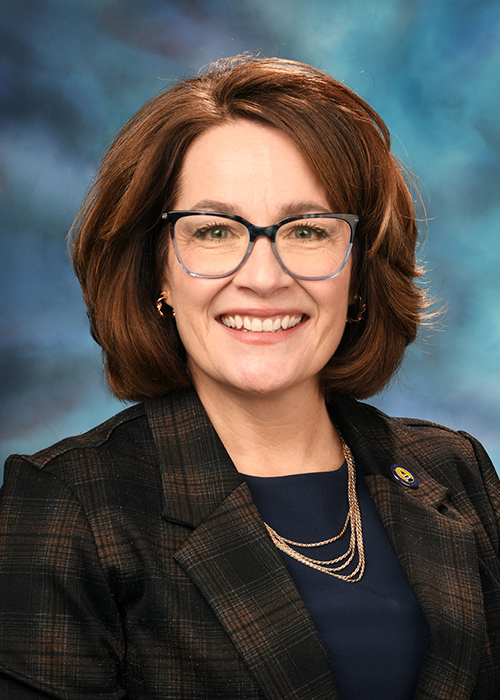
104th Regular Session Introduced by Meg Loughran Cappel

Creates a State Instructional Technology Advisory Board to guide and evaluate AI in Illinois public schools, with annual AI tool reviews and district reporting requirements.

Rule 3-9(a) / Re-referred to Assignments
0
WeVote Research Nonpartisan
Bill Summary · SB 1556

Summary — SB 1556 (State Instructional Technology / Artificial Intelligence in Schools)

Note: The materials provided include multiple, jurisdictionally distinct drafts labelled “SB 1556.” This summary focuses on the education / artificial intelligence measure (the School Code amendment) that establishes a State Instructional Technology Advisory Board and directs the State Board of Education on AI in K–12 settings.

Main purpose

To create a standing advisory body and a formal state process to evaluate, guide, and set standards for educational technologies — explicitly including artificial intelligence (AI) — used in Illinois public schools and to require school districts to report on AI use.

Key provisions

  • Establishes the State Instructional Technology Advisory Board to collaborate with the State Board of Education (ISBE) on guidance, integration, oversight, and evaluation of educational technologies, including AI.
  • Advisory Board composition and terms:
    • Chaired by the State Superintendent (or designee).
    • Includes representatives appointed by statewide teacher, principal, school board, and superintendent associations, regional practicing classroom teachers, an instructional-technology association representative, and AI/ed‑tech experts.
    • Members serve two‑year terms and may be reappointed.
  • ISBE, in consultation with the Advisory Board, must develop standards and rules addressing:
    • Safety, transparency, data privacy, and educational quality for AI technologies used in schools.
    • A rubric or evaluation method to assess AI applications.
  • Evaluation and publication requirements:
    • By December 31, 2025, and by July 1 each year thereafter, ISBE must identify and evaluate commonly used AI tools in schools and publish standards and evaluation results.
    • ISBE must provide a way for educators to request evaluations of specific tools.
    • The published list is informational only (not an endorsement or prohibition).
  • Guidance and professional development:
    • ISBE, with the Advisory Board, must produce guidance for districts and educators (by Dec 31, 2025 and updated annually) covering:
    • Basic AI concepts (e.g., machine learning, NLP, computer vision).
    • Instructional uses of AI at district, school, classroom, and individual levels.
    • How to assess and address bias, privacy, and transparency; how to access ISBE evaluations.
    • Best practices for selection, implementation, evaluation, accessibility, and student AI literacy (age‑appropriate ethical/responsible use).
    • ISBE must offer synchronous and asynchronous professional development to support implementation and must review guidance at least annually.
  • Reporting: School district annual technology reports to ISBE must include student, teacher, and district use of AI.
  • Effective date: the bill takes effect upon becoming law.

Who is affected

  • State Board of Education / State Superintendent — new duties and evaluation responsibilities.
  • School districts and charter schools — must report AI use and follow state guidance.
  • Educators and students — subject to guidance, training, and district policies on AI use.
  • Ed‑tech vendors — may be evaluated and listed; data privacy and transparency expectations may affect procurement.
  • Potential fiscal impact — ISBE will incur costs for evaluations, guidance development, and PD; bill text notes state mandate/reimbursement considerations.

Timeline / procedural notes

  • Evaluations and guidance: first deadlines set for December 31, 2025, and then annually by July 1.
  • The bill indicates immediate effectiveness upon enactment.
  • Companion and procedural details (committee referrals, amendments, sponsor names) varied in the supplied materials; check the relevant state legislative website for current status and exact sponsor information.

Compiled from official sources — confirm details with the bill’s official record.

Sign in to ask a question.