

WeVote

Bill

Bill

SF 60

Sales tax distribution rates.

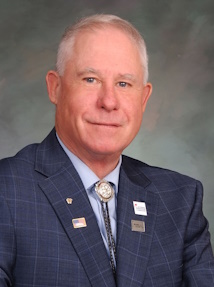
2025 Regular Session Introduced by Bill Allemand and 10 co-sponsors

Shifts 4% sales tax from the General Fund (69% to 65%), creating a Local Government Distribution Account that uses a formula to fund counties, cities and towns (effective 7/1/2025).

H:Died in Committee Returned Bill Pursuant to HR 5-4
0
WeVote Research Nonpartisan
Bill Summary · SF 60

Summary — SF 60: Sales tax distribution rates

Status: Died in Committee (House) — Returned Pursuant to HR 5-4 (3/03/2025)
Introduced: January 16, 2025
Primary sponsor(s): Senators Rowley, French; multiple cosponsors
Related/companion bill: HF 1201

Purpose / Intent

SF 60 would revise how Wyoming’s state sales and use tax revenue is allocated between the state General Fund and local governments. It reduces the General Fund’s share of the 4% state sales/use tax and creates a dedicated local government distribution account with a new, detailed formula for distributing additional revenue to counties, cities and towns — including supplemental and “revenue-challenged” formulas intended to benefit lower‑revenue municipalities.

Key provisions

  • Changes distribution percentages for the 4% state sales and use tax (statutory changes to W.S. 39-15-111 and 39-16-111).
    • Reduces the General Fund credit from 69% to 65% of revenues from the 4% tax (the fiscal note and bill text reference this change).
    • The reduction increases the portion of sales/use tax available for local government distributions.
  • Creates W.S. 39-15-111.1 — a Local Government Distribution Account:
    • The first $6,093,750.00 each month (subject to other provisions) is deposited into the account.
    • Amounts in the account are continuously appropriated to the Office of State Lands and Investments (OSLI) for allocation.
    • Semiannual distribution schedule: collections July–Dec are calculated and distributed March 15 next year; collections Jan–June calculated and distributed Oct 15 that year.
  • Allocation rules from the account (high-level):
    • 89% of the available amount is split: two-thirds of that 89% for direct distributions to cities/towns (with 5% of that portion reserved for the revenue‑challenged formula), one-third of that 89% to counties.
    • An additional 5.5% to cities/towns (again with 5% reserved for revenue‑challenged distribution) and 5.5% to counties.
    • Detailed municipal supplemental funding formula: base payments ($7,500 for very small municipalities; $17,500 for larger), then remainder allocated using a weighted index — 75% weight on inverse per‑capita sales/use tax and 25% weight on inverse per‑capita assessed value, adjusted by population and normalized.
    • Revenue‑challenged formula: identifies municipalities in the lowest per‑capita quartile and directs funds on a pro‑rata basis to raise them toward the lowest quartile level (subject to available funds).
  • Administration: OSLI calculates formulas and distributes funds.
  • Applicability / effective date: applies to sales and use taxes collected on or after July 1, 2025 (bill text and fiscal note indicate July 1, 2025).

Fiscal impact (from LSO fiscal note)

  • Estimated decrease to the General Fund:
    • FY2026: ($38,600,000)
    • FY2027: ($39,700,000)
    • FY2028: ($40,700,000)
  • Equal and offsetting increases to local government (Local Sources Fund) in those years.
  • Estimates based on the October 2024 CREG forecast; include change in the administrative 1% fee mechanics.

Who is affected

  • State General Fund: receives a smaller share of the 4% sales/use tax.
  • Counties, cities and towns: receive increased, formula-driven distributions; smaller and low‑revenue municipalities stand to gain relatively more under the supplemental and revenue‑challenged provisions.
  • Office of State Lands and Investments: charged with administering and calculating distributions.
  • Department of Revenue: provides data used in calculations.

Legislative progress / procedural notes

  • Passed the Wyoming Senate (with multiple amendments considered/adopted at second and third reading stages).
  • Multiple amendments were filed and some subsequently deleted; bill text contained both the percentage change and the detailed new local distribution account and formulas.
  • Died in the House (H: Died in Committee — Returned Pursuant to HR 5-4) on March 3, 2025; therefore it did not become law.

If you want, I can extract and present the exact allocation percentages and statutory text excerpts (municipal formula steps, distribution schedule, or the full W.S. citations) for legal or budgeting review.

Compiled from official sources — confirm details with the bill’s official record.

Sign in to ask a question.