

WeVote

Bill

Bill

HR 10077

Safety Starts at the Top Act of 2026

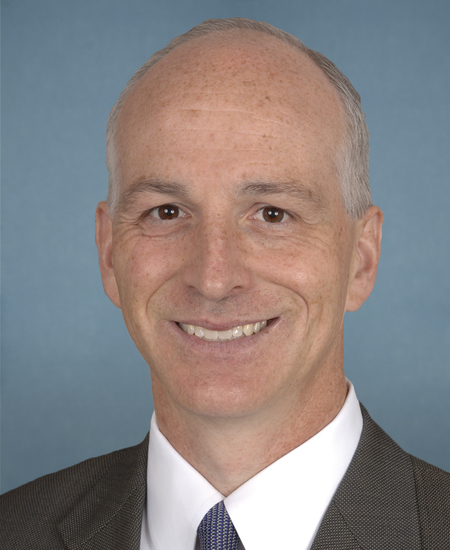
119th Congress Introduced by Adam Smith

The bill tightens ODA eligibility, requiring large aviation entities to have labor and safety-focused board members and annual FAA certification, or risk losing delegation.

Introduced in House
0
WeVote Research Nonpartisan
Bill Summary · HR 10077

Summary of HR 10077 (Safety Starts at the Top Act of 2026)

Purpose and intent

  • The bill aims to revise the qualifications for Organization Designation Authorization (ODA) holders under the Federal Aviation Administration (FAA) and to require certain governance and oversight standards for large aviation entities.
  • By tightening who can hold an ODA and adding board-level representation requirements for very large entities, the bill seeks to enhance safety outcomes in aircraft design and manufacturing through greater oversight and accountability.

Key provisions

1) Definitions and qualifications for ODA holders (Section 2(a))
- Amends Section 44736(c)(2) of Title 49 U.S.C. to define an “ODA holder” as an entity that:
- (A) Is authorized to perform functions under a delegation from the FAA Administrator under section 44702(d).
- (B) For entities with at least $15,000,000,000 in annual gross revenue, must certify annually to the FAA Administrator that the board of directors includes:
- (i) Two representatives from labor organizations, including at least one representative from each labor organization that represents employees directly involved in aircraft design and manufacturing.
- (ii) Two representatives with proven experience in aerospace safety and demonstrable outcomes related to that experience.

2) Review and revocation of existing ODA delegations (Section 2(b))
- Requires the FAA Administrator, within 90 days after enactment, to rescind any existing delegation under 49 U.S.C. § 44702(d) to an entity that does not meet the revised criteria in Section 2(a).
- This creates a mechanism to remove current ODA holders that fail to satisfy the enhanced governance requirements.

Who is affected

  • FAA-delegated entities operating under an ODA designation (ODA holders) are directly impacted.
  • Specifically, very large aviation entities (annual gross revenue of at least $15 billion) will face additional governance requirements:
    • Mandatory annual certification to the FAA regarding board composition.
    • Inclusion of labor representatives with involvement in aircraft design/manufacturing.
    • Inclusion of safety-experienced directors with demonstrated aerospace safety outcomes.
  • All existing ODA holders must be evaluated by the FAA, and those not meeting revised standards risk losing their delegation.

Procedural and timeline aspects

  • Effective date: The bill’s provisions would take effect upon enactment (the exact date is determined by when it becomes law).
  • Administrative action: The FAA must conduct a verification and rescission of non-compliant ODA delegations within 90 days of enactment.
  • Oversight: The bill requires ongoing annual certification from eligible large entities to maintain ODA status.

Potential impact and considerations

  • Safety: By embedding labor and safety-experience representation at the governance level of large aviation entities, the bill aims to improve safety culture, accountability, and outcomes in design and manufacturing processes.
  • Governance: The requirement for labor and safety-focused board members introduces explicit stakeholder representation in rating large entities’ eligibility for delegated authority.
  • Regulatory compliance: Large entities must adjust governance structures and certification processes to align with the new criteria; non-compliant entities risk losing FAA delegated authority.
  • Transition: The 90-day rescission window creates a rapid transition period for identifying and removing ineligible ODA holders.

Compiled from official sources — confirm details with the bill’s official record.

Sign in to ask a question.