

WeVote

Bill

Bill

HR 6683

Safer Schools Act of 2025

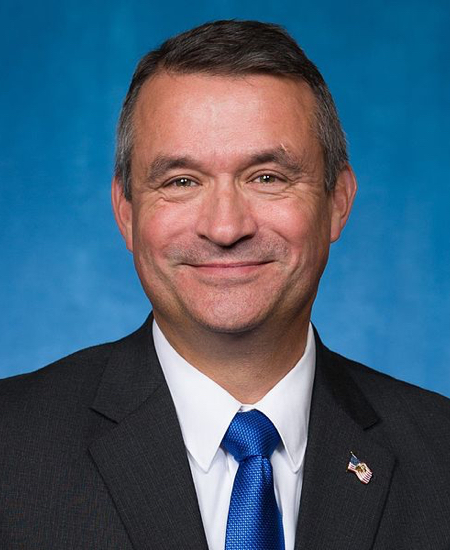
119th Congress Introduced by Don Bacon and 8 co-sponsors

A federal pilot funds independent security risk assessments for public schools and hard security upgrades based on those findings, with data-driven oversight and a five-year sunset

Introduced in House
1
WeVote Research Nonpartisan
Bill Summary · HR 6683

Overview

  • Bill: HR 6683 (Safer Schools Act of 2025)
  • Session: 119th Congress
  • Purpose: Establish a federal pilot grant program to encourage public schools to conduct independent facility security risk assessments and fund hard security improvements based on those assessments. The program includes separate grant tracks, evaluation/reporting requirements, and a sunset after five years.

Main purpose and intent

  • Create a federally funded pilot to improve school security by:
    • funding independent facility security risk assessments for public schools
    • funding hard security improvements identified by those assessments
  • Prioritize schools that have experienced deadly-harm events or threats.
  • Gather nationwide data on school security improvements and outcomes to inform future policy.

Key provisions and changes

Pilot program establishment

  • The Attorney General must establish a pilot program within 120 days of enactment, including guidelines and application processes.

Independent facility security risk assessment grants (Section 2(b))

  • Eligibility: Public schools may apply for grants to have independent facility security risk assessments performed.
  • Application requirements: Size of the school, a comprehensive financial report (including funds used from federal, state, or local sources), and a certification that the school cannot cover the assessment cost without the grant.
  • Priority: Applications from schools that have experienced an event involving deadly harm or the attempt of deadly harm against multiple individuals receive priority.
  • Ineligibility: Schools that have received a grant under this section in the previous five fiscal years or that receive a grant in the same year are ineligible, with an exception for events occurring after a grant (i.e., subsequent eligibility if such an event occurs).

Hard security improvement grants (Section 2(c))

  • Eligibility: Public schools may apply for grants to implement hard security improvements based on the most recent independent assessment.
  • Application requirements: Size, financial state, description of prior security improvements, specific products/services proposed, cost estimates, and results of the most recent independent risk assessment.
  • Priority: As above, prioritizing schools that have experienced deadly-harm events.
  • Ineligibility: Similar five-year/grant-in-year restrictions, with the same exception for events occurring after initial grant.
  • Matching funds: Federal share cannot exceed 50% of hard security improvement costs. The Attorney General may waive all or part of the matching requirement for financial hardship.
  • Grant conditions:
    • Use funds to address vulnerabilities identified by the most recent assessment.
    • If a panic alarm is installed, ensure it is linked to the nearest local law enforcement agency, transmits immediately upon activation, and is not audible inside the school building.
    • Before contracting with vendors, obtain written confirmation from the agency that conducted the assessment that the proposed improvement mitigates identified vulnerabilities.
    • Ensure compliance with local building codes and standards.

Information dissemination and outreach

  • The Attorney General must disseminate grant information to local educational agencies nationwide.
  • If a deadly-harm event occurs, the Director must notify the head of the affected school within 30 days to indicate priority eligibility and offer technical assistance.

Reporting requirements

  • Grant recipient reporting (within one year of grant):
    • Copy of assessment results and number of vulnerabilities found.
    • List of hard improvements made and the percentage of vulnerabilities fixed and remaining.
    • Any events of deadly harm or attempts in the five years before hard security improvements were fixed or within one year after.
    • A survey of safety perceptions on campus before and one year after improvements.
  • Attorney General reporting (every two years after enactment, and annually thereafter) to Congress:
    • Contents of grant recipient reports.
    • Percentages by type of hard security fixes.
    • Remaining vulnerabilities and breakdown by improvement type.
    • Average percentage of vulnerabilities fixed and remaining after improvements.

Sunset

  • The pilot program terminates five years after the program is established.

Definitions

  • Independent facility security risk assessment: Federal/State/local entity conducts an assessment focusing on active shooter vulnerabilities, perimeter and interior security, and silent alarm capabilities.
  • Hard security improvements: Physical security enhancements around property perimeter, access points, video and alert systems, interior and classroom security, and related hardware.
  • Public school: Public elementary or secondary school, including those predominantly funded by an Indian tribal government.
  • Appropriate congressional committees: House Judiciary and Education and the Workforce; Senate Judiciary and Health, Education, Labor, and Pensions.

Funding authorization and allocation (Appropriations)

  • Total appropriations for the pilot:
    • Year 1: $100 million
    • Year 2: $200 million
    • Years 3–5: $300 million per year
  • Allocation of funds:
    • 30% to the independent assessment grant program (Section 2(b))
    • 70% to the hard security improvement grant program (Section 2(c))

Who is affected

  • Public K-12 schools (elementary and secondary), including eligible tribal-funded institutions.
  • Local educational agencies (LEAs) that would apply for and manage grants.
  • Law enforcement coordination entities (due to panic alarm linkage and notification requirements).
  • National and Congressional stakeholders through required reporting and data dissemination.

Procedural and timeline aspects

  • Enactment triggers:
    • Pilot program guidelines and applications due within roughly 120 days.
    • Independent assessments and hard security improvements begin within 180 days of enactment.
  • Grant lifecycle:
    • Eligibility windows tied to event history and prior grant status.
    • One-year reporting period after grant receipt, with ongoing federal reporting every two years.
  • Sunset:
    • Program ends five years after establishment unless extended.

Potential impact and considerations

  • Focus on proactive risk assessment and targeted improvements based on independent analyses.
  • Emphasis on coordination with local law enforcement and adherence to building codes.
  • Data collection could inform broader national policy on school safety and security funding.
  • The 50% cost-sharing cap and potential waivers address fiscal considerations for under-resourced schools.
  • The five-year sunset may limit long-term security investments unless renewed.

Compiled from official sources — confirm details with the bill’s official record.

Sign in to ask a question.