

WeVote

Bill

Bill

HR 9913

Safe Sips Act of 2026

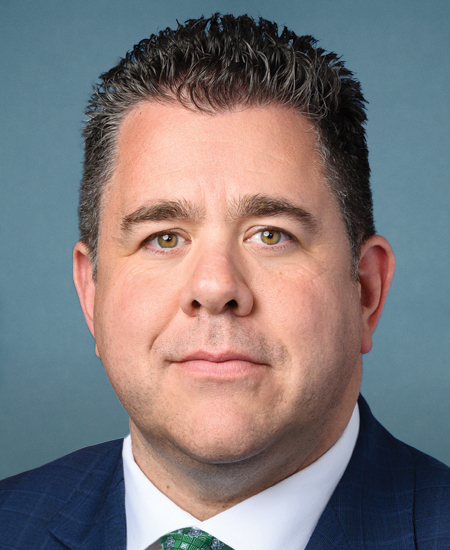
119th Congress Introduced by Nick LaLota

The Safe Sips Act requires a federal, uniform color-coding system at dispensing points for covered drinks, with accessible non-color identifiers to help all consumers.

Introduced in House
0
WeVote Research Nonpartisan
Bill Summary · HR 9913

Bill at a glance

  • Bill: HR 9913
  • Session: 119th Congress
  • Title: Safe Sips Act of 2026
  • Introduced: July 23, 2026 by Rep. Nick LaLota
  • Purpose: Direct federal agencies to establish a color-coding system for certain intoxicating drinks and related enforcement and implementation provisions.

Main purpose and intent

The Safe Sips Act of 2026 requires the federal government to create and mandate a standardized color-coding system for packaging of “covered drinks” that contain certain intoxicating substances. The goal is to provide a uniform visual cue at the point of dispensing to help consumers identify drinks with intoxicating ingredients, along with an accessibility identifier for blind or colorblind consumers.

Key provisions and changes

  • Establishment of color-coding system (Section 2(a))

    • Each covered drink must use a single color at the dispensing point, regardless of the specific intoxicating substance.
    • Packaging must include a non-color identifier (text, symbol, pattern, tactile feature, etc.) to aid accessibility for blind or colorblind consumers.
    • The system must define technical specifications and tolerances for colors to enforce “substantially similar color” standards.
  • Implementing and enforcing the system (Section 2(b))

    • Manufacturers of covered drinks must implement the color-coding system.
    • Distributors/retailers must disseminate information to consumers about the system.
    • Retailers must ensure sold or offered covered drinks comply with the system.
    • Prohibition on using the color for non-covered drinks (i.e., the color or substantially similar color cannot be applied to drinks that are not covered drinks).
  • Penalties and enforcement (Section 2(c))

    • The Secretary must establish a procedure for civil penalties against noncompliant manufacturers, distributors, or retailers, and a structure for determining fines.
  • Rulemaking timeline (Section 2(d))

    • The Secretary must issue necessary implementing rules within 2 years after enactment.
  • Preemption (Section 2(e))

    • States, political subdivisions, or tribal governments may not enact laws or regulations that are more stringent than the federal requirements established by this act.
  • Rule of construction (Section 2(f))

    • The act does not alter:
    • Federal authority under the Controlled Substances Act or related scheduling requirements.
    • Other federal law governing the manufacture, distribution, sale, importation, possession, or interstate delivery of a covered drink.
  • Definitions (Section 2(g))

    • Covered drink: A drink for sale that contains a covered substance and is in a single can/bottle or other Secretary-determined container.
    • Covered substance: Includes alcohol, THC, intoxicating cannabinoids, Kratom-related substances, or other intoxicating substances as determined by the Secretary.
    • Dispensing point: The part of the container through which the drink is accessed (top, cap, lid, etc.).
    • Distributor: A person who sells/transfers/delivers a covered drink for resale (not a common carrier).
    • Intoxicating cannabinoid: Cannabinoid with intoxicating or impairing effects substantially similar to or greater than THC, including various isomers or synthetics.
    • Kratom-related substance: As defined (Mitragyna speciosa and related alkaloids/derivatives).
    • Alcohol, covered drink, covered substance, dispensing point, etc., definitions tailored to the act’s scope.
    • Secretary: Agencies involved are HHS (through FDA) and Treasury (through the Alcohol and Tobacco Tax and Trade Bureau, or TTB).
  • Applicability (Section 2(h))

    • The act applies to covered drinks manufactured, distributed, sold, or offered for sale four years after enactment.

Who is affected

  • Manufacturers of covered drinks (must implement color-coding and identification features).
  • Distributors and retailers (must disseminate information and ensure compliance; cannot market non-covered drinks with the color).
  • Consumers (benefit from standardized color cues and accessibility features).
  • Federal agencies (FDA/HS and TTB/UST) responsible for implementing rules, enforcement, and penalties.
  • States and tribal governments (preemption clause restricts state-level variations).

Procedural and timeline notes

  • Rulemaking deadline: Federal agencies must issue implementing rules within 24 months of enactment.
  • Enforcement structure: Civil penalties framework to be established by the Secretary.
  • Preemption: The act preempts more stringent state or tribal color regulations for covered drinks.
  • Effective date: Four years after enactment for applicability to cover drinks.

Summary statement

The Safe Sips Act of 2026 aims to reduce consumer risk and ambiguity around intoxicating beverages by mandating a uniform color-coding system at the dispensing point, complemented by accessible non-color identifiers. It sets forth implementation responsibilities for manufacturers, distributors, and retailers, establishes penalties for noncompliance, and provides a federal preemption framework to standardize regulation across jurisdictions. The act would come into force four years after enactment, with regulatory rules due within two years of enactment.

Compiled from official sources — confirm details with the bill’s official record.

Sign in to ask a question.