

WeVote

Bill

Bill

S 3428

SAFE Crypto Act

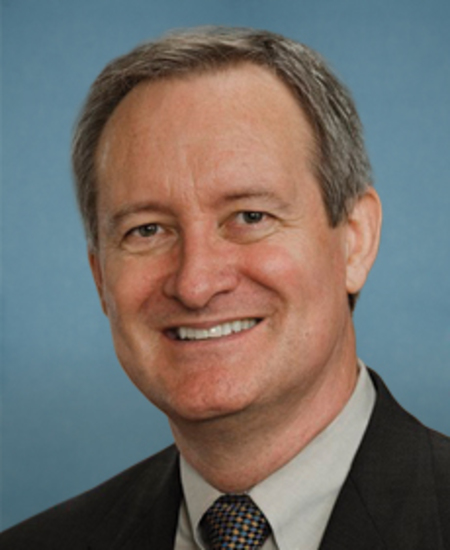
119th Congress Introduced by Mike Crapo and 2 co-sponsors

Establishes a cross-sector Task Force to detect, prevent, and disrupt cryptocurrency scams, boosting interagency coordination and asset-recovery options.

Introduced in Senate
1
WeVote Research Nonpartisan
Bill Summary · S 3428

Overview

  • Bill: S. 3428 (SAFE Crypto Act)
  • Session: 119th Congress, 1st Session
  • Purpose: Establish a bipartisan, cross-sector Task Force on Recognizing and Averting Cryptocurrency Scams to study, coordinate, and recommend improvements to prevent digital asset scams and enhance law enforcement capabilities.

  • Sponsor/Co-sponsors: Sen. Moran (primary) with Sen. Slotkin; cosponsored by Sen. Crapo.

  • Introduction date: December 10, 2025

  • Status in bill text: Referred to the Senate Committee on Banking, Housing, and Urban Affairs.

Main purpose and intended impact

  • Create a dedicated Task Force to identify, prevent, and disrupt scams involving digital assets (cryptocurrency, digital asset intermediaries, and related products).

  • Improve coordination among federal, state, local, and Tribal authorities, industry participants, and victims’ networks to reduce scam incidence and improve recovery.

  • Provide policy and operational recommendations, potentially informing future legislation, regulation, and enforcement strategies.

Key provisions and changes

  • Definitions (Sec. 2)

    • Aligns defined terms with the GENIUS Act for Digital Asset, Digital Asset Service Provider, and Permitted Payment Stablecoin Issuer.
    • Defines the Secretary as the Secretary of the Treasury.
    • Defines the Task Force as established in Sec. 3.
  • Establishment and composition of the Task Force (Sec. 3)

    • Establishment: The Secretary must establish the Task Force within 180 days after enactment.
    • Membership: Chaired by the Secretary (or designee) and includes:
    • Federal officials: Attorney General; Director of FinCEN; Director of the IRS; heads of other relevant agencies as determined.
    • Industry and service providers: Representatives of permitted payment stablecoin issuers; digital asset service providers; digital asset custodians; blockchain intelligence providers.
    • Stakeholders: Representatives of victims, scam support networks, consumer protection groups.
    • Law enforcement: Representatives of federal, state, and local law enforcement.
    • Other industries as needed, and representatives from one or more state bank regulatory authorities.
    • Term and vacancies: Members serve until the Task Force ends; vacancies filled in the same manner as initial appointments.
  • Purposes (Sec. 3, subsections (c))

    • Scam detection and prevention: Analyze trends, develop methods to prevent scams, issue recommendations.
    • Cross-sector approach: Ensure recommendations reflect impacts across financial services, telecom, tech, etc.
    • Stakeholder insight: Include victim-support voices and industry insight into crime networks, ATMs, and prevention strategies (money tracing, etc.).
    • Information sharing and interdiction networks: Promote real-time information sharing and collaboration with digital asset service providers and stablecoin issuers to disrupt on/off-ramp flows linked to illicit activity.
    • Enhanced asset recovery: Coordinate with permitted stablecoin issuers to enable freezing, seizing, burning, or reissuing assets implicated in scams or unlawful conduct, consistent with due process and law.
  • Meetings (Sec. 3, subsection (d))

    • The Task Force must meet at least three times in the first year, with flexibility to meet thereafter via in-person or remote means.
  • Duties (Sec. 3, subsection (e))

    • Review data sources: FBI IC3 database, FTC fraud database, etc.
    • Best practices: Assess methods used by scammers (financial grooming, Ponzi schemes, rug pulls, etc.), and effectiveness of prevention and victim-support mechanisms.
    • International coordination: Compare approaches from other jurisdictions and collaborate internationally to curb scams.
    • Scams and intermediaries: Examine how scams are executed via digital asset intermediaries and develop countermeasures.
    • Education and reporting: Create and promote education programs to help consumers identify and report scams.
    • Law enforcement coordination: Propose strategies to identify and prosecute perpetrators; work with state, local, and Tribal authorities.
    • Stakeholder consultation: Involve financial services providers, other industries, and governmental agencies.
    • Legislative and staffing needs: Evaluate need for additional federal legislation and full-time staff to combat scams.
    • International collaboration: Target criminal networks abroad and coordinate with other governments.
  • Compensation (Sec. 3, subsection (f))

    • Members serve without additional compensation beyond standard federal employee pay.
  • Reporting requirements (Sec. 3, subsection (g))

    • Initial report due within 1 year: Includes results of reviews, identified strategies, legislative/regulatory recommendations, and recommendations to enhance intergovernmental cooperation, data sharing, reporting, and anti-scam training effectiveness.
    • Annual updates: After the initial report, the Task Force must publish yearly updated reports to the same committees and make them publicly available online, detailing progress and ongoing strategies.
  • Applicable law and sunset (Secs. 3, subsecs (h)-(i))

    • The Task Force is not exempt from the Federal personnel rules in Chapter 4 of Title 5 (i.e., it operates outside certain standard federal work rules).
    • Sunset: The Task Force terminates 3 years after it submits the required report.

Who/what would be affected

  • Federal agencies involved in enforcement, finance, taxation, and law enforcement (e.g., Treasury, FBI, FinCEN, IRS, DOJ).
  • Digital asset industry participants: Digital asset service providers, permitted payment stablecoin issuers, digital asset custodians, blockchain intelligence providers.
  • Victims and support networks: Individuals harmed by crypto scams and organizations assisting them.
  • State and local authorities, Tribal governments, and state bank regulators.
  • General public: Consumers and investors would be affected indirectly through improved scam detection, education, and potential enforcement actions.

Procedural and timeline aspects

  • Timeline to establish: Task Force must be created within 180 days of enactment.
  • Meetings: At least three meetings in the first year; ongoing as determined.
  • Reporting timeline:
    • Initial comprehensive report due within 1 year of establishment.
    • Annual updates thereafter.
  • Duration: The Task Force operates for up to 3 years from the date of the initial report, after which it terminates.

Potential implications

  • Increased interagency and industry collaboration on crypto scam enforcement and prevention.
  • Enhanced mechanisms for freezing or recovering digital assets linked to illicit activity, subject to due process and applicable law.
  • Greater emphasis on consumer education and international cooperation to combat cross-border scams.
  • Possible need for new legislation or regulatory adjustments to support expanded information sharing, data harmonization, and resource allocation for enforcement and education.

Compiled from official sources — confirm details with the bill’s official record.

Sign in to ask a question.