

WeVote

Bill

Bill

HR 9471

SAFE Banking Act of 2026

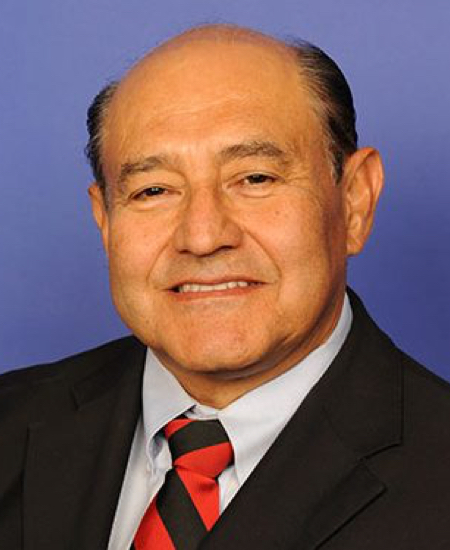
119th Congress Introduced by Lou Correa and 7 co-sponsors

The bill creates broad safe harbors and protections for banks and insurers serving state-sanctioned marijuana and hemp businesses, including money-laundering, liability, and collat

Introduced in House
0
WeVote Research Nonpartisan
Bill Summary · HR 9471

Purpose and scope

  • Bill: HR 9471, the Secure And Fair Enforcement Banking Act of 2026 (SAFE Banking Act of 2026)
  • Objective: Create protections and safe harbors for financial institutions that provide banking and other financial services to State-sanctioned marijuana businesses and to service providers for those businesses, as well as to hemp-related legitimate businesses and service providers.
  • Jurisdiction: United States; introduced in the House on June 25, 2026. Referred to the House Committee on Financial Services and to Judiciary and Veterans’ Affairs for consideration.

Key provisions and changes

  • Section 3 — Safe harbor for depository institutions

    • Prohibits federal banking regulators from terminating or limiting deposit insurance, or taking adverse actions, against a depository institution solely because it provides services to State-sanctioned marijuana businesses or service providers.
    • Prohibits regulators from discouraging or downgrading services to such accounts, or taking adverse actions against loans to these entities, based solely on the State-sanctioned status.
    • Extends safe harbor protections to depository institution charters applying for charters (to the same extent as for existing institutions).
  • Section 4 — Protections for providing services

    • Proceeds from marijuana-related activities conducted in compliance with state law are not considered proceeds from illegal activity for purposes of federal money-laundering statutes (18 U.S.C. 1956 and 1957) or other federal laws merely because they involve a State-sanctioned business or service provider.
  • Section 5 — Protections under federal law

    • Broad protections for institutions, insurers, and their personnel when providing services to State-sanctioned marijuana businesses or service providers.
    • Protects against liability under federal law for providing such services or for reinvesting income derived from them.
    • Specifies similar protections for Federal Reserve Banks, Federal Home Loan Banks, and insurers.
    • Forfeiture protections for collateral tied to loans or services to State-sanctioned marijuana entities (and for collateral in federally backed mortgage contexts) when the income is from State-sanctioned activity (marijuana or related services). Marijuana or marijuana products themselves are excluded from “collateral.”
  • Section 6 — Suspicious activity reporting

    • Amends 31 U.S.C. 5318(g) to mandate that SARs related to State-sanctioned marijuana businesses follow Treasury guidance.
    • Treasury must amend FINCEN guidance (FIN-2014-G001) or issue new guidance within 180 days to align with SAFE Banking Act goals.
  • Section 7 — Guidance and examination procedures

    • Within 180 days, FFIEC (in coordination with Treasury) must develop uniform guidance and examination procedures for banks serving State-sanctioned marijuana businesses and service providers.
    • Permits legacy cash deposits from the first 90 days of relationship if properly documented and consistent with due-diligence and reporting requirements.
  • Section 8 — Hemp-related businesses and service providers

    • Updates banking guidance to address hemp-related legitimate businesses and service providers, clarifying compliance with federal laws, including subchapter II of Chapter 53 (Bank Secrecy Act) and related hemp regulations.
  • Section 9 — Treatment of income for federally backed mortgages

    • Income from State-sanctioned marijuana activities (or hemp-related service providers) can be treated the same as other legal income for eligibility for federally backed single-family mortgages.
    • Mortgage lenders and related agencies may not be liable solely for providing or underwriting mortgages based on such income.
    • Implementation timelines for FHA, VA, USDA, and mortgage guarantors to adjust their underwriting guidelines within 180 days.
  • Section 10 — Deposit account termination procedures

    • Sets thresholds and requirements for how federal banking agencies may request or order the termination of accounts, including protections against termination based solely on reputational risk.
    • Provides notice requirements and limits in cases involving national security or criminal investigations.
  • Section 11 — Diversity and inclusion reporting

    • Requires annual reports from federal banking regulators on access to financial services for minority-owned, veteran-owned, women-owned, and small State-sanctioned marijuana businesses.
    • Recommends regulatory or legislative steps to expand access.
  • Section 12 & 13 — GAO studies

    • GAO study on diversity and inclusion barriers in market access for minority/veteran/women-owned and small State-sanctioned marijuana and hemp businesses (due within 2 years; report due within 2 years).
    • GAO study on the effectiveness of suspicious-transaction reporting in identifying criminal actors, including whether these reports effectively detect persons/entities in state contexts allowing marijuana activity.
  • Section 14 — Applicability to hemp

    • Provisions applicable to hemp-related legitimate businesses and service providers are made to apply in the same manner as for State-sanctioned marijuana businesses (with exceptions noted in Sections 6 and 13).
  • Section 15 — Rules of construction

    • Clarifies no mandate to provide banking services; preserves general examination and enforcement authority; affirms McCarran-Ferguson and Dodd-Frank boundaries for insurance regulation.
    • Maintains that enforcement actions cannot be solely based on providing services to State-sanctioned marijuana businesses.

Who would be affected

  • Depository institutions (banks, credit unions, and similar entities) and entities performing financial services for them.
  • State-sanctioned marijuana businesses and their service providers (and hemp-related legitimate businesses and hemp-related service providers).
  • Federal regulators (FFIEC member agencies, Treasury, FinCEN, and related bodies) responsible for banking supervision, guidance, and enforcement.
  • Mortgage lenders and federally backed mortgage programs (FHA, VA, USDA, Fannie Mae, Freddie Mac) regarding income from state-legal marijuana activities.
  • Minority-owned, veteran-owned, women-owned, and small State-sanctioned marijuana businesses, via annual diversity/inclusion reporting and potential enhanced access programs.

Procedural and timeline aspects

  • Uniform guidance and examination procedures: to be developed within 180 days of enactment.
  • SAR guidance alignment: Treasury amendments within 180 days.
  • Hemp-related guidance updates: completed within 90 days for hemp provisions; broader updates aligned with enactment.
  • Implementation for mortgage income treatment: FHA, VA, USDA, and GSEs to implement within 180 days of enactment.
  • GAO studies: initiated and reports due within specified timeframes (2 years for the diversity study and a later 2-year study on reporting effectiveness).

If you’d like, I can tailor this summary to a specific audience (lawmakers, financial institutions, journalists) or provide a side-by-side comparison with the prior SAFE Banking Act versions.

Compiled from official sources — confirm details with the bill’s official record.

Sign in to ask a question.