

WeVote

Bill

Bill

SB 1442

RUST BELT TO GREEN BELT PILOT

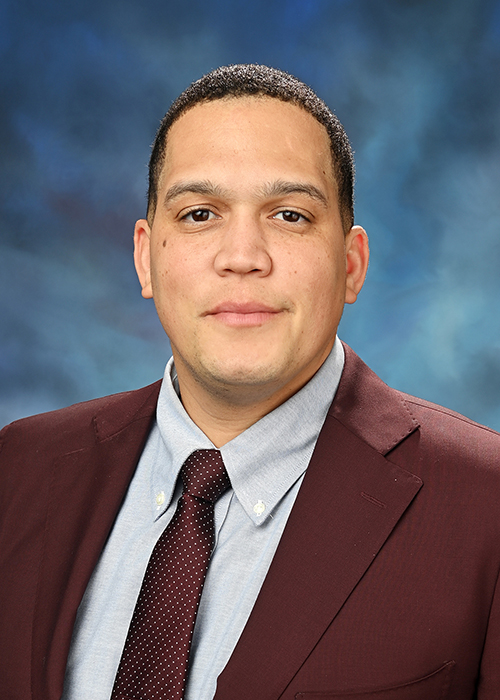
104th Regular Session Introduced by Robert Peters

Launches the Rust Belt to Green Belt Pilot Program and fund to spur Lake Michigan offshore wind in Illinois, requiring equity plans and 700,000 RECs/yr for 20 years, rate caps.

Rule 3-9(a) / Re-referred to Assignments
0
WeVote Research Nonpartisan
Bill Summary · SB 1442

SB 1442 — “Rust Belt to Green Belt Pilot” (summary)

Note: the file you provided contains text from multiple unrelated bills (including an Arizona appropriation for secure behavioral health residential facilities and several Hawaii bills on child & adolescent mental health). The summary below focuses on the Illinois “Rust Belt to Green Belt Pilot Program” material that matches the bill title you gave.

Main purpose

SB 1442 creates a pilot program and a dedicated state fund to accelerate development of an on‑Lake Michigan (Great Lakes) utility‑scale offshore wind industry in Illinois while directing benefits—jobs, procurement, and training—to historically underrepresented populations and economically impacted communities. It also adds procurement and inclusion requirements to the Illinois Power Agency (IPA) procurement framework.

Key provisions

  • Creates the Illinois Rust Belt to Green Belt Pilot Program Act and the Illinois Rust Belt to Green Belt Fund (a special state treasury fund) to be administered by the Department of Commerce and Economic Opportunity (DCEO).
  • Directs DCEO to use the Fund to encourage and facilitate employing construction workforces drawn from underrepresented populations for offshore wind projects (program specifics to be developed by DCEO).
  • Requires applicants for a new utility‑scale offshore wind project (seeking procurement through the Illinois Power Agency) to file an “equity and inclusion plan” with DCEO as part of their application.
  • Amends the Illinois Power Agency Act to add a procurement requirement: in addition to other RECs, the IPA must procure at least 700,000 renewable energy credits (RECs) delivered annually for at least 20 years from one new utility‑scale offshore wind project.
  • Caps on customer cost impacts: the long‑term renewable procurement plan must be sized so the estimated average net increase to eligible retail customers from these resources does not exceed:
    • 4.25% of the per‑kWh amount paid by those customers during the year ending May 31, 2009, and
    • no more than 4.5% of that amount as of the billing month after a new utility‑scale offshore wind project commences commercial operations and begins delivering power to the PJM grid.
  • Requires the IPA to conduct at least one new utility‑scale offshore wind procurement within 360 days of the effective date of the amendatory Act.
  • Legislative findings emphasize Illinois’ Lake Michigan offshore wind potential (stated potential capacity ~4,528 MW in the Illinois portion of Lake Michigan), port and workforce advantages (notably Chicago’s South Side), and federal funding opportunities for port/port‑related infrastructure.
  • Defines terms (e.g., “disproportionately impacted area,” “equity and inclusion plan,” etc.) and makes conforming changes to the State Finance Act. The introduced version indicates the Act is effective immediately.

Who/what is affected

  • Offshore wind developers and project applicants (must submit equity & inclusion plans).
  • Illinois Power Agency (new procurement obligations).
  • Department of Commerce & Economic Opportunity (program and fund administration).
  • Construction and maritime labor forces, especially workers from underrepresented/disproportionately impacted areas (target beneficiaries of workforce strategies and hiring emphasis).
  • Port authorities and related infrastructure on the south side of Chicago (potential beneficiaries of port rehabilitation and laydown work).
  • Electricity ratepayers (procurement sizing and caps intended to limit rate impacts to the percentages noted).
  • Supply chain and local economic development stakeholders (expected job creation and investment).

Timeline & implementation notes

  • IPA must run a procurement for at least one utility‑scale offshore wind project within 360 days of the Act’s effective date.
  • The procurement guarantee is for 700,000 RECs annually for minimum 20 years from one project.
  • The DCEO will design and administer the pilot fund and evaluate equity/inclusion plans submitted by developers.
  • The bill text in your file is partially truncated; details on scoring, eligibility criteria, or specific Fund appropriation/disbursement mechanics may be in omitted sections.

Potential impacts

  • Economic: could catalyze offshore wind development in Lake Michigan, drive investment in ports and manufacturing, and create construction and long‑term operations jobs—with an explicit equity focus.
  • Energy: adds a targeted offshore wind procurement (REC volume) to Illinois’ long‑term renewable mix.
  • Ratepayer protections: the bill contains explicit caps to limit near‑term bill impacts tied to procurement choices.
  • Implementation risk: timelines, project siting/permitting (state/federal Great Lakes/Great Lakes trust issues), and the cost competitiveness of Great Lakes offshore wind vs. other resources will affect outcomes.

If you want, I can:
- Produce a one‑page policy brief comparing SB 1442’s procurement approach to existing IPA procurements; or
- Extract and summarize the remaining truncated equity/inclusion scoring provisions (if you can supply the rest of the text).

Compiled from official sources — confirm details with the bill’s official record.

Sign in to ask a question.